Plastic Screw Anchor Selection | Hebei Wotu Fastener Manufacturing Co., Ltd.

Plastic Screw Anchor Selection

A plastic screw anchor is chosen to hold a screw in a wall material that cannot reliably grip the screw threads on its own. The right option depends first on the substrate—solid masonry, concrete, hollow drywall, or another panel—and then on the fixture load, screw size, and installation conditions.

For a dependable purchase, match the anchor design and dimensions to the wall rather than selecting by appearance alone. An anchor that works in solid masonry may expand poorly in a hollow board, while a hollow-wall design may not provide the required support in dense concrete.

Related Products

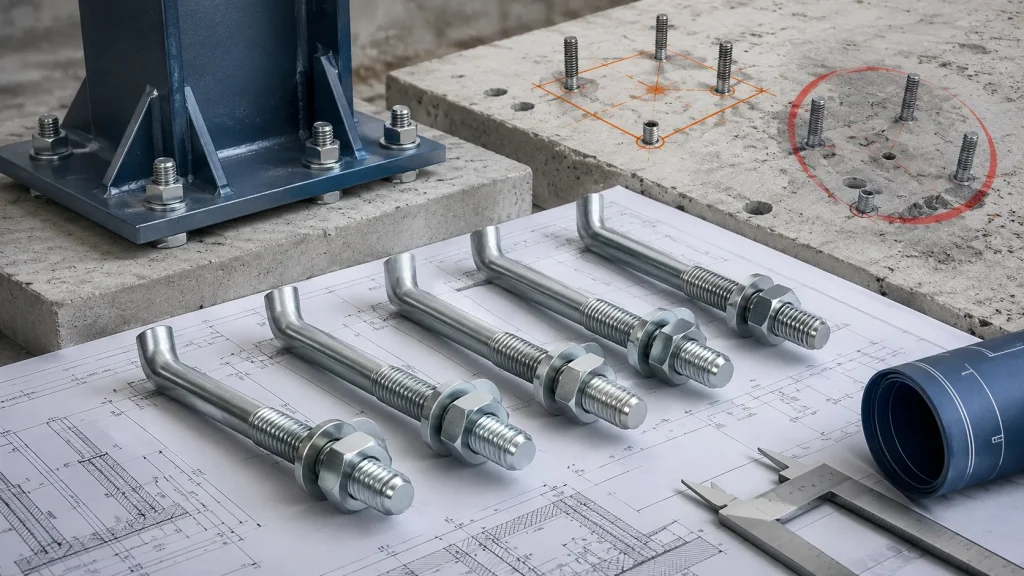
7-letter, 9-letter L-shaped anchor bolt (Chinese national standard GB/T799-1988 embedded anchor screw)

7-letter, 9-letter L-shaped anchor bolt (Chinese national standard GB/T799-1988 embedded anchor screw)

Brand: Wotu Surface: Natural black oxide treatment, customized hot-dip galvanized, zinc plated as required Specifications: Follow Chinese national standard GB/T799-1988, in stock M12-M48, total length 120mm~1500mm, nonstandard customized diameter, bending length, total screw length available Matching: Nuts, flat washers and spring washers of the same specification can be supplied in complete sets. Packaging: Bundling and packaging, using wooden pallets and film-wrapped export packaging in large quantities

Read More
Blue-White Zinc Plated Pan Head With Pad Self-Tapping Screw

Blue-White Zinc Plated Pan Head With Pad Self-Tapping Screw

Brand: Hengzuan Surface: blue and white zinc plated Specifications: in stock ST4.2/ST4.8full range of specifications, length 13~50mm in stock, support nonstandard length customization Packaging: 25kg cartons, solid wood packaging, support neutral packaging, private-label customization

Read More
Wafer Head Self-Drilling Screw

Wafer Head Self-Drilling Screw

Brand: Hengzuan Surface: blue and white zinc plated, can be customized color zinc plated, black oxide plated Specifications: Comply with GB/T15856.2 Chinese national standard, in stock ST3.5/ST4.2/ST4.8/ST5.5 mainstream wire diameter, rod length 13mm~50mm full range of specifications, nonstandard length customization on demand, drilling applicable plate thickness 2~5mm Packaging: 25kg export cartons, full pallets wrapped with film, supports neutral export packaging, private-label customization

Read More
Countersunk Head Blue-White Zinc Plated Self-Drilling Screw (Chinese National Standard: Phillips Countersunk Head Self-Drilling And Self-Tapping Screw GB/T15856.2-2002)

Countersunk Head Blue-White Zinc Plated Self-Drilling Screw (Chinese National Standard: Phillips Countersunk Head Self-Drilling And Self-Tapping Screw GB/T15856.2-2002)

Brand: Hengzuan Surface: blue and white zinc plated, can be customized color zinc plated, black oxide plated Specifications: Comply with GB/T15856.2-2002 Chinese national standard, in stock ST4.2/ST4.8/ST5.5 full range of specifications, length 13mm~75mm optional, supports customized nonstandard rod lengths; drilling adaptation plate thickness 0.7~6mm Packaging: 25kg export cartons, full pallets wrapped with film, supports neutral export packaging, customer private-label customization

Read More

Compare anchor designs by wall material and screw fit

Plastic anchor selection criteria

When comparing plastic screw anchors, review the anchor material, expansion or locking style, compatible screw range, dimensions, installation method, and intended substrate. The important question is not only whether the anchor fits the hole, but whether it creates a stable connection in the specific wall and remains suitable for the load and environment.

Criterion What To Check Why It Matters Buyer Tip
Substrate type and condition Confirm whether the anchor will go into solid masonry, hollow block, brick, concrete, plasterboard, or another base, and check for cracks or weak surfaces. Plastic anchors expand or grip differently in each substrate. A design suited to solid masonry may not hold securely in a hollow or friable wall. Ask, “Which anchor design and installation method suit this substrate and its actual condition?”
Anchor size and expected load Compare the anchor length, diameter, embedment, and the item’s supported load with the supplier’s application guidance. The anchor must engage enough sound material without breaking through the back of a thin wall or leaving too little thread engagement. Provide the fixture thickness, fastener size, and intended load, then ask which anchor size is recommended.
Screw and anchor compatibility Verify that the screw diameter, length, thread form, and head style match the anchor’s internal shape and the fixture. An undersized screw may not expand the anchor properly; an unsuitable head or excessive length can prevent the fixture from seating correctly. Ask for the approved screw range and whether the proposed screw is supplied with, or tested for use with, the anchor.
Installation hole and setting method Confirm the required drill-hole diameter, depth, cleaning method, and whether the anchor should be flush, partially embedded, or set behind the surface. An oversized, shallow, or debris-filled hole can reduce grip and cause the anchor to spin or pull out during tightening. Request an installation sketch showing the hole size, minimum depth, and setting sequence for the selected anchor.
Environment and material suitability Check exposure to moisture, outdoor conditions, temperature changes, chemicals, and any requirement for a particular plastic formulation. The surrounding environment can affect plastic durability and long-term holding performance, especially where the anchor is exposed or the substrate becomes damp. Ask, “Is this anchor intended for the stated indoor or outdoor exposure, and what limitations should we observe?”

Specify the fixing for the actual load and substrate

The key distinction is between an expansion anchor for solid material and a hollow-wall or self-drilling anchor for board materials. Expansion anchors rely on the surrounding masonry compressing or gripping the plastic as the screw enters. Hollow-wall designs need a different engagement method because there may be an empty cavity behind the face of the panel.

This matters because the same screw and nominal anchor diameter can behave very differently in different walls. Confirm the substrate, the fixture type, the expected load direction, and the screw's diameter and length before approving a design.

Start with the wall. Identify whether the anchor will enter concrete, brick, block, plasterboard, or a composite panel. Also note whether the material is solid throughout the fixing depth. For masonry, check the anchor's expansion behavior and the condition of the drilled hole. For hollow panels, check how the anchor spreads or locks behind the face.

Match the anchor to the fixing. The screw must fit the anchor's internal diameter and engage far enough to activate it without bottoming out. Allow for the thickness of the mounted item, any washer or bracket, and the embedded portion of the screw. Do not assume that a longer screw automatically creates a stronger fixing.

Consider the actual load and environment. A light sign, cable clip, cabinet fitting, and shelf bracket place different demands on a fixing. Pull-out, shear, vibration, repeated removal, moisture, and temperature can change the suitable material or design. For safety-critical or heavily loaded fixtures, obtain the relevant load guidance rather than treating a general-purpose plastic anchor as interchangeable.

Prevent avoidable installation errors. A hole that is oversized, contaminated, or drilled into a weak joint can reduce holding performance. Check the recommended drill type and hole preparation, keep the anchor seated correctly, and avoid over-tightening the screw. In an enquiry, provide the wall material, fixture thickness, screw details, expected load, and environment so the proposed anchor can be reviewed against the application.


Criteria Importance Description Example Options
Substrate type Primary selection factor The anchor must suit the material that will carry the load. Solid concrete, brick, block, and hollow board require different engagement methods. A plug-style expansion anchor may suit a drilled hole in solid masonry, while a hollow-wall fixing may be needed for a plasterboard panel.
Anchor action Determines how the fixing holds Plastic anchors may expand against the hole wall, grip by friction, or spread behind a panel. The holding method should match the wall construction and load direction. A light wall sign in solid brick may need expansion, while a fitting on board material may need a design that resists pull-out from the panel face.
Screw compatibility Critical for correct installation The screw diameter, thread form, and length must activate the anchor without splitting it, under-expanding it, or preventing the fixture from tightening fully. If the fixture is thick, the screw length must allow for both the fixture thickness and the required engagement inside the anchor.
Load and use conditions Important for safety and service life A static light load is different from a bracket that sees vibration, repeated movement, or outward pull. Moisture and temperature may also affect material choice. A cable clip, small sign, and shelf bracket should not be treated as the same fixing problem just because the anchor diameter is similar.
Hole preparation Often overlooked during installation The drilled hole must match the anchor size and be clean enough for proper seating. Oversized, crumbling, or poorly aligned holes can reduce holding performance. An anchor placed in a loose mortar joint may perform differently from the same anchor installed in sound brick or concrete.

Blog Articles / Reviews

How to Specify Countersunk Head Cross Thick Thread Fiberboard Screws for Furniture Assembly Projects

How to Specify Countersunk Head Cross Thick Thread Fiberboard Screws for Furniture Assembly Projects

Fiberboard screws are selected based on more than screw size alone. For furniture assembly and board-based applications, buyers need to match the screw structure with the characteristics of fiberboard, MDF, and similar engineered wood materials. A suitable specification should consider thread design, head style, screw length, diameter, installation method, and application requirements. For buyers sourcing […]

What Should an RFQ Include When Sourcing Dacromet Hex Head Self-Drilling Screw?

What Should an RFQ Include When Sourcing Dacromet Hex Head Self-Drilling Screw?

When sourcing dacromet hex head self drilling screw, a complete RFQ should define the application, screw configuration, coating requirement, dimensions, and supplier confirmation requirements. Buyers often receive different quotations because suppliers may interpret coating, size, drilling capability, or packaging scope differently. Before preparing a project inquiry, buyers can review the available fastener product categories to […]

How Should Buyers Evaluate Self Tapping Screws for Project Procurement?

How Should Buyers Evaluate Self Tapping Screws for Project Procurement?

#4 self tapping screws should not be purchased from the “#4” designation alone. For a usable B2B specification, the buyer still needs the actual screw diameter, thread form or pitch, overall length, substrate, pilot-hole condition, head and drive style, material, surface finish and quantity. This matters because suppliers may use different naming systems. Wotu Fastener’s […]

Anchor Bolts: 7 Ordering Errors That Cause Site Rework

Anchor Bolts: 7 Ordering Errors That Cause Site Rework

ost anchor bolt ordering errors come from incomplete drawings, unclear dimensions, unsuitable material or coating choices, undefined tolerances, and mismatched nuts or washers. These mistakes affect steel fabricators, EPC contractors, equipment installers, importers, and distributors because anchor bolts are usually embedded before the connected structure arrives on site. Once concrete has cured, even a small […]

Which Self-Tapping Roofing Screw Specification Fits Metal Panels on Steel or Timber?

Which Self-Tapping Roofing Screw Specification Fits Metal Panels on Steel or Timber?

The correct self-tapping roofing screw depends on the complete panel-and-substrate stack-up. Steel supports typically require a point and thread matched to the support thickness and any pilot-hole requirement; timber supports require a wood-appropriate thread and sufficient embedment. In both cases, buyers must define diameter, length, head, sealing washer, material or coating, environment, pull-out requirements, and […]

Frequently Asked Questions

Can the same anchor be used in concrete and drywall?

Usually not as a direct substitute. A plastic expansion anchor can work well in a solid material because the wall supports the anchor as it expands, while drywall often needs a design that grips or locks behind the panel face. Confirm the substrate before choosing the anchor style.

How should I choose the screw size for the anchor?

The screw must match the anchor’s compatible diameter and be long enough to pass through the fixture and engage the anchor properly. If the screw is too small, it may not expand the anchor; if it is too large or too long, it can damage the anchor or bottom out before tightening the fixture.

Is a longer anchor always stronger?

No. Holding depends on the wall material, hole quality, anchor design, screw engagement, and load direction. In a weak or hollow substrate, extra length may not add useful holding power unless the anchor is designed for that construction.

What is the trade-off between a plastic anchor and a metal fixing?

Plastic anchors are often suitable for light to moderate wall fixings and can be simple to install with standard screws. Metal anchors may be preferred where the fixture is heavier, exposed to more stress, or requires a different locking method, but the correct choice still depends on the substrate and application.

What details should be provided before ordering?

Provide the wall material, anchor hole size if already defined, fixture thickness, screw diameter and length, expected load, and whether the installation is indoors, outdoors, dry, or exposed to moisture. A drawing or photo of the fixing point can also help clarify whether an expansion, plug-style, or hollow-wall type is more appropriate.

Leave Your Message

Please provide the wall material, the fixture thickness and expected load, and the screw size or installation environment so we can review a suitable plastic screw anchor specification.