A screw gun differs from a general drill/driver mainly through its control over screw seating. A drill/driver offers broader drilling and fastening use, while a dedicated screw gun is often easier to regulate for repeated screw installation. An impact driver may provide useful driving force, but its impact action can be less suitable where consistent seating or delicate surfaces are important.
This distinction matters on an assembly line or installation crew: a tool that is too powerful or poorly controlled can strip the drive, crush the material or leave inconsistent joint tension. For occasional mixed work, flexibility may outweigh the speed of a dedicated tool; for repetitive fastening, repeatability usually deserves greater weight.
Start with the fastener and substrate. Confirm the screw head and drive type, screw length, thread form and material being joined. Wood, fiberboard, drywall, sheet metal and pre-drilled steel place different demands on bit engagement, torque control and seating depth. A tool selected without this information may drive the screw but still produce weak or damaged joints.
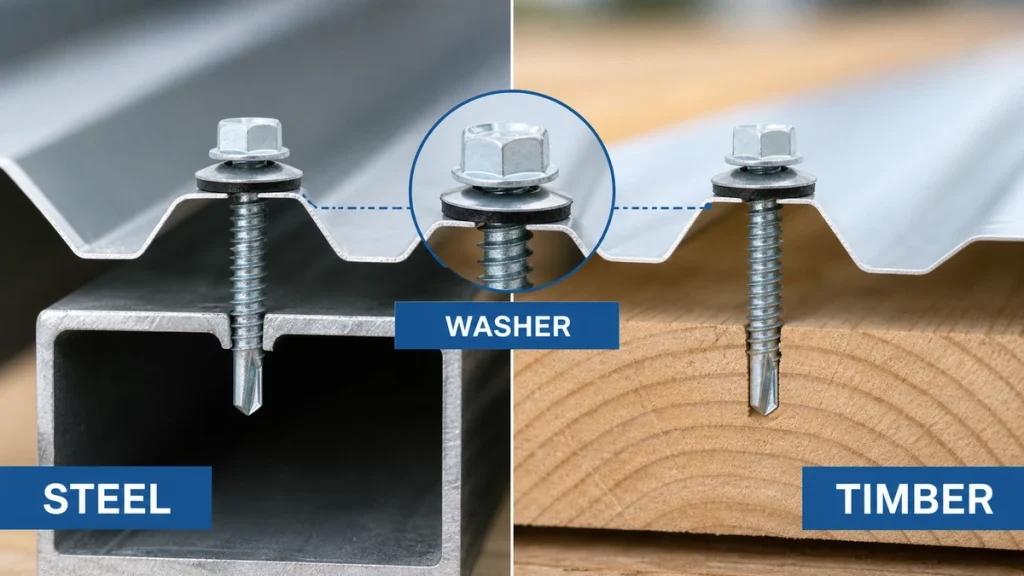
Compare control features rather than relying only on maximum torque. A clutch, adjustable depth stop or other repeatable setting can be valuable for countersunk screws and surface-finished panels. For metal-to-metal work, check that the tool can maintain stable driving with the chosen self-tapping or self-drilling screw. General guidance on screw and substrate matching is available in this comparison of self-drilling and self-tapping screws.
Consider the work pattern and operator. Cordless tools can suit mobile installation, while a corded tool may be practical at a fixed workstation; the decision also depends on access to power, working time and the need to manage batteries. Check grip, balance, trigger control, bit changes and access to tight spaces. Avoid choosing a tool that reaches the required torque only at an uncomfortable or difficult-to-repeat setting.
Before requesting a recommendation, send the screw type and drive, diameter and length, joining materials, and expected application pattern. Include whether the work is occasional installation or repeated production fastening. If the screws are self-tapping or self-drilling, state whether the assembly uses a pilot hole or requires the screw to create its own hole; the distinction affects tool control and bit selection.