SDS Max Drill Bits for Concrete Drilling | Hebei Wotu Fastener Manufacturing Co., Ltd.

SDS Max drill bits for concrete and masonry drilling

SDS Max drill bits are chosen for rotary hammers used in concrete, reinforced concrete, masonry and stone. The main decision is not only bit diameter; the shank system, drilling depth, carbide tip design and jobsite material all affect drilling speed, hole accuracy and tool life.

For buyers comparing SDS Max drill bits for anchor holes, through-holes or heavy demolition preparation, the safest starting point is to match the bit to the hammer model and the hole requirement before discussing packaging, quantity or delivery.

Related Products

Blue-White Zinc Plated Winged Countersunk Head Self-Drilling Screw

Blue-White Zinc Plated Winged Countersunk Head Self-Drilling Screw

Brand: Hengzuan Surface: blue and white zinc plated, optional color zinc plated, black oxide treatment Specifications: in stock ST3.5/ST4.2/ST4.8 mainstream specifications, rod length 16~50mm full size range, supports nonstandard length customization, suitable for drilling steel sheets 2~5mm Packaging: 25kg cartons, full pallets packed on wooden pallets, support neutral packaging, private-label customization

Read More
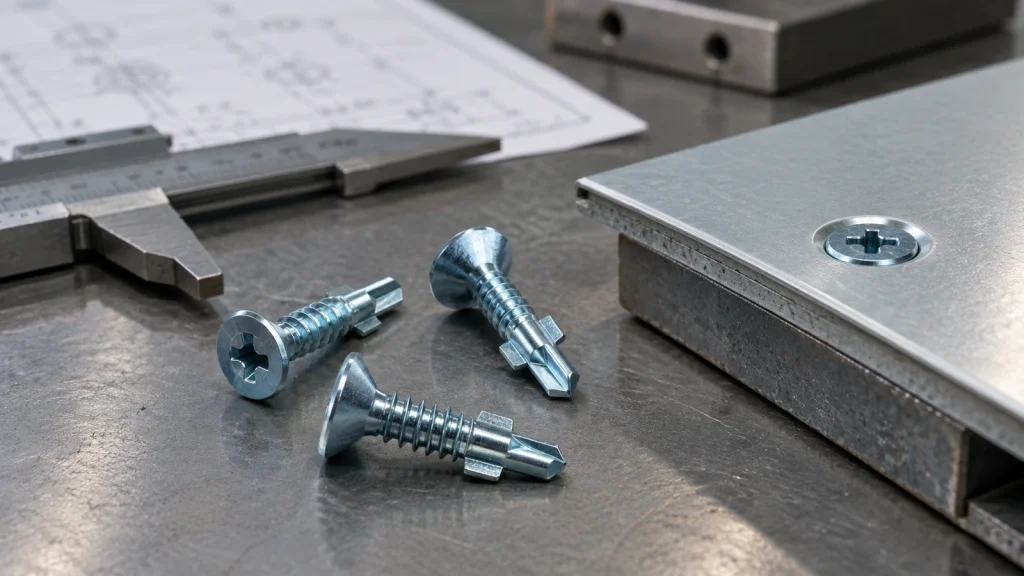
Countersunk Head Blue-White Zinc Plated Self-Drilling Screw (Chinese National Standard: Phillips Countersunk Head Self-Drilling And Self-Tapping Screw GB/T15856.2-2002)

Countersunk Head Blue-White Zinc Plated Self-Drilling Screw (Chinese National Standard: Phillips Countersunk Head Self-Drilling And Self-Tapping Screw GB/T15856.2-2002)

Brand: Hengzuan Surface: blue and white zinc plated, can be customized color zinc plated, black oxide plated Specifications: Comply with GB/T15856.2-2002 Chinese national standard, in stock ST4.2/ST4.8/ST5.5 full range of specifications, length 13mm~75mm optional, supports customized nonstandard rod lengths; drilling adaptation plate thickness 0.7~6mm Packaging: 25kg export cartons, full pallets wrapped with film, supports neutral export packaging, customer private-label customization

Read More
Chinese-standard Color Nylon Head Hex Self-Drilling Screw

Chinese-standard Color Nylon Head Hex Self-Drilling Screw

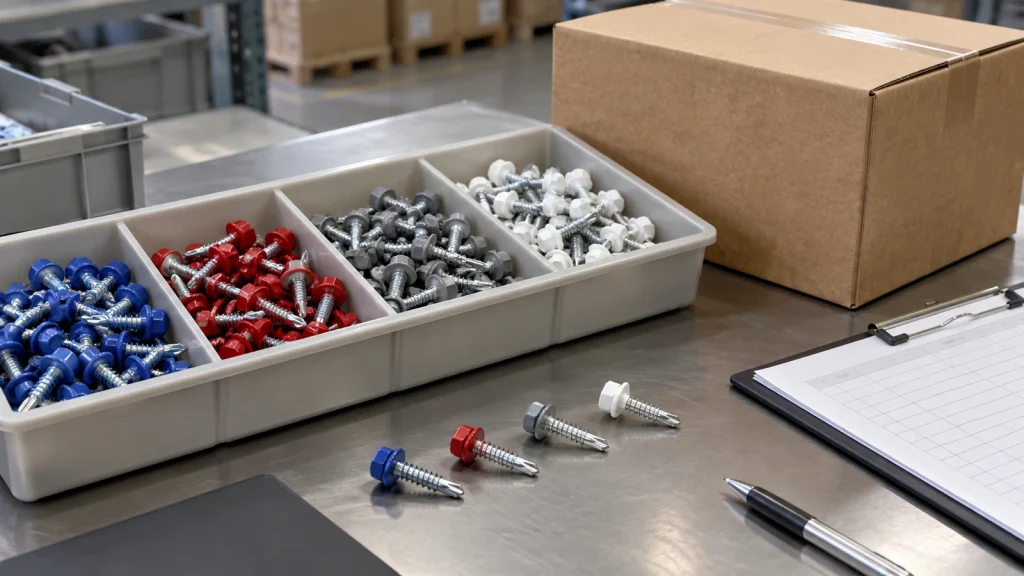
Brand: Hengzuan Surface: screw color zinc plated, head color nylon protective cap, multiple colors available Specifications: Chinese national standard ST5.5, ST6.3 mainstream caliber, rod length 25mm~125mm full range of specifications in stock, supports nonstandard length customization, suitable for drilling steel sheet thickness 2~6mm Packaging: 25kg cartons, full pallets packed on wooden pallets, support neutral packaging, private-label customization

Read More
Countersunk Head Blue Zinc Self-Drilling Screw

Countersunk Head Blue Zinc Self-Drilling Screw

Brand: Hengzuan Surface: blue and white zinc plated, can be customized color zinc plated, black oxide plated Specifications: in stock 3.5/3.9/4.2/4.8/5.5 mainstream wire diameter, rod length 13mm~75mm full size range, nonstandard length can be customized as needed Packaging: 25kg export cartons, full wooden pallets wrapped with film, supports neutral export packaging, private-label customization

Read More

Key details for selecting SDS Max drill bits

Selection notes

Useful SDS Max drill bit selection compares shank fit, bit diameter, drilling depth, carbide tip design, flute style, material application and packaging. These details decide whether a bit is suitable for light masonry work, repetitive anchor drilling or harder concrete applications.

Criterion What To Check Why It Matters Buyer Tip
SDS Max shank compatibility Confirm the bit has an SDS Max shank, not SDS Plus or a straight shank, and match it to the rotary hammer model being used. SDS Max bits fit larger rotary hammers and heavy concrete drilling. The wrong shank will not lock into the tool and can delay work on site. Ask: Can you confirm the shank type and whether it suits the hammer model we plan to use?
Hole diameter and drilling depth Compare the required anchor or sleeve size with the bit diameter, working length, and overall length. A bit that is too short may not reach the specified embedment depth, while the wrong diameter can affect anchor fit and holding performance. Send the anchor size, required hole depth, and maximum material thickness before ordering.
Cutter head design for the base material Check whether the bit is intended for concrete, reinforced concrete, brick, or masonry, and ask about the cutter geometry for rebar contact if relevant. Dense concrete and occasional rebar contact need a tougher head design than light masonry drilling. Using the wrong style can slow drilling or damage the bit. Ask: Will these SDS Max drill bits be used mainly in plain concrete, reinforced concrete, or mixed masonry?
Dust removal and flute design Look at the flute shape and usable length, especially for deep holes or repeated anchor drilling. Good dust evacuation helps keep the hole clear, reduces heat buildup, and supports more consistent hole depth. For deep holes, ask whether the flute design is suitable for continuous drilling or if staged clearing is recommended.
Quantity, packaging, and replacement planning Confirm the number of bits per size, individual or bulk packaging, and how mixed diameters are packed for site use. Large jobs often need spare bits in the main anchor sizes. Clear packaging also helps crews avoid mixing similar diameters. Provide a size breakdown instead of only a total quantity, such as how many pieces are needed for each diameter and length.

What to confirm before ordering SDS Max drill bits

SDS Max and SDS Plus are not interchangeable. SDS Max is the larger shank system used with heavier rotary hammers, while SDS Plus is common on lighter tools and smaller holes. Choosing the wrong shank type means the bit will not fit the chuck, even if the diameter appears suitable.

The other practical distinction is between standard masonry bits, carbide-tipped concrete bits and specialty bits for reinforced concrete. A low-cost bit may be acceptable for occasional masonry drilling, but frequent anchor installation in concrete usually calls for better carbide geometry and stronger flute design to clear dust and reduce binding.

Start with the hole, not the catalog name. Confirm the required diameter, working length and total length, and state whether the hole is for anchors, pipe penetrations, rebar detection work or general construction drilling. Anchor holes usually need more consistent sizing than rough through-holes.

Match the bit to the material. Brick and block are easier on the tip, while hard concrete and reinforced concrete create more heat, impact and tip wear. If the job may contact rebar, ask what bit style is suitable rather than assuming a general concrete bit will perform well.

Check compatibility with the rotary hammer. SDS Max bits fit SDS Max chucks; they do not fit SDS Plus tools without changing the tool system. Also consider whether the hammer has enough capacity for the requested diameter, because oversizing the bit for the tool can slow work and shorten bit life.

Avoid vague inquiries such as “send SDS Max bit price.” A useful request names the shank type, diameter, length, tip style if known, material to be drilled, expected quantity and packaging needs. If corrosion protection, private labeling or mixed sizes matter, state those details early so the quotation can address the actual purchase.

Criteria Importance Description Example Options
Shank and hammer compatibility Essential because the bit must match the chuck system before diameter or tip design can be considered. SDS Max bits are intended for SDS Max rotary hammers, while SDS Plus belongs to a smaller tool system. These shank formats should not be treated as interchangeable. A buyer with an SDS Plus hammer should verify tool compatibility before requesting an SDS Max bit.
Material and reinforcement exposure High because concrete, masonry and reinforced concrete impose different wear and drilling demands. Brick and block are usually less demanding than hard concrete. Possible contact with rebar may require a bit style selected for that application rather than a general masonry option. A bit for occasional blockwork may not be the preferred choice for repeated holes in reinforced concrete.
Hole diameter and depth Essential for anchor fit, through-hole clearance and tool suitability. Specify the required diameter, working length, total length and hole purpose. Anchor holes generally call for more consistent sizing than rough openings for services. An anchor installation request should identify the anchor-related hole requirement instead of stating only that a concrete bit is needed.
Tip and flute design Important when drilling frequently, clearing dust or working in harder material. Carbide geometry and flute design affect cutting action, debris removal and resistance to wear or binding. The preferred design depends on the material and drilling workload. A maintenance buyer drilling occasional masonry holes may have different priorities from a contractor drilling many concrete anchor holes.
Order configuration and identification Practical for avoiding size mix-ups and ensuring the quotation matches the intended purchase. Confirm quantity, size mix, packaging, labeling and any private-label requirements alongside the technical details. Clear identification is particularly useful when several diameters or lengths are ordered. A mixed-size order should list each diameter and length rather than describe the requirement as a general SDS Max bit assortment.

Blog Articles / Reviews

What Should an RFQ Include When Sourcing Dacromet Hex Head Self-Drilling Screw?

What Should an RFQ Include When Sourcing Dacromet Hex Head Self-Drilling Screw?

When sourcing dacromet hex head self drilling screw, a complete RFQ should define the application, screw configuration, coating requirement, dimensions, and supplier confirmation requirements. Buyers often receive different quotations because suppliers may interpret coating, size, drilling capability, or packaging scope differently. Before preparing a project inquiry, buyers can review the available fastener product categories to […]

What Is the Difference Between Self Drilling and Self Tapping Screws?

What Is the Difference Between Self Drilling and Self Tapping Screws?

Direct Answer: A self-drilling screw has a drill-shaped point that creates a hole and then forms mating threads in a suitable material. A self-tapping screw forms or cuts mating threads but may require a correctly sized pilot hole. Selection depends on substrate type and thickness, joint stack, point geometry, installation tool, finish and application testing—not […]

What RFQ Details Matter When Ordering Blue Zinc Winged Self-Drilling Screws?

What RFQ Details Matter When Ordering Blue Zinc Winged Self-Drilling Screws?

When ordering a blue zinc self drilling screw with a winged, countersunk configuration, diameter and length are not enough to define the application. The RFQ should identify the materials being connected, upper-material thickness, steel-substrate thickness, total material stack, required countersunk seating, screw diameter, total length, drill-point condition, wing geometry, surface treatment, installation method, quantity and […]

What Should Buyers Confirm When Ordering Color Nylon Head Hex Self-Drilling Screws?

What Should Buyers Confirm When Ordering Color Nylon Head Hex Self-Drilling Screws?

When ordering a chinese standard color nylon head hex self drilling screw, the RFQ should define more than a color name. Buyers should confirm the exact color reference, nylon head or cap configuration, base screw diameter and length, steel-sheet condition, metallic screw finish, visible-face requirement, color approval method, batch-consistency check and packaging or SKU separation. […]

Rust Prevention Tips for Self-Drilling Screws

Rust Prevention Tips for Self-Drilling Screws

As we all know, the simplest way to prevent self-drilling screws from rusting is to properly isolate the screws from moisture-containing and humid environments. This can be achieved through selective application of protective coatings and sealants, or by purchasing specially formulated rust-resistant or rust-proof screws. This is why many businesses and households have rust prevention […]

Frequently Asked Questions

Can these bits be used for anchor holes in concrete?

Yes, SDS Max bits are commonly selected for heavy rotary-hammer drilling in concrete, but the diameter and working length must match the anchor and the required hole depth. Consistent hole sizing is especially important for anchor installation, so confirm the intended anchor type and drilling material before ordering.

When would SDS Plus be a better choice?

SDS Plus is generally more suitable for lighter rotary hammers, smaller holes and less demanding masonry work. SDS Max is the better fit when the tool, hole size or drilling workload requires the larger shank system; the two systems are not interchangeable.

Does a larger diameter automatically make a bit better for the job?

No. A larger bit may be unsuitable for the anchor, opening or rotary hammer, and using an oversized bit can reduce drilling efficiency and increase tool and bit wear. Select the diameter from the hole requirement, then check that the hammer has the capacity for it.

What should I include when requesting a quotation?

State the SDS Max shank requirement, diameter, total and working length, material to be drilled, intended use and expected quantity. Also mention whether the order includes mixed sizes, anchor-hole work, reinforced concrete, packaging, labeling or other purchase requirements.

Is a general concrete bit suitable if the hole may encounter rebar?

Not necessarily. Reinforced concrete can place more impact and wear on the tip than brick, block or ordinary concrete, so ask which bit design is intended for occasional or repeated contact with reinforcement. Do not assume that a standard masonry bit and a reinforcement-focused option offer the same performance.

Leave Your Message

Share the SDS Max bit diameter and length you need, the material you will drill, and the expected quantity or size mix. If the bits must suit anchor installation, reinforced concrete or special packaging, include that in your inquiry.