Self-drilling and self-tapping screws are related but not interchangeable. A self-drilling screw has a drill-shaped point designed to penetrate certain metal assemblies, while a self-tapping screw forms threads in a prepared hole or a material it can penetrate without a drilling point. The distinction matters because using the wrong point can cause poor engagement, excessive installation effort or an unreliable joint.
For metal-to-metal work, confirm the combined material thickness and the screw's intended drilling range. For metal-to-wood or pre-drilled assemblies, focus more closely on thread form, hole size and available thread engagement. If the request simply says “self drive screw,” ask the supplier to confirm which of these two functions is required.
Start with the joint materials. State whether the screw will join metal to metal, metal to wood, a panel to a support, or components through a pre-drilled hole. Thin sheet, structural sections and timber present different thread-engagement and pull-through issues, so a general-purpose description is not enough.
Match the point and thread to the installation method. A self-drilling point may reduce a separate drilling step in suitable metal, while a self-tapping screw may be the better choice where the hole is already prepared or the receiving material is softer. Do not select by overall length alone; check how much of the screw will pass through the first material and how much thread will remain engaged in the second.
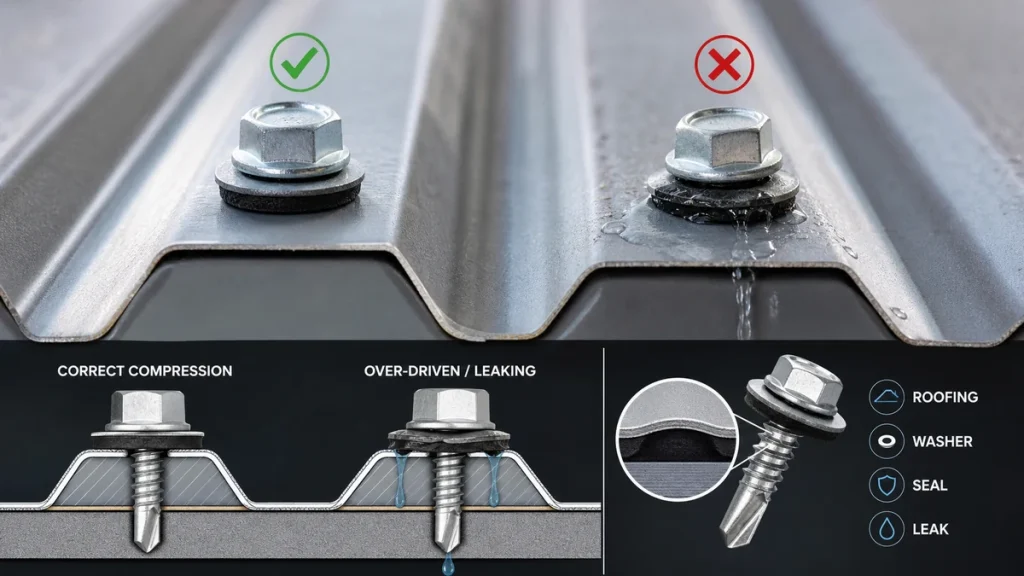
Specify the head, drive and protection for the actual assembly. Head shape affects seating and clearance, while the drive type affects tool access and installation consistency. For outdoor, humid or chemically exposed use, request the available coating or material options and confirm that they suit the mating materials. In roofing or weather-exposed panels, also define the sealing arrangement and avoid assuming that a correct-looking length alone prevents leaks.
Make the next enquiry specific. Send a drawing or photo if available, the two materials and their thicknesses, whether a pilot hole is used, the required head or washer arrangement, the environment, and the expected quantity. Ask for confirmation of the recommended screw type and installation guidance before approving a substitute. The distinction between self-drilling and self-tapping screws is also covered in this comparison of common joint applications.