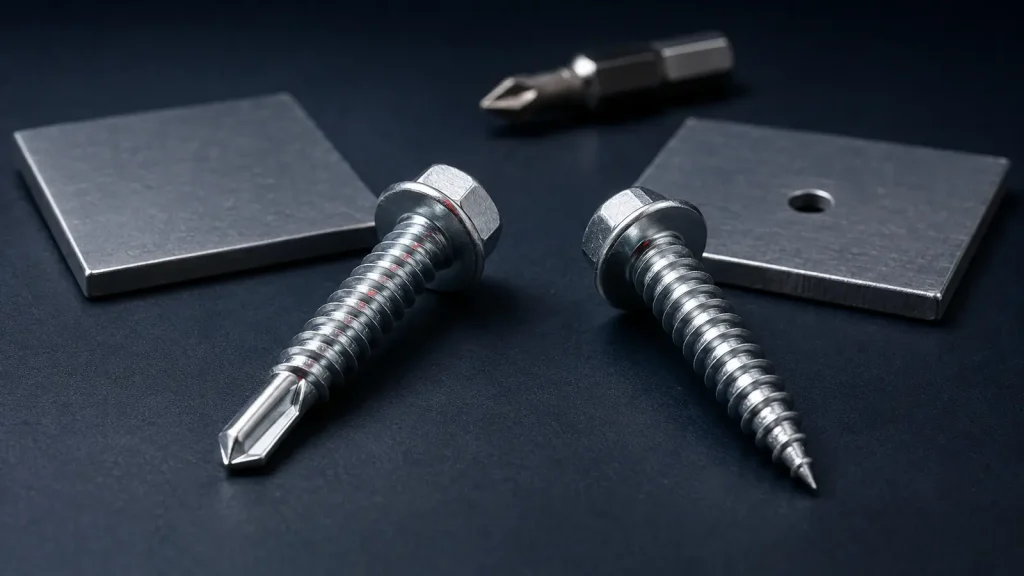
| Thread-forming style for the base material |
Confirm whether the screw is intended to form threads in sheet metal, plastic, or another pre-drilled material, not to drill its own hole. |
Self tapping machine screws rely on the pilot hole and thread design to create a usable mating thread. The wrong tapping style can strip the hole, crack plastic, or fail to seat fully. |
What material and thickness will the screw enter, and is the hole already drilled or punched? |
| Pilot hole size and tolerance |
Match the proposed screw size to the pilot hole diameter used in the assembly drawing or production process. |
A hole that is too small raises driving torque and can break screws or distort the part. A hole that is too large reduces thread engagement and pull-out resistance. |
Can you share the pilot hole diameter, tolerance, and whether the hole is drilled, punched, molded, or laser cut? |
| Head style and drive recess |
Compare pan, countersunk, truss, or other head forms with the required bearing area, flushness, and driver access. |
The head controls how the load spreads on the surface and whether the screw sits proud or flush. The drive type affects assembly speed and the risk of cam-out during installation. |
Does the joint need a flush surface, a wide bearing head, or access for automated driving tools? |
| Length, engagement, and point clearance |
Verify that the screw length gives enough thread engagement without bottoming out or protruding into nearby components. |
Too little engagement weakens the joint. Too much length can damage hidden parts, interfere with movement, or create a safety issue on the back side of the assembly. |
What is the total stack thickness, and is there a clearance limit behind the tapped material? |
| Material and surface finish compatibility |
Select screw material and coating based on the environment, the mating material, and any appearance or corrosion expectations. |
Indoor electrical housings, outdoor brackets, plastic assemblies, and dissimilar-metal joints place different demands on corrosion resistance, hardness, and surface finish. |
Will the assembled product face moisture, chemicals, outdoor exposure, or contact with aluminum, stainless steel, or coated sheet metal? |