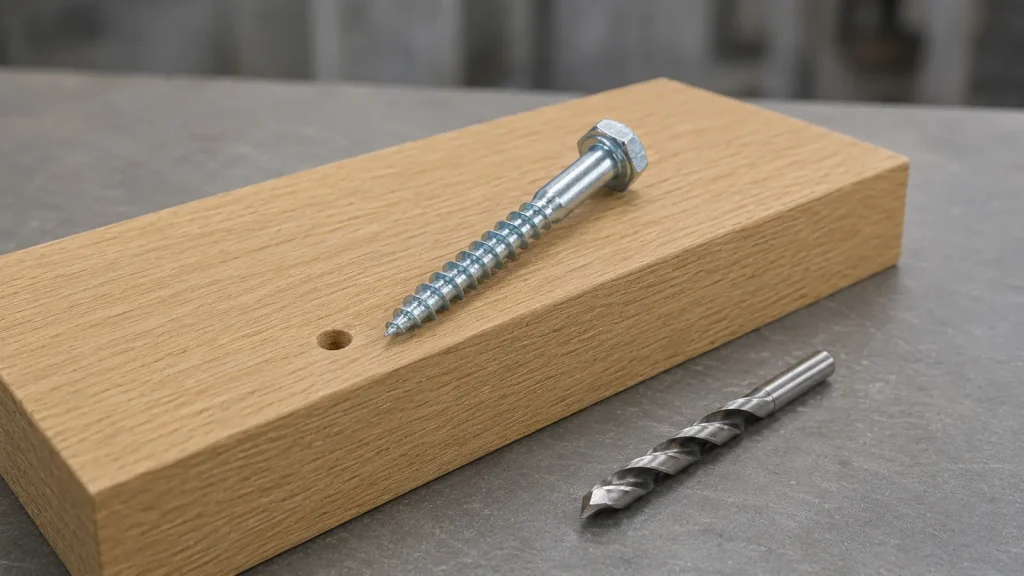
| Head style and bearing surface |
Confirm whether the assembly needs a carriage-style square shoulder, a hex head, or another wood-bolt head pattern. |
The head and shoulder determine how the fastener resists turning and how it seats against timber, plates, or brackets. |
Ask which head and shoulder dimensions match your tool access and the joint detail. |
| Diameter, length, and usable thread |
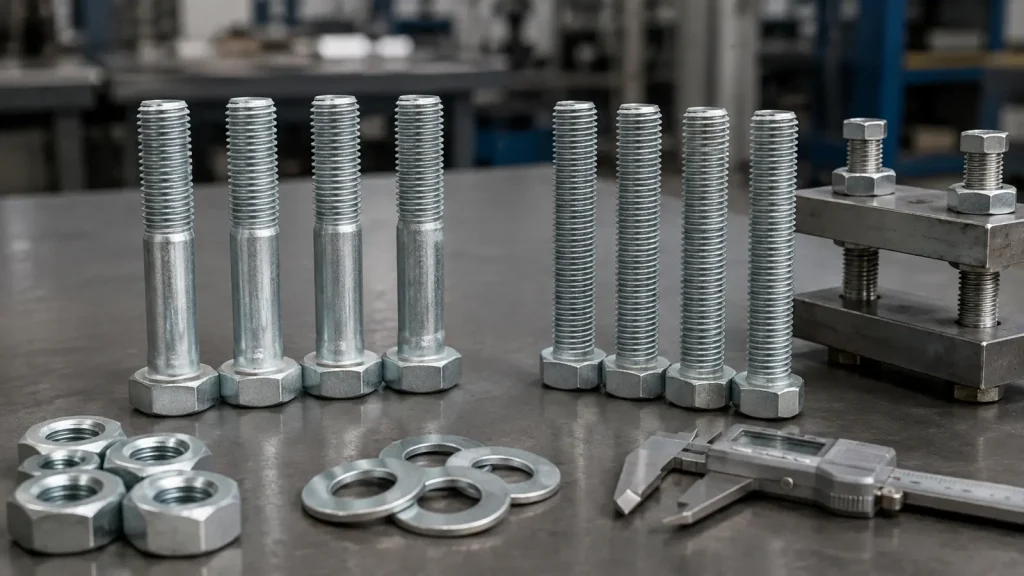
Compare the bolt diameter, overall length, unthreaded shank, and threaded engagement with the timber thickness and joint stack-up. |
Too little thread reduces engagement; too much length can interfere with the opposite face, washer, or nut. |
Provide the wood thickness, attached hardware thickness, washer space, and required nut engagement for confirmation. |
| Thread form for the wood joint |
Verify whether the proposed wood bolt is intended for a pre-drilled timber joint and whether its thread length suits the clamped members. |
A bolt normally passes through prepared holes and clamps the joint with a nut; it is not interchangeable with a wood screw that cuts its own thread. |
Ask for a simple joint sketch showing which members are drilled and where the nut will sit. |
| Coating or material for the exposure |
Match the finish or material to indoor, sheltered, outdoor, damp, or treated-timber use, then confirm compatibility with the surrounding hardware. |
Moisture and chemical contact can accelerate corrosion, affecting service life and the ability to remove the nut later. |
State the exposure conditions and timber treatment, and ask which finish or material is recommended for that environment. |
| Nut, washer, and hole fit |
Check the matching nut thread, washer outside diameter, washer thickness, and clearance-hole size as one assembly. |
A washer spreads clamping force on softer wood, while incorrect threads or a poorly sized hole can prevent proper tightening or damage the timber. |
Ask for the complete bolt, nut, and washer combination and the recommended clearance-hole guidance for your timber. |