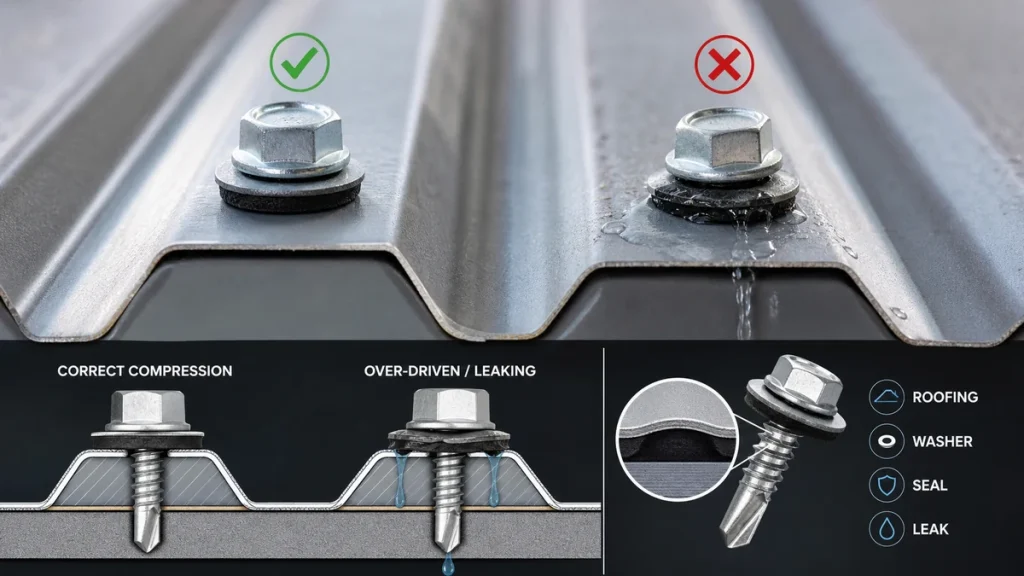
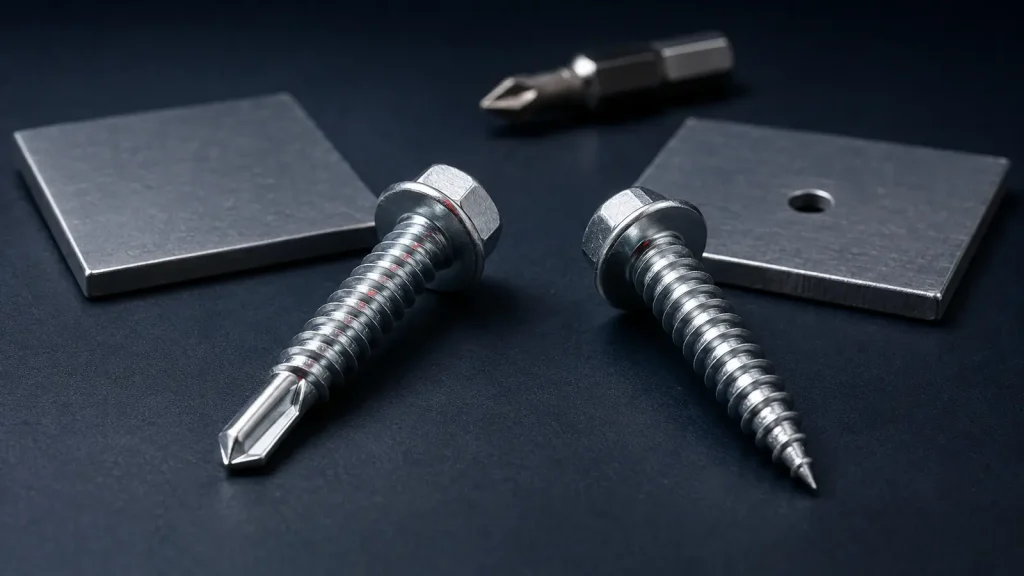
A 2-inch self-tapping screw forms its own thread in a prepared hole, while a self-drilling screw uses a drilling point to penetrate suitable sheet metal before engaging the material. A conventional wood or fiberboard screw is generally chosen for timber-based materials, where its thread and pointed tip are matched to the substrate.
This distinction matters because using a self-tapping screw where a drilling point is needed can slow installation or damage the joint, while using a self-drilling screw in a pre-drilled or wood assembly may provide the wrong thread engagement. Specify the joint materials and whether a pilot hole already exists before comparing screw types.
Match the screw to the joint. For wood, furniture board or fiberboard, review the thread profile, point and head design together. For metal-to-metal work, check whether the application calls for a self-tapping or self-drilling point and whether the screw must pass through one or more layers before engaging the base material.
Check the usable thread length. The stated 2-inch length may be unsuitable if the head, washer or unthreaded section reduces the portion entering the workpiece. Avoid choosing by overall length alone; confirm the material thickness, desired penetration and clearance behind the assembly.
Select the head and drive for the installation. Countersunk heads can sit flush in suitable materials, while pan or washer-style heads may provide a different bearing surface. The drive recess should match the intended tool and torque control. A mismatch can cause cam-out, surface damage or inconsistent seating.
Confirm durability and supply details before ordering. Ask Hebei Wotu Fastener Manufacturing Co., Ltd. which materials, finishes, diameters, thread forms and head configurations are available for the intended use. Send the joined-material description, required quantity and a drawing or sample if the screw must fit an existing assembly.