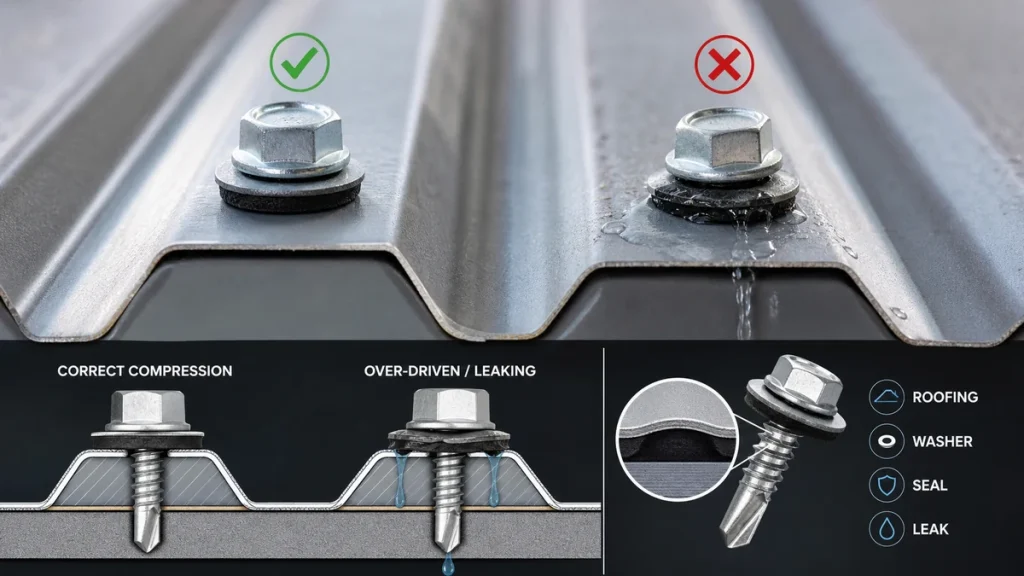
A 3/4 inch wood screw, self-tapping screw, self-drilling screw, and fiberboard screw can all be the same nominal length but behave differently in use. A wood or fiberboard screw is selected for grip in timber, MDF, particle board, or similar materials, while a self-tapping screw forms or cuts threads in a prepared hole. A self-drilling screw adds a drill point for some metal applications, reducing the need for a separate drilling step.
This distinction matters because the wrong point or thread can split board, strip thin metal, leave weak thread engagement, or create a head that does not seat correctly. For a 3/4 inch screw, there is less room to compensate for a poor match, so the material stack and pilot-hole plan should be defined before ordering.
Start with the material stack. State the thickness and material of each layer being fastened. A 3/4 inch screw may be suitable for a thin panel into a frame, a hinge into board, or light sheet attachment, but it may be too short if the screw must pass through a washer, bracket, gasket, or surface coating before reaching the base material.
Choose the head for the finished assembly. Countersunk heads sit flush in furniture, cabinetry, and hardware where the surface must remain smooth. Pan, wafer, or hex heads leave a bearing surface above the part and can be better for brackets, clips, or thin sheet. The head diameter and recess type affect both appearance and installation torque.
Match the thread to the base material. Coarser threads usually suit wood-based panels because they grip softer material better. Finer threads are often used where the base material is harder or thinner. If the screw is self-tapping, confirm the intended pilot hole and whether the thread-forming action is right for the material instead of assuming any 3/4 inch screw will cut a reliable thread.
Avoid treating length as the full specification. An inquiry should include gauge or diameter, head style, drive type, point type, material, surface finish, and packed quantity. If the screw is used outdoors, in damp areas, or with treated timber or metal, ask which coating or material grade is appropriate for the exposure conditions.