Allen Hexagon Wrench Selection | Hebei Wotu Fastener Manufacturing Co., Ltd.

Allen Hexagon Wrench Selection for Hex-Socket Fasteners

An Allen hexagon wrench is a small tool, but it can decide whether an assembly runs smoothly or ends with rounded socket heads and rework. The right choice depends on the socket size, access angle, fastener material, tightening method and how often the tool will be used.

For buyers sourcing tools alongside socket screws, set screws or other hex-socket fasteners, the main decision is not only metric versus inch size. Handle style, tip shape, steel quality and packaging all affect fit, torque control and operator speed.

Related Products

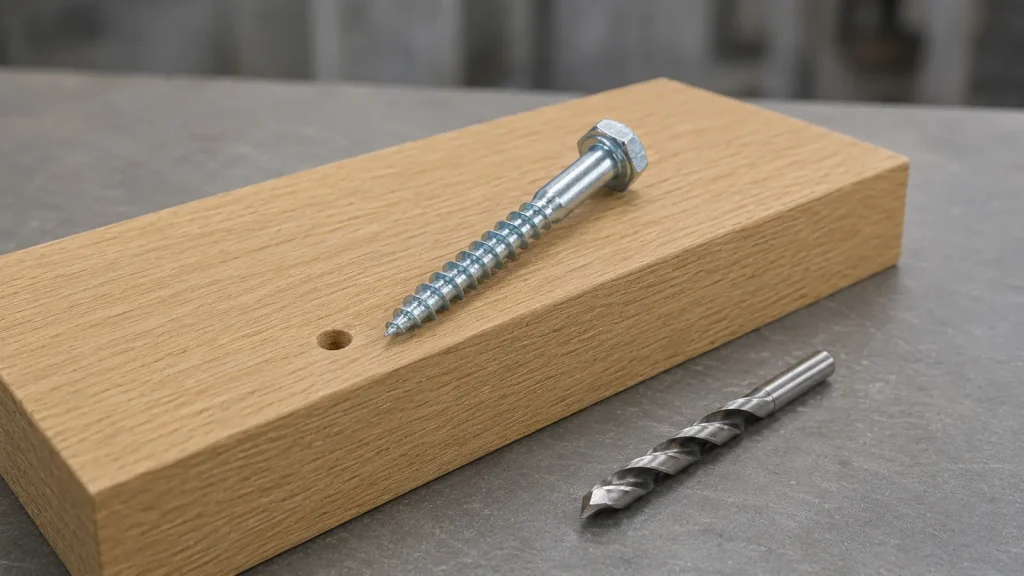
Hexagonal Wood Screws

Hexagonal Wood Screws

Brand: Wotu Surface: blue and white zinc plated Specifications: Chinese national standard 6#/8#/10#/12#/16#/20#, rod length 35mm~250mm full range of specifications in stock, supports nonstandard length customization Packaging: 25kg cartons, full pallets packed on wooden pallets, support neutral packaging, private-label customization

Read More

Hex nut (Chinese national standard GB52-1976)

Hex nut (Chinese national standard GB52-1976)

Brand: Wotu Surface: 304 stainless steel Specifications: in stock M6~M24 full standard metric specifications, supports nonstandard pitch, thickening/customized Matching: Can be matched with bolts of corresponding specifications, flat washer, spring washer complete set of supporting shipment Packaging: 25kg cartons, whole wooden pallets

Read More
Hex nut DIN934-1987 (A/B accuracy classification)

Hex nut DIN934-1987 (A/B accuracy classification)

Brand: Wotu Standard basis: German standard DIN934-1987, metric coarse thread/fine thread universal thread Surface: 304 stainless steel Specifications: M6~M24 full range of specifications Supporting equipment: same specification bolts, flat washer, spring washer complete set of shipment Packaging: 25kg standard carton, whole wooden pallet packaging

Read More
Hex thin nut

Hex thin nut

Brand: Wotu Surface: zinc plated Specifications: in stock M8~M64 full standard specifications, covering precision, machinery, and steel structure full size range, supporting nonstandard tooth pitch and customized thickness Matching: Can be matched with bolts of corresponding specifications, flat washer, spring washer complete set of shipment Packing: packed in 25kg cartons and packed on wooden pallets.

Read More
Hex flange nut (Chinese national standard GB/T6177.1-2000)

Hex flange nut (Chinese national standard GB/T6177.1-2000)

Brand: Wotu Surface: zinc plated Specifications: in stockM6/M8/M10/M12/M14/M16/M20 Chinese national standardfull range of specifications, support nonstandard thickness, tooth pitch customized Matching: can be matched with bolts of the same specification, flat washer, spring washer complete set of shipment Packaging: 25kg cartons, whole wooden pallets

Read More
Hot-Dip Galvanized Hex Nut (DIN934 Thickened/GB Thin Nut In Multiple Specifications)

Hot-Dip Galvanized Hex Nut (DIN934 Thickened/GB Thin Nut In Multiple Specifications)

Brand: Wotu Surface: high temperature hot dip zinc plated surface treatment Specifications: Comply with DIN934, GB/T6170, GB/T6172.1 Chinese national standard German standard, in stock M6-M64 full range of specifications, length is nonstandard customized as required Packaging: 25kg woven bag/export carton, full-container wooden pallet wrapped with film, supports neutral packaging, private-label customization

Read More

Allen wrench styles for hex-socket fasteners

Selection points

Compare Allen hexagon wrench options by size system, end style, arm length, handle type, finish and packing format. The best selection is the one that fits the socket correctly, reaches the screw without forcing the operator, and holds up to the expected tightening frequency.

Criterion What To Check Why It Matters Buyer Tip
Key size and screw fit Match the wrench size to the socket size of the hex socket screws, set screws, or cap screws used in the assembly. A loose fit rounds the socket; an oversized key will not seat fully and can damage the fastener before torque is applied. Which hex socket sizes are used in your product drawing or maintenance kit, and do you need single keys or a size set?
Arm style and access space Compare L-key, T-handle, folding, and ball-end styles against the clearance around the fastener head. Short arms fit tight spaces, long arms give more leverage, and ball ends help angled access but are not ideal for final high-torque tightening. Will the wrench be used mainly for assembly torque, field maintenance, or reaching recessed screws at an angle?
Material and hardness Ask what steel grade, heat treatment, and hardness control are used, and confirm they suit the fasteners being driven. A wrench that is too soft twists or wears quickly; one that is too brittle may crack under load. Can the supplier state the material and heat-treatment standard for the Allen hexagon wrench you plan to buy?
Tip accuracy and edge condition Inspect whether the hex ends are cleanly formed, square, and free from burrs or heavy rounding. Accurate tips make fuller contact with the socket walls, reducing cam-out and premature wear on both tool and screw. Can you provide a sample or drawing tolerance for the hex tip dimensions before placing a bulk order?
Surface finish and working environment Choose a finish suitable for storage and use conditions, such as dry indoor assembly, toolbox storage, or occasional outdoor maintenance. Finish affects corrosion resistance, grip feel, and how well the tool remains readable and usable after repeated handling. Will the wrench be stored in a controlled workshop, shipped in kits, or exposed to moisture during service?

Key choices before ordering hex keys or wrench sets

The practical difference between a standard L-key, a ball-end wrench and a T-handle wrench is access and control. A straight end gives the best contact inside the hex socket and is the safer choice for final tightening. A ball end reaches screws at an angle, which helps in tight assemblies, but it gives less contact area and should not be used for heavy torque.

A T-handle is faster and more comfortable for repeated assembly, while a folding set or loose L-key set is easier to store with maintenance kits. If the wrench will be used on production benches, ask about consistent sizing, surface finish and whether the set matches the fasteners already specified for the product.

Start with the fastener standard and socket size. Metric Allen wrenches and inch-size hex keys are not interchangeable, even when they look close. A near-fit tool can damage the recess before the operator feels the problem, especially on small screws or plated fasteners.

Choose the end style based on the work area. Short-arm L-keys suit general maintenance and compact kits. Long-arm keys give better reach. Ball-end keys save time in obstructed positions, but the straight end should still be available for final tightening. For repeated assembly, a T-handle or driver-bit format may reduce hand fatigue.

Think about wear, not just the first fit. Poorly finished tips, soft steel or inconsistent sizes can round over quickly and start damaging good fasteners. For production use, confirm the material, heat treatment, surface coating, size marking and packing method rather than buying only by set count.

Avoid ordering a wrench set without checking the actual screws in the assembly. Send the fastener type, socket size range, work access conditions and expected use pattern. If tools are supplied together with screws, confirm whether the wrench is for installation, field service or a one-time kit.

Criteria Importance Description Example Options
Size system Critical for fit Metric and inch hex keys are not interchangeable just because they appear similar. A near-fit tool may slip and damage the socket recess. A maintenance kit for metric socket screws should include metric hex keys rather than the closest inch-size substitutes.
End style Important for access and torque control Straight ends give stronger contact for final tightening. Ball ends allow angled entry but should be used with care where high torque is needed. A ball-end key can reach a recessed screw behind a bracket, while the straight end is better for the final turn.
Handle and body format Important for working speed and comfort Loose L-keys are compact and simple. T-handles and driver bits can suit repeated assembly where operators need faster handling or better grip. A service pack may use a single L-key, while a production bench may prefer T-handles or bits matched to a tool holder.
Tool durability Important for repeated use Tip accuracy, steel quality, heat treatment and finish affect how long the wrench holds its shape and how well it protects the fastener socket. For occasional one-time assembly, basic packing may be acceptable; for daily use, buyers should confirm wear-related details before ordering.
Packing and identification Useful for kits, service parts and inventory control Clear size marking and suitable packing reduce mix-ups, especially when several similar hex sizes are used in the same assembly area. A hardware set shipped with screws may need one clearly identified wrench, while a maintenance department may prefer a full labeled set.

Blog Articles / Reviews

Which Hexagonal Wood Screw Specifications Should Buyers Freeze Before Production?

Which Hexagonal Wood Screw Specifications Should Buyers Freeze Before Production?

A hexagonal wood screw order should not be released from a gauge number and length alone. Before production, the buyer and supplier need one approved specification that fixes the screw diameter, length basis, thread geometry, point, hex-head dimensions, material, finish, installation method, substrate and acceptance evidence. The pilot hole belongs in the application specification as […]

The Concept of Hexagonal Self-Drilling Screws and High-Pressure Standard Parts

The Concept of Hexagonal Self-Drilling Screws and High-Pressure Standard Parts

Hexagonal self-drilling screws, manufactured by Hebei Wotu Fastener Manufacturing Co., Ltd., operate under a modern enterprise system and strictly manage according to the ISO9001:2015 quality system. The company uses “Wotu” as its registered trademark. The term “standard parts” in China is a shorthand for “standard fasteners,” a narrow definition. High- and medium-pressure standard parts refer […]

A manufacturer of hexagonal self-drilling screws discusses their performance standards.

A manufacturer of hexagonal self-drilling screws discusses their performance standards.

Hebei Wotu Fastener Manufacturing Co., Ltd., founded in the 1990s, is located in Yongnian District, Handan City, Hebei Province, known as the “Hometown of Fasteners.” 1. Core Hardness: Standard: HRC32-40. Our products are measured at HRC31.7-39.0. 2. Surface Hardness: Standard: HV600-700. Our products are measured at approximately HV620. 3. Hardened Layer: 4#-6#: 0.05-0.18mm; 8#-12#: 0.10-0.23mm; […]

What are the standard dimensions of a universal hexagonal self-drilling screw?

What are the standard dimensions of a universal hexagonal self-drilling screw?

Self-drilling screws, also known as “drill screws,” “self-drilling screws,” or “dovetail screws,” are classified into different types based on their application, material, and shape. A standard 6mm self-drilling screw has a flatness of 9.38mm or 9.8mm. A hexagonal self-drilling screw with dimensions 4.5*14*25 means the screw size is 4.5mm, the screw length is 25mm, and […]

Frequently Asked Questions

Can one hex key be used for both metric and inch socket screws?

It is not a good idea. Metric and inch sizes can look close, but a slightly loose wrench can round the socket, especially on small screws or fasteners with a plated finish. Match the wrench size system to the fastener specification before ordering sets or packed kits.

Is a ball-end wrench better than a standard straight-end wrench?

A ball end is useful when the screw is partly obstructed and the wrench must enter at an angle. The trade-off is reduced contact inside the socket, so it is not the best choice for final tightening or high-torque work. Many users keep both: ball end for access, straight end for firm tightening.

What style is suitable for production assembly work?

For repeated bench assembly, operators often work faster and with less hand fatigue using a T-handle, long-arm key or driver-bit format rather than a small loose L-key. The right choice depends on screw location, required tightening control and how often the tool is used during each shift.

What is a common mistake when buying wrench sets for packaged hardware?

A common mistake is choosing a set count or low-cost included wrench without checking the actual socket size and access space in the product. If the wrench is packed with furniture, equipment panels or service parts, confirm that the supplied size fits the screw cleanly and gives enough leverage for normal installation.

What details should be confirmed before placing an order?

Confirm metric or inch sizing, size range, wrench style, end type, arm length, handle format and packing method. For regular use, also ask about material, heat treatment, surface finish and size marking, because these points affect wear and operator accuracy.

Leave Your Message

Share the socket size system, required wrench style and intended use, such as assembly line work, maintenance kits or packaged hardware sets. Include any packing or labeling requirements if the wrench will ship with fasteners.