Alum Key Fit | Hebei Wotu Fastener Manufacturing Co., Ltd.

Alum Key and Hex Fastener Fit

An alum key is often requested when the buyer means an Allen key or hex key for driving socket-head screws, set screws and other internal-hex fasteners. The important decision is not the name on the enquiry, but the fit between the tool, the screw recess and the working conditions.

For a fastener order, the key detail is the drive type and size required by the screw. A poorly matched key rounds the recess, slows assembly and can damage coated or stainless fasteners before the joint is even tightened.

Related Products

7-letter, 9-letter L-shaped anchor bolt (Chinese national standard GB/T799-1988 embedded anchor screw)

7-letter, 9-letter L-shaped anchor bolt (Chinese national standard GB/T799-1988 embedded anchor screw)

Brand: Wotu Surface: Natural black oxide treatment, customized hot-dip galvanized, zinc plated as required Specifications: Follow Chinese national standard GB/T799-1988, in stock M12-M48, total length 120mm~1500mm, nonstandard customized diameter, bending length, total screw length available Matching: Nuts, flat washers and spring washers of the same specification can be supplied in complete sets. Packaging: Bundling and packaging, using wooden pallets and film-wrapped export packaging in large quantities

Read More
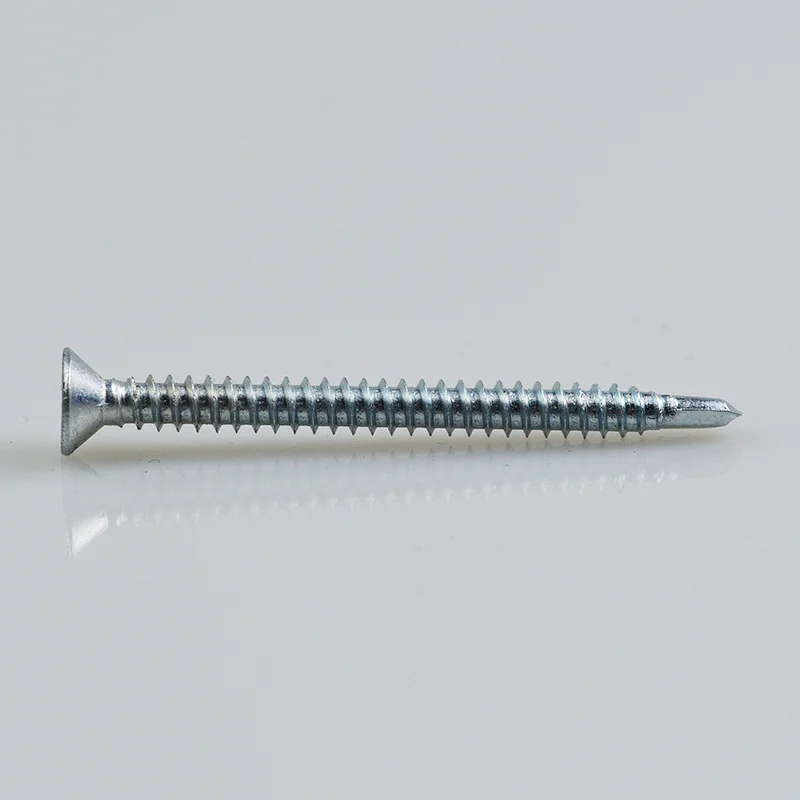
Countersunk Head Blue-White Zinc Plated Self-Drilling Screw (Chinese National Standard: Phillips Countersunk Head Self-Drilling And Self-Tapping Screw GB/T15856.2-2002)

Countersunk Head Blue-White Zinc Plated Self-Drilling Screw (Chinese National Standard: Phillips Countersunk Head Self-Drilling And Self-Tapping Screw GB/T15856.2-2002)

Brand: Hengzuan Surface: blue and white zinc plated, can be customized color zinc plated, black oxide plated Specifications: Comply with GB/T15856.2-2002 Chinese national standard, in stock ST4.2/ST4.8/ST5.5 full range of specifications, length 13mm~75mm optional, supports customized nonstandard rod lengths; drilling adaptation plate thickness 0.7~6mm Packaging: 25kg export cartons, full pallets wrapped with film, supports neutral export packaging, customer private-label customization

Read More
Countersunk Head Blue Zinc Self-Drilling Screw

Countersunk Head Blue Zinc Self-Drilling Screw

Brand: Hengzuan Surface: blue and white zinc plated, can be customized color zinc plated, black oxide plated Specifications: in stock 3.5/3.9/4.2/4.8/5.5 mainstream wire diameter, rod length 13mm~75mm full size range, nonstandard length can be customized as needed Packaging: 25kg export cartons, full wooden pallets wrapped with film, supports neutral export packaging, private-label customization

Read More

Match the Hex Key to the Socket Fastener

Key and drive selection

Selection should focus on the fastener drive, size standard, access space, expected tightening method and whether the tool is needed for installation, maintenance or packaging with the screws. These details decide whether a straight hex key, ball-end key, T-handle tool or another driver style is appropriate.

Criterion What To Check Why It Matters Buyer Tip
Aluminum alloy and temper Confirm the alloy designation and temper used for the key, if specified. The material affects weight, machinability, strength, and suitability for the intended application. Which alloy and temper do you recommend for my load, environment, and finishing process?
Key profile and size compatibility Compare the drawing or sample against the mating keyway, shaft, lock, or assembly. A small profile or dimension mismatch can prevent insertion or create excessive play. Can you review my drawing or sample and confirm the matching profile and dimensions?
Critical dimensions and tolerance Ask for the dimensions that control fit, including width, height, length, hole position, or groove geometry. Controlled dimensions determine whether the key transfers motion or remains securely seated. Which dimensions are inspected, and can you provide the applicable tolerance range?
Surface finish and operating environment Confirm the requested finish and check whether the key will face moisture, chemicals, abrasion, or outdoor exposure. The surface condition can affect corrosion resistance, appearance, insertion, and service life. What finish is available for my environment, and is a sample approval possible before production?

What to Confirm Before Ordering Keys or Compatible Fasteners

The main distinction is between the key itself and the fastener it drives. A hex key is the tool; the screw specification determines the recess size, depth and access space. If the enquiry only says “alum key,” it is worth confirming whether the buyer needs the tool, the compatible socket screw, or both supplied together.

Material and finish also matter. A harder tool usually resists wear better, but the fastener recess still needs to be accurately formed. For assembly work, ball-end keys improve access at an angle, while straight-end keys give better engagement when higher torque is needed.

Start with the fastener drawing or sample. Confirm the screw type, thread size, head style and internal drive form before choosing a key. Two screws that look similar from the outside may need different drive sizes, especially across metric and inch standards.

Think about access to the joint. A short L-key suits compact work, a long arm gives more leverage, and a T-handle can be easier for repeated assembly. A ball end helps reach awkward screws, but it should not be the first choice for high-torque final tightening because contact area is reduced.

A common mistake is treating a loose-fitting key as “close enough.” That can strip the socket, especially on small screws or coated fasteners. If the screw will be assembled many times, ask about recess consistency and tool fit rather than focusing only on the screw material.

For an enquiry to Hebei Wotu Fastener Manufacturing Co., Ltd., send the fastener standard or drawing, the required drive size if known, and the application conditions. If you need the key supplied with the fasteners, ask directly whether matching tools are available or whether the company only supplies the fasteners.


Criteria Importance Description Example Options
Tool and fastener compatibility Essential for preventing rounded recesses and poor torque transfer. Match the key profile and exact size to the internal drive in the screw. Confirm the metric or inch standard instead of relying on visual similarity. A socket screw specified with a particular internal-hex size should be paired with a key of the same drive standard and size.
Straight-end versus ball-end design Important when access angle and tightening force differ across the application. Straight ends provide better contact for direct, higher-torque tightening. Ball ends improve access at an angle but reduce contact area and are less suitable for final tightening under high load. Use a ball end to start a recessed screw at an angle, then use a straight end for final tightening when access permits.
Key length and handle style Important for reach, clearance, leverage and repeated assembly. Short L-keys suit restricted spaces, while long arms provide reach and leverage. T-handles may be more comfortable for repeated work but require sufficient clearance around the fastener. A short key may fit inside a compact housing, whereas a long-arm or T-handle design may suit an exposed assembly bench.
Tool-only versus matching fastener supply Clarifying this avoids an incomplete order or an unsuitable accessory. The phrase “alum key” may describe the driver rather than the screw. State whether the order requires keys, compatible socket fasteners, or both as a matched requirement. An enquiry can specify compatible internal-hex screws plus the corresponding installation keys, or the keys alone for existing fasteners.
Recess consistency and repeat use More important for production, maintenance cycles and assemblies opened frequently. Repeated fitting increases the effect of poor tool fit, inconsistent recesses and excessive wear. Ask how the fastener drive is controlled and select a tool that maintains firm engagement. A maintenance application with frequent removal needs a reliable-fitting key rather than a loose substitute chosen only because it appears close in size.

Blog Articles / Reviews

Six key points to note when using and maintaining self-drilling screws

Six key points to note when using and maintaining self-drilling screws

1. Rinsing the self-drilling screw is crucial and requires meticulous attention, as residue may remain on its surface. This rinsing step should be performed after cleaning with a silicate cleaning agent. 2. Proper stacking is essential during tempering of the self-drilling screw; otherwise, slight oxidation may occur in the quenching oil. 3. The appearance of […]

Frequently Asked Questions

Is an alum key the same as an Allen key or hex key?

In many enquiries, “alum key” refers to an Allen key or hex key used with internal-hex fasteners. Confirm the intended term with the buyer or supplier, because the request may mean the hand tool, the compatible screw, or a set containing both.

Which style is better for screws in a recessed or awkward location?

A ball-end key can reach an internal-hex recess at an angle and is useful where straight access is difficult. A straight-end key gives fuller engagement and is the safer choice for higher-torque tightening when the tool can be aligned with the screw.

Can a metric key be used with an inch-size socket screw?

A metric key and an inch-size key are not interchangeable just because they look similar. A near-fitting tool can damage the recess, so confirm the fastener standard and the exact drive size before assembly.

What information should be included in a purchasing enquiry?

Provide the screw drawing, sample, or full fastener description, along with the drive size and size standard if known. Also state whether you need only compatible fasteners or matching keys, and describe access limitations or repeated assembly requirements.

Is a longer key always the better choice?

No. A longer arm can provide more leverage and reach, while a short key is easier to use in confined spaces. Choose based on access and the required tightening method rather than length alone; excessive leverage can damage a small socket or fastener.

Leave Your Message

Please include the screw type or drawing, the required hex drive size if known, and whether you need only the compatible fasteners or matching keys supplied with them.