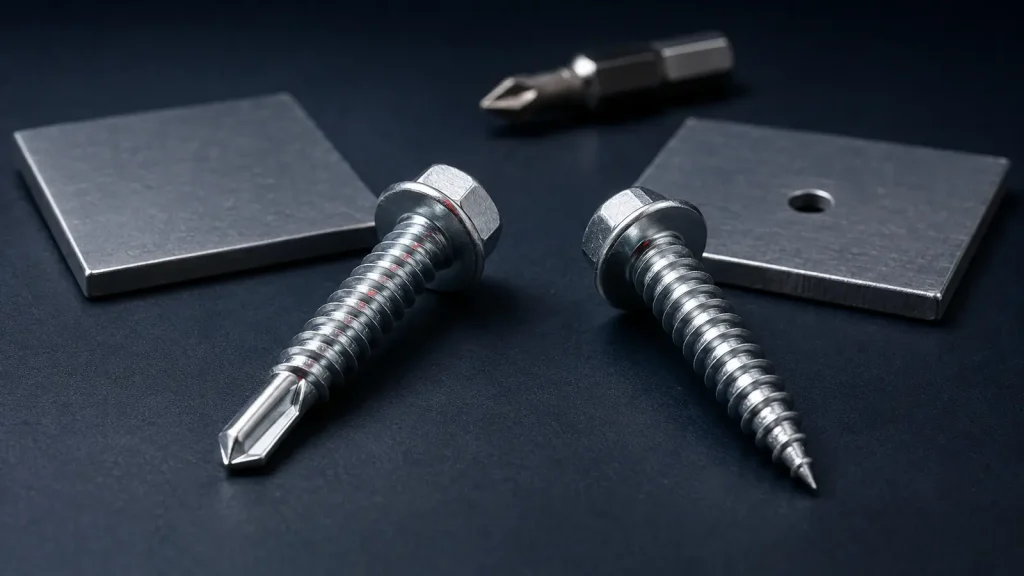
The main distinction is between a compact electric screwdriver and a heavier drill-driver. A compact rechargeable screwdriver suits light assembly, appliance work, hinges, covers, clips, and small fasteners where control matters. A drill-driver handles larger screws and drilling tasks, but it can be less comfortable for repetitive light fastening.
For fastening quality, look at clutch control, bit fit, handle shape, speed control, and battery convenience. A tool that is slightly slower but easier to control often produces better results than one that drives aggressively and cam-outs the screw head.
Start with the fastener and material. Small machine screws, self-tapping screws, wood screws, and thread-forming screws behave differently. If the application uses finished surfaces, soft materials, or plated fasteners, adjustable torque control becomes important because over-driving can damage both the screw and the part.
Think about access and operator movement. A straight-body screwdriver can reach narrow spaces, while a pistol grip usually feels better for repeated vertical driving. Built-in lights, forward/reverse placement, bit locking, and one-handed operation are not extras if the work involves cabinets, machinery covers, electrical housings, or confined assemblies.
Battery format changes daily use. A built-in rechargeable battery keeps the tool compact and simple, but a removable battery can reduce downtime if the tool is used continuously. Check charging method, replacement battery availability, and whether the tool can maintain consistent output as the charge drops.
Avoid matching a screwdriver to the screw alone and ignoring the joint. Pilot holes, thread engagement, washer use, screw head style, and bit quality all affect the result. For a practical next step, share the screw type, approximate application material, and whether the tool will be used for occasional maintenance or repeated assembly work.