The practical difference between color coated roofing sheets is usually found in the base metal, coating system, paint finish, and profile shape. A sheet for a dry inland warehouse may not need the same coating performance as a roof exposed to coastal air, chemical fumes, livestock buildings, or frequent condensation. Choosing only by color or lowest sheet price can lead to early fading, red rust at cut edges, or leaks at laps and screw points.
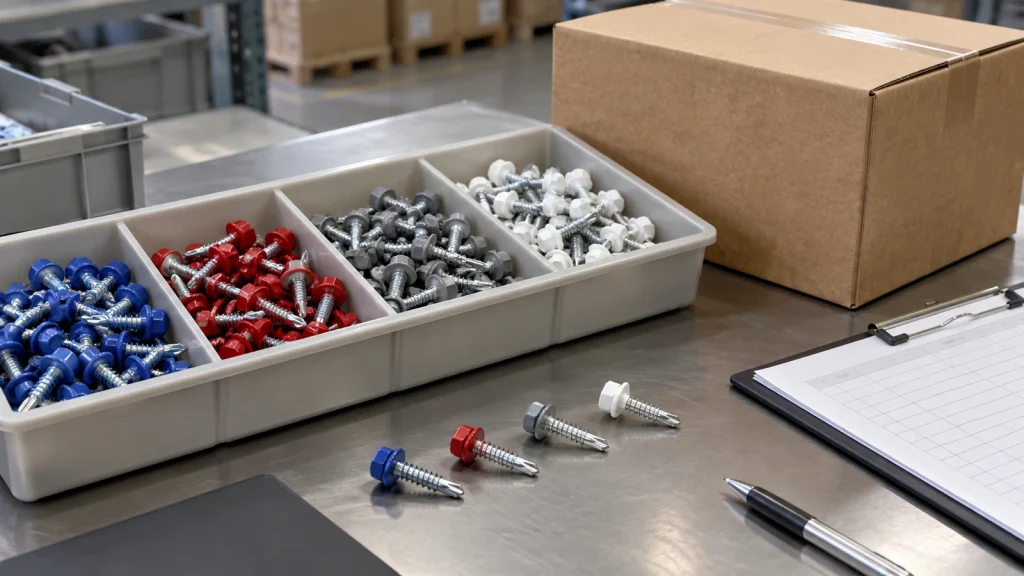
Fastener compatibility also matters. The screw head finish, washer material, drill point, and thread type should suit the coated sheet and the supporting structure, whether steel purlins or timber. A good sheet can still leak if the wrong roofing screw is used, if the washer is over-compressed, or if the screw is too short to engage the structure properly.
Start with the roof environment. Ask where the building will be used, what exposure it faces, and whether the roof will see salt air, industrial gases, animal waste, standing moisture, or high UV exposure. Those details influence the coating and paint system more than the color name does.
Check the sheet profile and structure together. Deeper profiles can improve stiffness and drainage, while lower profiles may suit lighter cladding or smaller spans. The support spacing, roof slope, lap direction, and expected foot traffic all affect the sheet choice. Do not approve a profile from a photo without confirming the drawing, effective cover width, overlap method, and fixing position.
Match the fastening system before ordering. For steel structures, confirm the drill point and thread suit the purlin thickness. For timber, confirm the thread engagement and screw length. The head style, color cap or painted head, washer diameter, and sealing washer material should be selected for the sheet profile and exposure conditions. Hebei Wotu Fastener Manufacturing Co., Ltd. can be asked about suitable roofing screw details if the project requires matching fasteners.
Before purchase, send the roof application, sheet profile drawing or photo, base material requirement if known, color reference, supporting structure type, and fixing layout. Also confirm whether cut-to-length sheets, accessories, ridge caps, side laps, and matching screws are part of the same supply scope or need to be purchased separately.