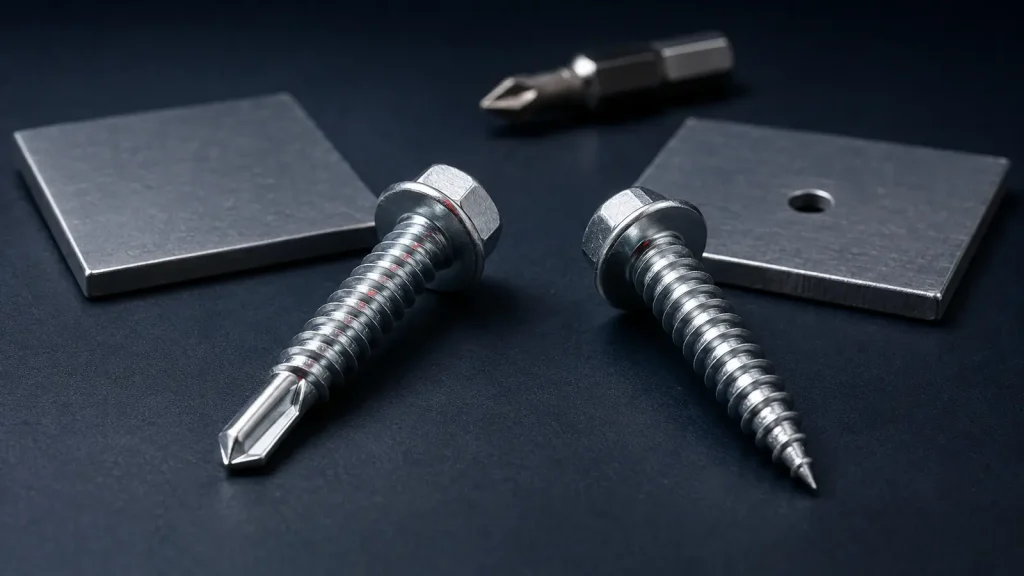
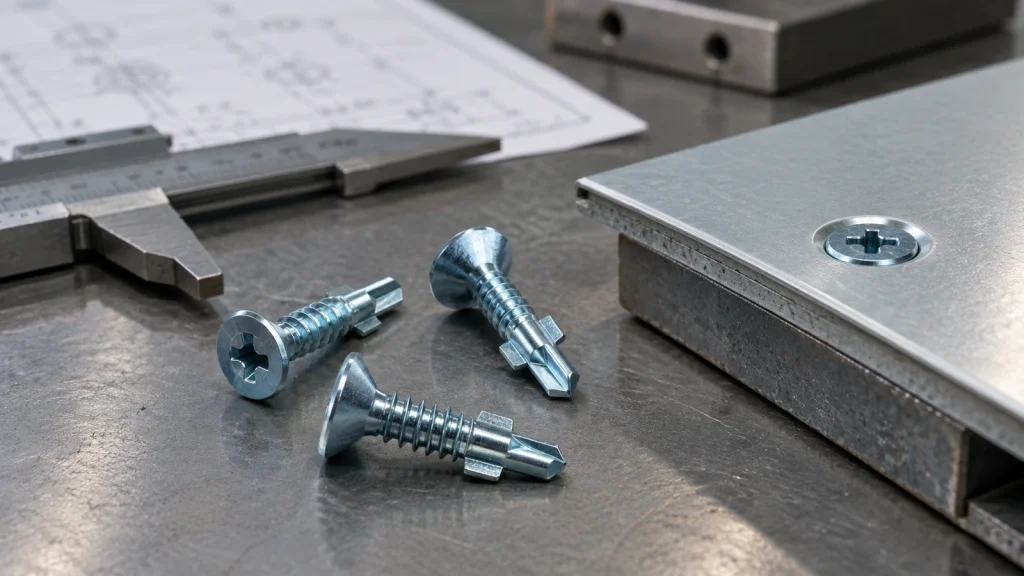
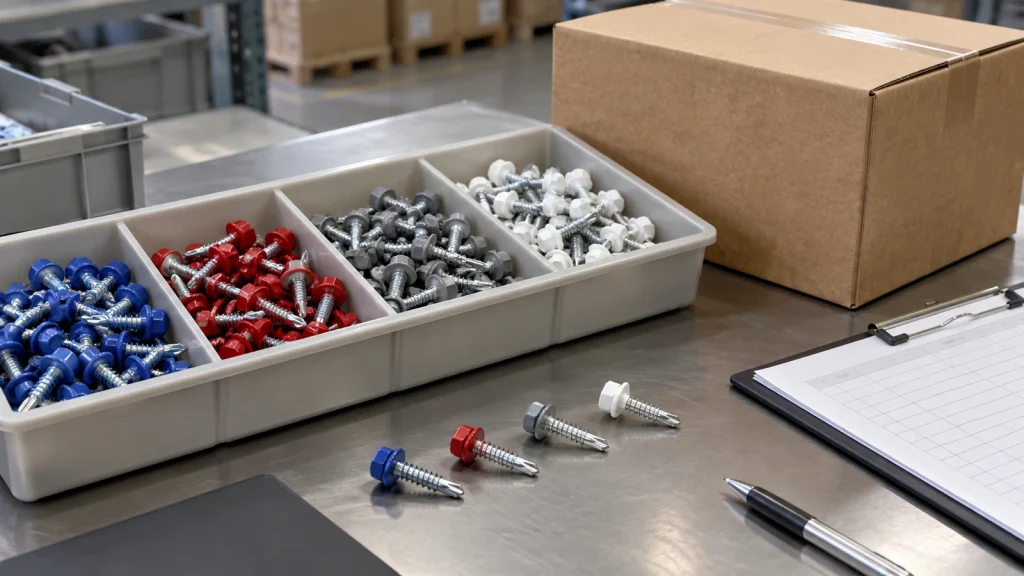
The key distinction is between cutting a clearance hole, preparing a pilot hole, and cutting a larger circular opening. A pilot hole supports thread formation or tapping; a clearance hole lets the fastener pass through; a hole cutter or hole saw removes a larger disc of material for pipe, conduit, access, or fitting installation.
This matters because the wrong cutter type can create the right-looking hole with the wrong function. For example, a hole made too large for a self-tapping screw may not hold the thread, while a cutter used in the wrong material may leave burrs, heat marks, or an irregular edge that affects assembly quality.
Start with the material and hole purpose. Thin sheet metal, thicker steel, aluminum, wood, plastic, and composite panels behave differently under cutting pressure. A cutter that works well for one material may chatter, clog, or overheat in another. State the base material, coating or finish, and whether the hole must support a fastener, pass a fitting, or serve as an access opening.
Confirm the finished hole requirement, not just the nominal cutter size. Ask what tolerance, edge quality, burr allowance, and surface protection matter in the finished part. If the hole will receive screws, rivets, anchors, or threaded inserts, the acceptable hole diameter may be narrower than it first appears.
Do not overlook the drill setup. Shank style, arbor compatibility, pilot drill design, available drill speed, and workholding all affect the result. A cutter may fail early if it is paired with an unstable hand drill, poor alignment, or a setup that cannot clear chips properly.
For an inquiry, share the hole diameter, material thickness, material type, tool interface, expected use, and whether the hole must meet a fastening or fitting requirement. If the cutter is being selected alongside screws or other fasteners, include those fastener details so the hole and fastener work as one assembly.