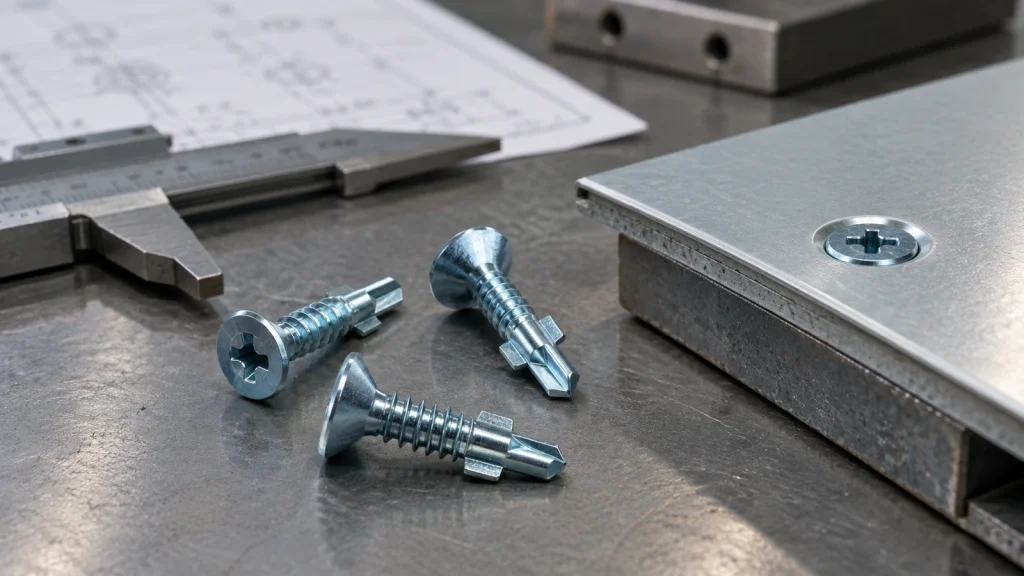
A self-drilling screw is not the same as a self-tapping screw. A self-drilling screw has a drill point that cuts the pilot hole as it enters the material, while a self-tapping screw forms or cuts threads after a hole has already been made. That difference matters more with stainless steel because the material resists cutting and can harden under heat and friction.
If the joint uses stainless sheet, thin metal sections or coated steel components, confirm the material thickness, mating material and required corrosion resistance before choosing the screw point and finish. A drill point that works well in mild steel may perform poorly in harder stainless or may not give enough thread engagement for the load.
Start with the base material, not the screw name. Stainless grade, sheet thickness, layered build-up and whether the screw enters stainless, carbon steel, aluminium or timber all affect the correct point style and thread form. If the hole is already drilled, a self-tapping screw may be more appropriate than a self-drilling screw.
Match corrosion performance to the environment. Indoor assemblies, exterior roofing, coastal exposure, chemical wash-down and mixed-metal contact place different demands on the screw material and coating. Avoid choosing only by surface color; ask what finish or material is suitable for the service conditions and what appearance tolerance is acceptable.
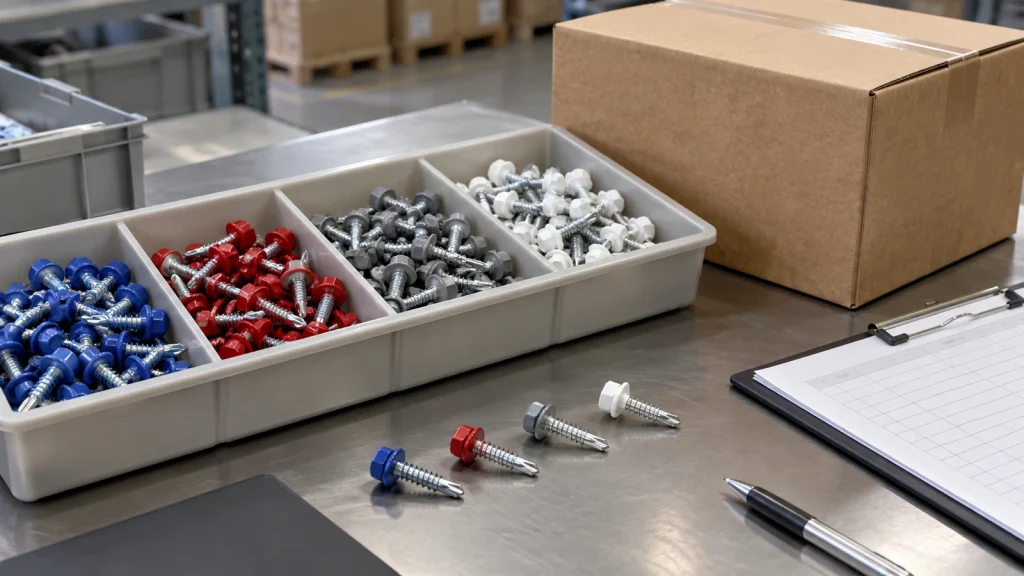
Pay attention to head style and driving access. Hex washer heads suit many sheet-metal and roofing assemblies because they give good drive engagement and bearing area, while countersunk or pan heads may suit flush or enclosed assemblies. If a seal, washer or painted head is needed, state that early because it changes both function and appearance.
A practical next step is to send the joint details rather than only a screw size. Include the stainless material or grade if known, total thickness to be drilled, mating material, head preference, finish or corrosion requirement, and whether the hole is pre-drilled. Those details make it easier to check whether a self-drilling, self-tapping or conventional fastening method fits the job.