| Drive recess and bit match |
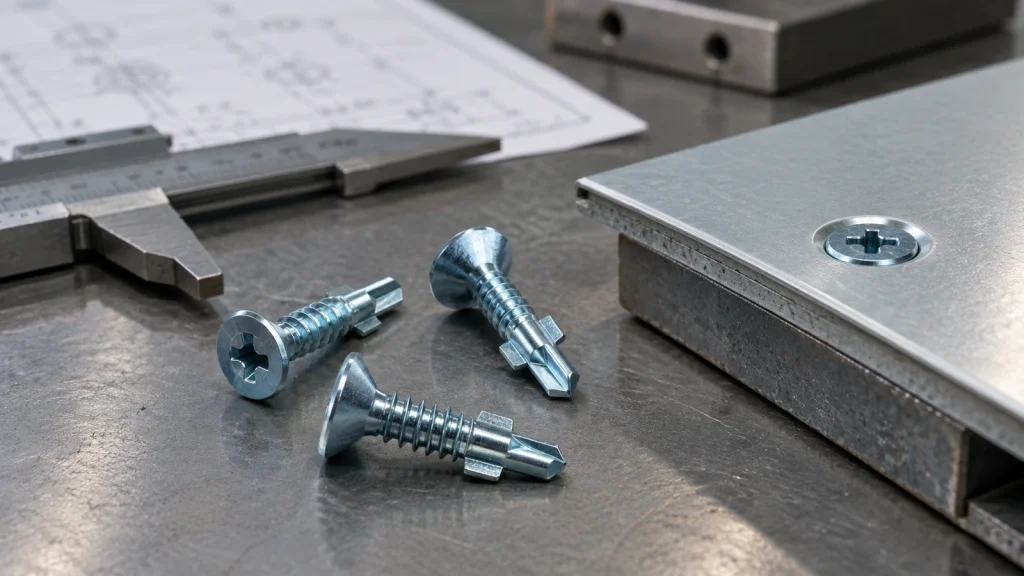
Confirm the screw head style and the exact driver bit needed, such as Phillips, hex socket, Torx, or hex washer head. |
A poor bit fit cams out, damages coatings, rounds the recess, and slows installation with an electric drill screwdriver. |
Ask: Which bit type and size should be used for this screw, and is a matching bit recommended for trial assembly? |
| Torque control for the joint |
Check whether the drill screwdriver has an adjustable clutch and test the setting on the actual screw, substrate, and washer combination. |
Too much torque can strip threads, crush washers, or overdrive the head; too little torque leaves the joint loose. |
Ask: What installation result should operators look for—flush head, seated washer, or a specified fastening condition? |
| Screw type versus material |
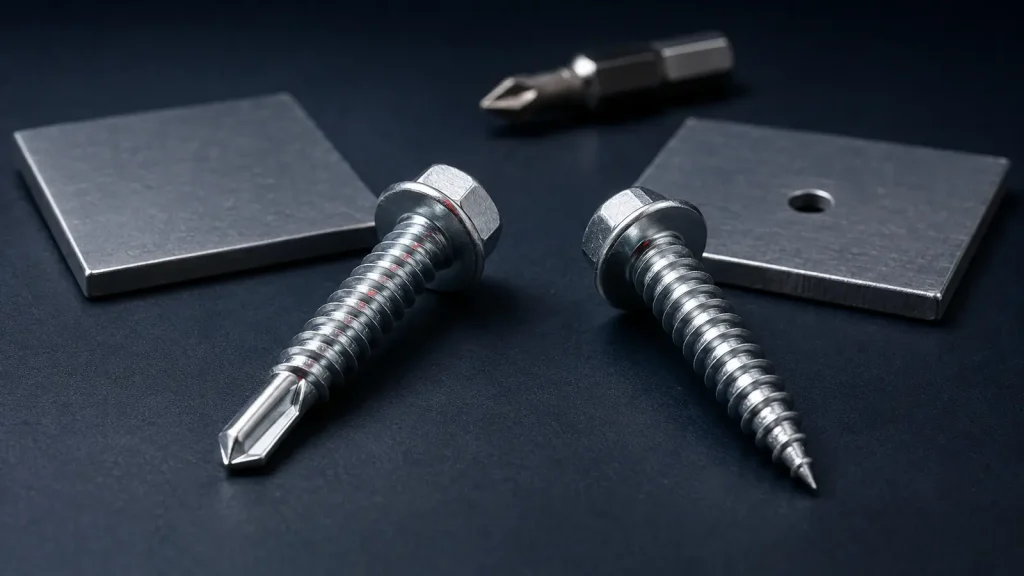
Match the screw design to the workpiece: self-drilling screws for drilling and fastening in one step, self-tapping screws for forming threads in a prepared hole or suitable material. |
The wrong screw type can overload the tool, break the drill point, fail to form a secure thread, or require extra drilling steps. |
Ask: Is the assembly metal-to-metal, metal-to-wood, or pre-drilled, and what screw type is intended for that setup? |
| Speed and pressure during driving |
Verify the recommended drill speed range in practice by checking whether the screw starts cleanly, drills without wandering, and seats without burning or slipping. |
High speed can overheat the point or damage coatings; low speed or uneven pressure can cause poor drilling and inconsistent fastening. |
Ask: Are there installation notes for drill speed, feed pressure, or pilot-hole use with this screw and material? |
| Coating and head protection during installation |
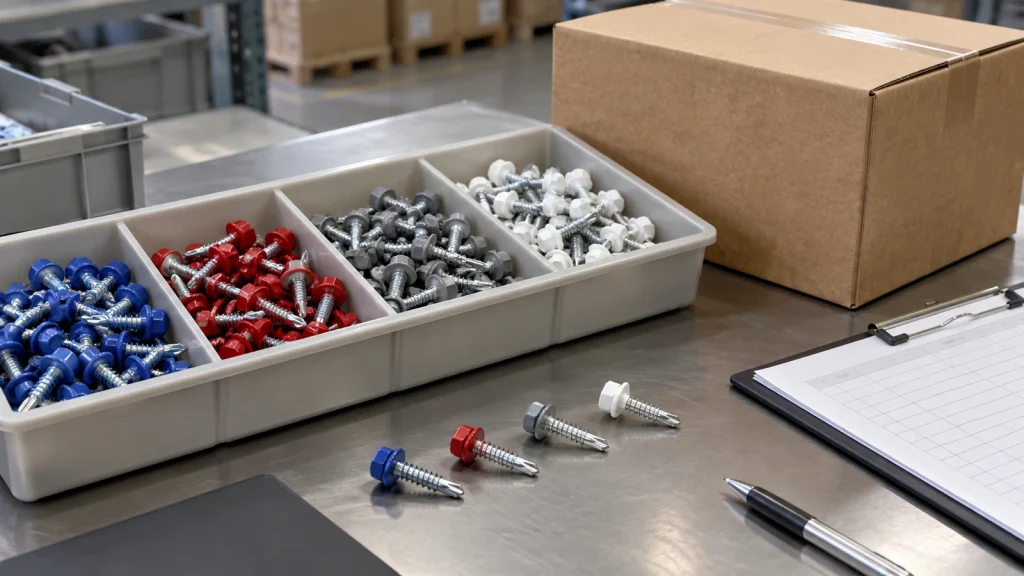
Inspect sample screws after driving to see whether the bit or socket marks the plated, painted, nylon, or coated head. |
Visible coating damage can reduce corrosion protection and affect appearance, especially on exposed roofing, cladding, or panel fasteners. |
Ask: Should installers use a depth stop, magnetic socket, non-marking bit, or washer control to protect the head finish? |