Hand Screw Machine Selection | Hebei Wotu Fastener Manufacturing Co., Ltd.

Hand Screw Machine Selection for Fastening Work

A hand screw machine is usually chosen for small-batch assembly, repair work, sample production, or stations where a powered automatic system would be too expensive or too rigid. The main decision is not simply manual versus powered; it is whether the operator needs torque control, repeatable seating depth, fast screw feeding, or only a simple tool for occasional fastening.

For fastener buyers, the machine choice should match the screw type, head recess, thread design, workpiece material, and access around the joint. A good fastening setup reduces stripped recesses, tilted screws, cracked boards, and inconsistent clamp force.

Related Products

7-letter, 9-letter L-shaped anchor bolt (Chinese national standard GB/T799-1988 embedded anchor screw)

7-letter, 9-letter L-shaped anchor bolt (Chinese national standard GB/T799-1988 embedded anchor screw)

Brand: Wotu Surface: Natural black oxide treatment, customized hot-dip galvanized, zinc plated as required Specifications: Follow Chinese national standard GB/T799-1988, in stock M12-M48, total length 120mm~1500mm, nonstandard customized diameter, bending length, total screw length available Matching: Nuts, flat washers and spring washers of the same specification can be supplied in complete sets. Packaging: Bundling and packaging, using wooden pallets and film-wrapped export packaging in large quantities

Read More
Countersunk Head Blue-White Zinc Plated Self-Drilling Screw (Chinese National Standard: Phillips Countersunk Head Self-Drilling And Self-Tapping Screw GB/T15856.2-2002)

Countersunk Head Blue-White Zinc Plated Self-Drilling Screw (Chinese National Standard: Phillips Countersunk Head Self-Drilling And Self-Tapping Screw GB/T15856.2-2002)

Brand: Hengzuan Surface: blue and white zinc plated, can be customized color zinc plated, black oxide plated Specifications: Comply with GB/T15856.2-2002 Chinese national standard, in stock ST4.2/ST4.8/ST5.5 full range of specifications, length 13mm~75mm optional, supports customized nonstandard rod lengths; drilling adaptation plate thickness 0.7~6mm Packaging: 25kg export cartons, full pallets wrapped with film, supports neutral export packaging, customer private-label customization

Read More
Hex Head Self-Drilling Screw With Bonded Washer

Hex Head Self-Drilling Screw With Bonded Washer

Brand: Hengzuan Surface: blue and white zinc plated, color zinc plated can be customized on request Specifications: in stock 4.2/4.8/5.5/6.3mm mainstream wire diameter, length 20mm~165mm full range of specifications, nonstandard rod length, drill point size can be customized Packaging: 25kg export cartons, full pallets wrapped with film, supports neutral export packaging, customer private-label customization

Read More
Countersunk Head Blue Zinc Self-Drilling Screw

Countersunk Head Blue Zinc Self-Drilling Screw

Brand: Hengzuan Surface: blue and white zinc plated, can be customized color zinc plated, black oxide plated Specifications: in stock 3.5/3.9/4.2/4.8/5.5 mainstream wire diameter, rod length 13mm~75mm full size range, nonstandard length can be customized as needed Packaging: 25kg export cartons, full wooden pallets wrapped with film, supports neutral export packaging, private-label customization

Read More

Match the Hand Screw Setup to the Fastener and Joint

Selection criteria

Relevant selection criteria include screw head form, drive type, thread behavior, pilot-hole requirement, material thickness, joint access, and the level of torque or depth control needed during installation. These details usually affect the result more than the general label “hand screw machine.”

Criterion What To Check Why It Matters Buyer Tip
Screw type and drive style Match the machine to the screws you actually use, including head style, recess type, thread type and length range. A hand screw machine that feeds or drives the wrong screw format will jam, strip recesses or leave inconsistent seating. Ask: Can you confirm compatibility with our screw drawing or sample, including head diameter, drive recess and overall length?
Manual, semi-automatic or assisted operation Clarify whether the unit only positions the screw, also feeds it, or provides torque-assisted driving. The right format depends on batch size, operator fatigue, cycle time and how much control the assembler needs at the joint. Ask: For our expected daily assembly volume, would a purely hand-operated unit or a feed-assisted model be more practical?
Torque control and seating consistency Verify how the machine limits torque or controls final seating depth, especially for wood, sheet metal or plastic assemblies. Too little torque leaves loose joints; too much torque can strip threads, crack material or damage screw heads. Ask: How is torque adjusted and checked during use, and can it be set for different screw sizes or materials?
Workpiece access and operator handling Compare the nose design, bit access, grip shape and clearance needed around corners, recesses or vertical surfaces. A machine that works on a flat test piece may be awkward on furniture frames, panels, brackets or tight assemblies. Ask: Can the tool reach our actual screw positions without tilting the screw or blocking the operator’s view?
Consumables, bits and maintenance Identify the wear parts, compatible driver bits, feeding components and cleaning routine before purchase. Small wear parts affect uptime and fastening consistency, especially if the machine is used for repeated production work. Ask: Which parts are considered consumables, and are standard replacement bits or custom parts required?

Key Choices Before Selecting a Hand Screw Machine

The practical difference is between a basic hand driver, a hand-operated screw press or fixture, and a semi-automatic hand-held screwdriving system. A basic driver gives flexibility but depends heavily on operator skill. A fixture improves alignment and seating consistency. A hand-held system with feeding or torque control can raise output, but it needs closer matching to screw length, head style, bit type, and joint geometry.

This matters because many fastening problems blamed on the screw are caused by the installation method. A self-tapping screw, self-drilling screw, or fiberboard screw may perform well in the right pilot hole or base material, but fail if the tool cam-outs, overdrives the head, or starts the thread at an angle.

Start with the screw and joint, not the machine name. Confirm the head style, drive recess, diameter, length, thread type, coating, and the materials being joined. A countersunk wood screw in furniture needs different alignment and seating control than a hex head self-drilling screw used on metal sheet.

Decide how much repeatability the process needs. Occasional repair work may only need a comfortable hand tool and the correct bit. Batch assembly often benefits from a guide, depth stop, or torque-controlled driver. If screws are installed into thin metal, timber, fiberboard, or pre-drilled parts, the correct setup can prevent thread stripping and poor pull-down.

Avoid choosing a machine before checking access to the fastening point. Deep recesses, narrow corners, panel edges, and angled joints can make a standard hand-held tool awkward. Bit length, nose shape, screw presentation, and operator hand clearance may determine whether the process is practical.

For the next step, share the screw drawing or sample details, the workpiece material, the expected assembly method, and the problem you need to solve: speed, alignment, torque consistency, reduced damage, or operator fatigue. If the requirement involves screws supplied by Hebei Wotu Fastener Manufacturing Co., Ltd., confirm which screw specification and installation method should be matched.


Criteria Importance Description Example Options
Screw type and head drive Critical for fit and repeatability The machine, bit, and any guide or feeder must match the screw head style and recess. Poor matching can cause cam-out, damaged heads, unstable feeding, or inconsistent seating. A cross recess countersunk screw and a hex head self-drilling screw usually need different driving bits and nose access.
Torque or depth control Important where joint quality must stay consistent Manual tightening gives flexibility but can vary by operator. Torque or depth control helps prevent overdriving, under-tightening, cracked boards, and stripped threads. Furniture panels often need clean flush seating, while metal sheet fastening may need enough clamp force without damaging the fastener or panel.
Workpiece material and pilot-hole condition Often decides whether the fastening process works Wood, fiberboard, thin metal, thicker steel, and pre-drilled parts behave differently during installation. The tool setup should suit how the screw cuts, forms, or engages the material. A self-tapping screw in a pre-drilled hole has different driving behavior from a self-drilling screw starting directly into sheet metal.
Access around the fastening point Practical for operator comfort and alignment Corners, recesses, edges, and narrow assemblies may limit the tool body, bit length, nose shape, or fixture design. If access is poor, even the correct screw may start at an angle. A deep cabinet corner may need a longer bit or guided approach rather than a standard straight hand-held driver.
Production volume and feeding method Useful for deciding between simple and semi-automatic setups Occasional fastening can use a basic hand tool, while repeated assembly may justify a fixture, depth stop, torque control, or screw presentation system. More automation improves speed only when the screw and joint are consistent. A repair bench may prioritize flexibility, while a batch assembly station may prioritize repeatable screw seating and reduced operator fatigue.

Product Selection

Related Options

For furniture assembly, sheet-metal fastening, roofing work, or light production stations, the priority is a fastening setup that seats the chosen screw cleanly without damaging the recess, coating, or workpiece. Matching the tool, bit, and screw design is the safest way to improve consistency before moving to a more automated process.

Blog Articles / Reviews

How to Specify Countersunk Head Cross Thick Thread Fiberboard Screws for Furniture Assembly Projects

How to Specify Countersunk Head Cross Thick Thread Fiberboard Screws for Furniture Assembly Projects

Fiberboard screws are selected based on more than screw size alone. For furniture assembly and board-based applications, buyers need to match the screw structure with the characteristics of fiberboard, MDF, and similar engineered wood materials. A suitable specification should consider thread design, head style, screw length, diameter, installation method, and application requirements. For buyers sourcing […]

What Should an RFQ Include When Sourcing Dacromet Hex Head Self-Drilling Screw?

What Should an RFQ Include When Sourcing Dacromet Hex Head Self-Drilling Screw?

When sourcing dacromet hex head self drilling screw, a complete RFQ should define the application, screw configuration, coating requirement, dimensions, and supplier confirmation requirements. Buyers often receive different quotations because suppliers may interpret coating, size, drilling capability, or packaging scope differently. Before preparing a project inquiry, buyers can review the available fastener product categories to […]

How Should Buyers Evaluate Self Tapping Screws for Project Procurement?

How Should Buyers Evaluate Self Tapping Screws for Project Procurement?

#4 self tapping screws should not be purchased from the “#4” designation alone. For a usable B2B specification, the buyer still needs the actual screw diameter, thread form or pitch, overall length, substrate, pilot-hole condition, head and drive style, material, surface finish and quantity. This matters because suppliers may use different naming systems. Wotu Fastener’s […]

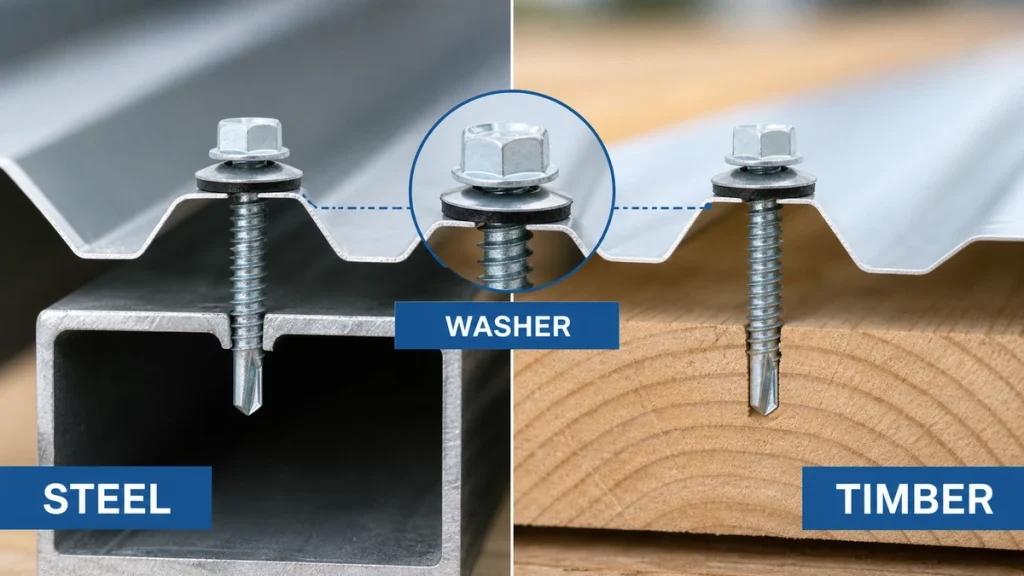
Which Self-Tapping Roofing Screw Specification Fits Metal Panels on Steel or Timber?

Which Self-Tapping Roofing Screw Specification Fits Metal Panels on Steel or Timber?

The correct self-tapping roofing screw depends on the complete panel-and-substrate stack-up. Steel supports typically require a point and thread matched to the support thickness and any pilot-hole requirement; timber supports require a wood-appropriate thread and sufficient embedment. In both cases, buyers must define diameter, length, head, sealing washer, material or coating, environment, pull-out requirements, and […]

Frequently Asked Questions

Is a manual setup suitable for small-batch screw assembly?

Yes, if the work does not require high cycle speed or automatic screw feeding. For samples, repairs, furniture assembly, and low-volume fastening, a manual or hand-operated setup can be practical as long as the bit, screw head, pilot hole, and operator access are matched correctly.

What is the trade-off between a simple hand driver and a torque-controlled tool?

A simple hand driver is flexible and inexpensive, but the final tightening force depends on the operator. A torque-controlled tool gives more repeatable seating and can reduce stripped recesses or overdriven screws, but it must be selected to suit the screw size, head style, and joint material.

Does the machine determine whether a self-tapping or self-drilling screw will work?

Not by itself. The screw design, base material, material thickness, pilot-hole condition, and installation angle all affect performance. The tool mainly controls how consistently the screw starts, drives, and seats.

What information should be checked before choosing a fixture or guided tool?

Check the screw diameter, length, head form, drive recess, bit type, material being fastened, access space, and whether the screw must sit flush, stand proud, or clamp a washer. If the job involves coated screws, also consider whether the tool contact could damage the coating or head.

Can one setup handle wood screws, self-tapping screws, and self-drilling screws?

Sometimes, but it should not be assumed. Different screws may need different bits, torque ranges, feed methods, pilot holes, or alignment support. A setup that works for a countersunk fiberboard screw may not suit a hex head self-drilling screw used in metal.

Leave Your Message

Send the screw type and size, the materials being fastened, and the main installation issue you want to solve, such as torque control, alignment, speed, or reduced surface damage.