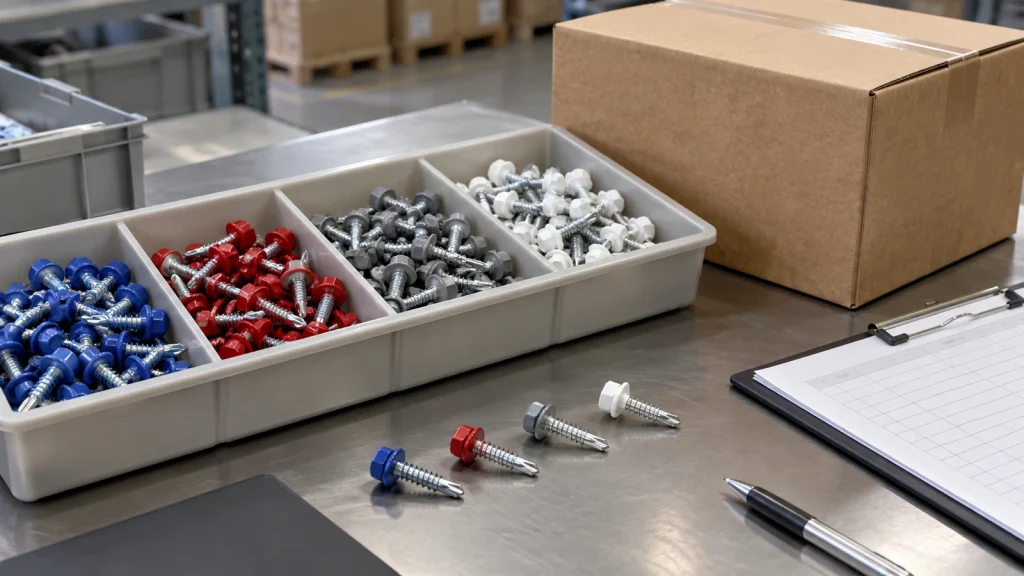
The practical distinction between a screw and a bolt is how the fastener forms the joint. A screw commonly engages the material or a tapped hole, while a bolt normally passes through prepared parts and tightens with a nut; industry terminology is not always consistent, so describe the actual joint rather than relying on the name alone.
Head access is equally important. A hex head suits a wrench, a socket head suits confined access with a hex driver, and a countersunk head is used when the head must sit flush. Choosing the wrong head can make tightening difficult, reduce clearance, or leave the assembly with an unsuitable surface.
Start with the joint. State whether the fastener will engage sheet metal, timber, plastic, masonry, a tapped hole or a nut. For thin or soft materials, check the available thread engagement and whether a washer, insert or other load-spreading feature is needed. For a through-joint, confirm the hole arrangement, nut compatibility and access for the installation tool.
Define the head and drive together. A countersunk head may improve clearance but requires a suitable seat and accurate preparation. A hex or flange head can provide convenient external access, while a socket head can work where side clearance is limited. Specify the drive type as well as the visible head shape to avoid receiving a part that cannot be installed with the intended tool.
Check material and finish against the environment. Indoor furniture, general equipment, damp locations and chemically exposed assemblies can require different material or surface-treatment choices. Do not select a finish from appearance alone; ask how it relates to corrosion exposure, contact with mating materials and any required service conditions.
Prevent avoidable ordering errors. Do not describe a part only as a “head screw bolt.” Send a drawing or sample if the head profile matters, and include the nominal diameter, length reference, thread type, material, finish, quantity and application. For an enquiry, also state the mating material and preferred drive so the supplier can confirm the complete combination.