Hole Cutter Drill Machine Selection Guide | Hebei Wotu Fastener Manufacturing Co., Ltd.

Hole Cutter Drill Machine Selection Guide

A hole cutter drill machine is chosen around the hole you need to make: material, diameter, depth, edge quality, and how often the tool will repeat the cut. For buyers working with metal framing, panels, brackets, or fastener assemblies, the main decision is not just the drill machine itself, but whether the cutter, drill speed, clamping method, and hole tolerance suit the final fixing method.

If the hole will accept a bolt, screw, anchor, conduit, or fitting, confirm the required hole size and the fastener that follows it. A clean, correctly sized hole can reduce rework, improve alignment, and help the fastener seat as intended.

Related Products

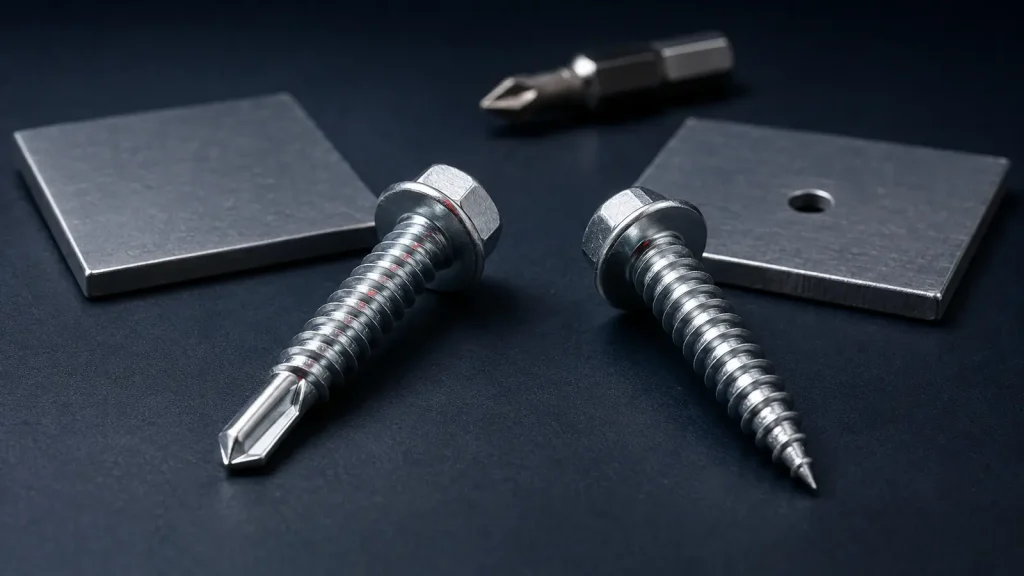
Hex Head Self-Drilling Screw With Bonded Washer

Hex Head Self-Drilling Screw With Bonded Washer

Brand: Hengzuan Surface: blue and white zinc plated, color zinc plated can be customized on request Specifications: in stock 4.2/4.8/5.5/6.3mm mainstream wire diameter, length 20mm~165mm full range of specifications, nonstandard rod length, drill point size can be customized Packaging: 25kg export cartons, full pallets wrapped with film, supports neutral export packaging, customer private-label customization

Read More
Dacromet Hex Head Self-Drilling Screw

Dacromet Hex Head Self-Drilling Screw

Brand: Hengzuan Surface: Dacromet anti-corrosion coating Specifications: in stock ST5.5/ST6.3 mainstream caliber, rod length 50mm~150mm, extended full range of specifications, supports nonstandard extra long customized, suitable for drilling steel sheet thickness 2~6mm Packaging: 25kg export cartons, full pallets wrapped with film, supports neutral export packaging, private-label customization

Read More
Painted Hex Head Self-Drilling Screw

Painted Hex Head Self-Drilling Screw

Brand: Hengzuan Surface: screw color zinc plated + hex head outdoor paint Specifications: ST5.5, ST6.3, rod length 25mm~120mm in stock, supports nonstandard customization, suitable for drilling steel sheets 2~5mm Packaging: 25kg cartons, whole wooden pallets

Read More
Chinese-standard Color Nylon Head Hex Self-Drilling Screw

Chinese-standard Color Nylon Head Hex Self-Drilling Screw

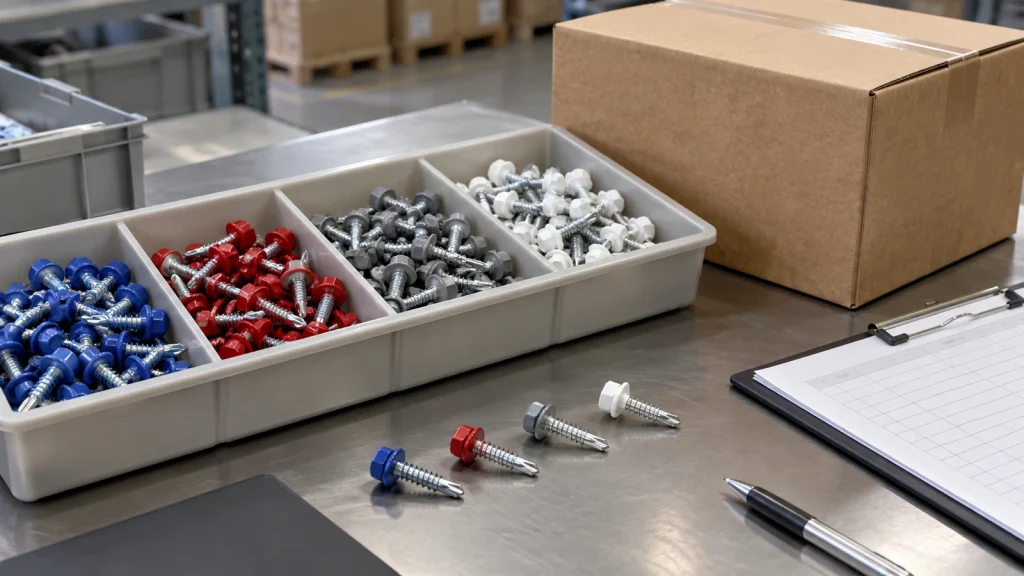
Brand: Hengzuan Surface: screw color zinc plated, head color nylon protective cap, multiple colors available Specifications: Chinese national standard ST5.5, ST6.3 mainstream caliber, rod length 25mm~125mm full range of specifications in stock, supports nonstandard length customization, suitable for drilling steel sheet thickness 2~6mm Packaging: 25kg cartons, full pallets packed on wooden pallets, support neutral packaging, private-label customization

Read More
Hex Head Self-Drilling Screw With Cup Washer

Hex Head Self-Drilling Screw With Cup Washer

Brand: Hengzuan Surface: color zinc plated Specifications: in stock ST5.5/ST6.3 regular diameter, rod length 19mm~75mm in stock, supports nonstandard customized, suitable for drilling steel sheet thickness 2~5mm Packaging: carton packaging, full pallets wooden pallet packaging, support neutral packaging, private-label customization

Read More
Hex Head No. 5 Point Self-Drilling Screw

Hex Head No. 5 Point Self-Drilling Screw

Brand: Wotu Surface: blue and white zinc plated, customized color zinc plated, Dacromet anti-corrosion coating available Specifications: ST5.5, ST6.3 mainstream specifications, rod length 20mm~125mm, full size range in stock, support nonstandard customization, drilling to adapt to steel sheet 2-6mm Packaging: 25kg cartons, whole wooden pallets

Read More

Select a hole cutting setup for the material, hole size, and fastening method

Hole cutting selection notes

Relevant selection criteria include cutter type, machine rigidity, workpiece material, hole diameter, cutting depth, arbor or shank compatibility, coolant method, and the fastener or fitting that will use the finished hole. For assembly work, the correct hole specification should be confirmed before selecting the drilling setup.

Criterion What To Check Why It Matters Buyer Tip
Hole size and cutter style Confirm the required hole diameter, material thickness, and whether the job needs an annular cutter, hole saw, step drill, or core drill. The cutter style changes the edge quality, cutting speed, required power, and how much material is removed. A mismatch can cause rough holes, overheating, or broken cutters. What hole diameter range and workpiece material should the machine handle most often?
Machine mounting and work position Check whether the hole cutter drill machine will be bench mounted, hand held, magnetic based, or used on a drill press or portable rig. Mounting affects accuracy, operator control, and safety. A magnetic drill may suit structural steel, while a bench setup is better for repeated workshop holes. Will the operator cut holes on flat plates, installed steel sections, pipes, or loose parts?
Spindle, arbor, and cutter compatibility Verify the shank type, arbor size, pilot pin requirement, chuck capacity, and whether adapters are needed for the selected cutters. Even if the motor has enough power, incompatible tooling can add runout, poor centering, and extra downtime during cutter changes. Which cutter brand, shank type, and diameter range do you already use or plan to standardize?
Speed control and feed method Compare fixed speed versus variable speed, manual feed versus controlled feed, and whether the machine suits the cutter material and workpiece hardness. Correct speed and feed reduce heat, protect the cutting teeth, and improve hole finish. Too much speed or pressure shortens cutter life quickly. Do you need the machine mainly for mild steel, stainless steel, aluminum, wood, or mixed materials?
Coolant, chip removal, and workholding Ask how cutting fluid is supplied, how chips are cleared, and what clamps, guides, or fixtures are needed to hold the work securely. Poor cooling and loose workpieces are common causes of chatter, oversized holes, cutter damage, and unsafe operation. Can you share the part shape and cutting position so the supplier can confirm coolant access and workholding needs?

Key decisions before choosing a hole cutter drill machine

The practical distinction is between drilling a full hole with a twist drill and cutting the hole perimeter with a hole cutter, annular cutter, or hole saw. A twist drill removes the whole center of the hole, while many hole cutters remove material around the edge and leave a core. That can make larger holes faster and cleaner, but it also requires the right pilot, arbor, machine stability, and chip removal.

For metal work, buyers should also separate portable drill use from magnetic drill or bench machine use. Portable tools suit field work and lighter materials, while rigid machines control alignment better on thicker steel or repeated holes. The wrong pairing can create oversize holes, rough edges, broken cutters, or poor fit with the intended fastener.

Start with the workpiece, not the machine name. State the material, coating, thickness range, hole diameter, through-hole or blind-hole requirement, and whether the hole will be used for bolts, self-drilling screws, self-tapping screws, anchors, or another assembly method. If the hole is for a fastener, the pilot hole and thread engagement matter as much as the cutting tool.

Match the cutter style to the job. Hole saws can be useful for sheet, panels, and lighter fabrication. Annular cutters are often selected for cleaner larger holes in steel when used with a suitable rigid drill setup. Step drills suit thin sheet and staged diameters, but they are not the same as a cutter for deeper or heavier sections. Avoid choosing only by nominal hole size; shank type, arbor compatibility, pilot control, and available cutting fluid all affect the result.

Think about accuracy and repeatability. A handheld setup may be acceptable for occasional clearance holes, but fixture holes, aligned brackets, or holes that receive close-fitting hardware usually need better control. Clamping, perpendicularity, burr control, and chip evacuation can change the quality of the final assembly even when the cutter diameter looks correct on paper.

A good next step is to share a drawing or sample description with the target hole diameter, tolerance if known, workpiece material and thickness, expected quantity, and the fastener or component that will pass through the hole. If the inquiry also involves screws or bolts for the same assembly, ask Hebei Wotu Fastener Manufacturing Co., Ltd. to confirm the matching fastener requirements separately from the drilling equipment selection.


Criteria Importance Description Example Options
Cutter type High importance because the cutter determines suitable materials, hole sizes, cutting depth, and the amount of material removed. Hole saws suit many sheet and panel applications; annular cutters are used for perimeter cutting in suitable thicker metal; step drills are intended for staged diameters in thinner sheet; twist drills remove the full center. A thin panel may suit a step drill, while a larger opening in structural steel may call for an annular cutter and a rigid machine.
Machine rigidity and setup High importance when alignment, repeatability, or hole quality matters. A handheld drill offers portability but gives the operator more control responsibility. Bench, magnetic, or other rigid setups can improve perpendicularity and repeatability when the workpiece and application permit their use. An occasional field clearance hole may be acceptable with a handheld setup; a row of aligned bracket holes generally needs firmer clamping and guidance.
Material and thickness High importance because cutting load, heat, chip evacuation, and cutter life change with the workpiece. Match the cutter geometry and machine capacity to the material and its thickness. Thin sheet, coated panels, mild steel, and thicker sections should not be treated as the same application. State the material grade or general material type and the full thickness range rather than describing the job only as metal drilling.
Finished-hole requirement Critical when the hole receives a fastener, anchor, conduit, or close-fitting component. Define the required diameter, tolerance if known, edge condition, and whether the hole must be through or blind. A nominal cutter size does not by itself guarantee the final fit. A clearance hole for a bolt has a different requirement from a hole intended for tapping or for a component that must pass through with limited play.
Arbor, shank, and cutting method compatibility Important because an otherwise suitable cutter may not connect to the available machine or operate correctly in the planned setup. Confirm the shank or arbor interface, pilot arrangement, available speed control, and whether the application permits cutting fluid or another chip-control method. Before ordering, provide the machine connection and ask whether the proposed cutter requires a specific arbor, pilot, or operating arrangement.

Blog Articles / Reviews

What Should an RFQ Include When Sourcing Dacromet Hex Head Self-Drilling Screw?

What Should an RFQ Include When Sourcing Dacromet Hex Head Self-Drilling Screw?

When sourcing dacromet hex head self drilling screw, a complete RFQ should define the application, screw configuration, coating requirement, dimensions, and supplier confirmation requirements. Buyers often receive different quotations because suppliers may interpret coating, size, drilling capability, or packaging scope differently. Before preparing a project inquiry, buyers can review the available fastener product categories to […]

What Is the Difference Between Self Drilling and Self Tapping Screws?

What Is the Difference Between Self Drilling and Self Tapping Screws?

Direct Answer: A self-drilling screw has a drill-shaped point that creates a hole and then forms mating threads in a suitable material. A self-tapping screw forms or cuts mating threads but may require a correctly sized pilot hole. Selection depends on substrate type and thickness, joint stack, point geometry, installation tool, finish and application testing—not […]

What RFQ Details Matter When Ordering Blue Zinc Winged Self-Drilling Screws?

What RFQ Details Matter When Ordering Blue Zinc Winged Self-Drilling Screws?

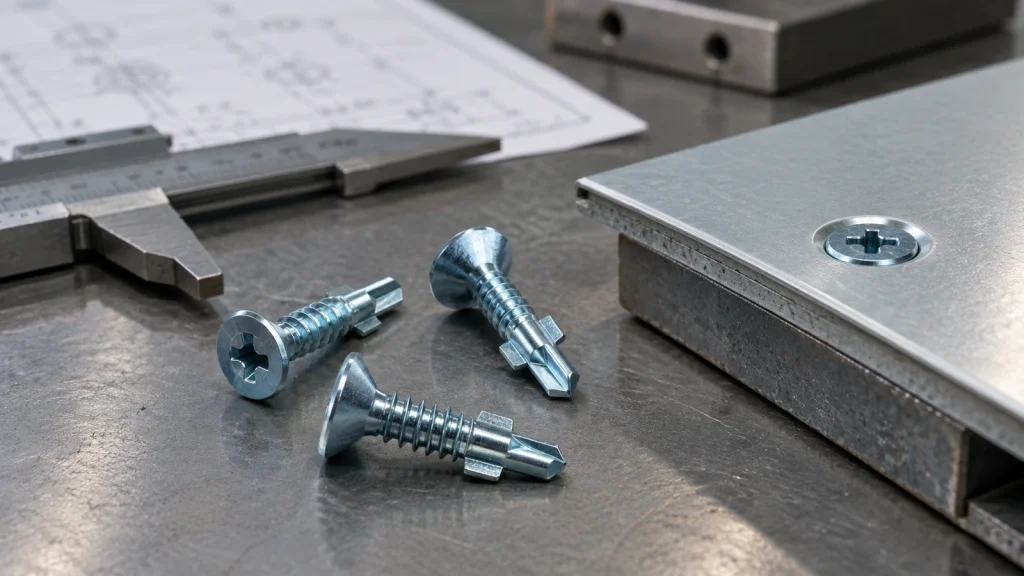
When ordering a blue zinc self drilling screw with a winged, countersunk configuration, diameter and length are not enough to define the application. The RFQ should identify the materials being connected, upper-material thickness, steel-substrate thickness, total material stack, required countersunk seating, screw diameter, total length, drill-point condition, wing geometry, surface treatment, installation method, quantity and […]

What Should Buyers Confirm When Ordering Color Nylon Head Hex Self-Drilling Screws?

What Should Buyers Confirm When Ordering Color Nylon Head Hex Self-Drilling Screws?

When ordering a chinese standard color nylon head hex self drilling screw, the RFQ should define more than a color name. Buyers should confirm the exact color reference, nylon head or cap configuration, base screw diameter and length, steel-sheet condition, metallic screw finish, visible-face requirement, color approval method, batch-consistency check and packaging or SKU separation. […]

Frequently Asked Questions

Can a hole cutter drill machine be used for metal panels and brackets?

Yes, provided the cutter, pilot arrangement, machine rigidity, and cutting method match the metal type and thickness. Thin sheet may suit a hole saw or step drill, while thicker steel and repeated holes may need a more rigid setup with an annular cutter.

When is a twist drill a better choice than a hole cutter?

A twist drill is often practical for small holes, occasional work, and situations where removing the full center is acceptable. A hole cutter or annular cutter can be more efficient for larger openings because it removes less material, but it needs compatible arbor support, pilot control, and stable alignment.

Does the cutter diameter alone define the finished hole?

No. Runout, workpiece movement, pilot clearance, cutting technique, burr formation, and the condition of the cutter can all affect the result. If the hole will receive a bolt, screw, anchor, conduit, or fitting, specify the required finished size and fit rather than ordering only by the nominal cutter diameter.

What should be included in a purchase enquiry?

Provide the workpiece material, thickness range, hole diameter, through-hole or blind-hole requirement, expected quantity, and the machine or arbor connection available. Also state whether the opening is for clearance, threading, a fastener, or another fitting, and ask which cutter type and operating setup are suitable.

Is a handheld drill suitable for accurate repeated holes?

It can work for occasional clearance holes when the workpiece is securely held and alignment is not highly demanding. Repeated holes, aligned brackets, and close-fitting hardware usually benefit from a more rigid machine, better clamping, and a defined method for controlling burrs and hole position.

Leave Your Message

Send the workpiece material and thickness, required hole diameter, and the fastener or fitting that will use the hole. Add expected quantity or repeated-use needs if the drilling setup must support production work.