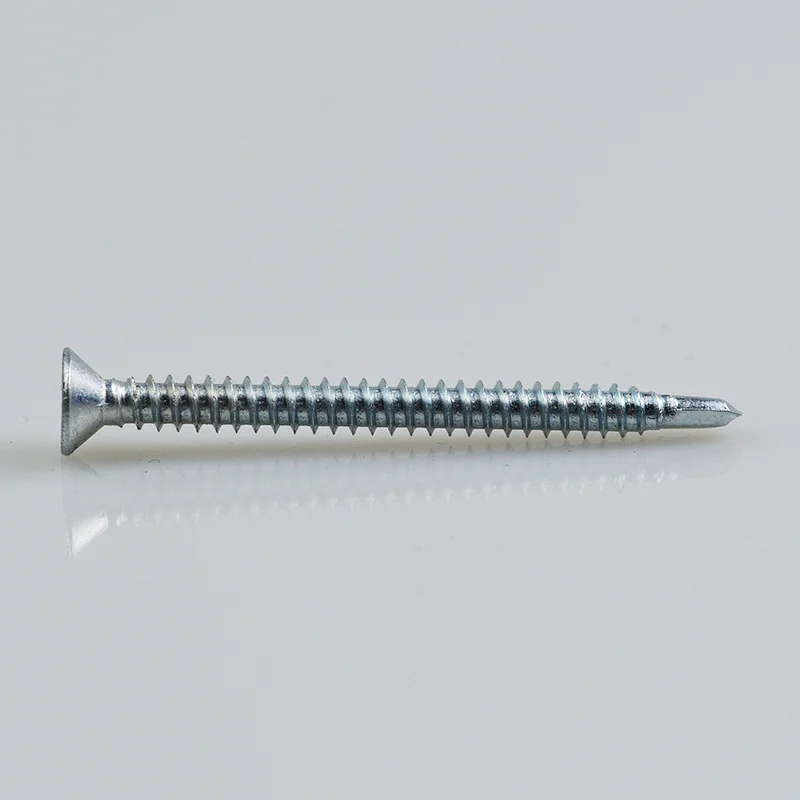
L-Key Screws for Hex Socket Assemblies | Hebei Wotu Fastener Manufacturing Co., Ltd.

L-key screws for hex socket fastening

An L-key screw is generally understood as a screw with an internal hexagonal socket, installed with an L-shaped hex key. The main buying decision is not the tool shape alone: the socket, head style, thread, length, material and finish must match the joint and the available installation space.

For a reliable specification, define what the screw will fasten, whether the joint uses a pre-tapped hole or a nut, and how much clamping force and corrosion resistance the application requires. If your drawing or purchasing system uses “L key screw” differently, confirm the intended socket and drive details before quoting.

Related Products

7-letter, 9-letter L-shaped anchor bolt (Chinese national standard GB/T799-1988 embedded anchor screw)

7-letter, 9-letter L-shaped anchor bolt (Chinese national standard GB/T799-1988 embedded anchor screw)

Brand: Wotu Surface: Natural black oxide treatment, customized hot-dip galvanized, zinc plated as required Specifications: Follow Chinese national standard GB/T799-1988, in stock M12-M48, total length 120mm~1500mm, nonstandard customized diameter, bending length, total screw length available Matching: Nuts, flat washers and spring washers of the same specification can be supplied in complete sets. Packaging: Bundling and packaging, using wooden pallets and film-wrapped export packaging in large quantities

Read More
Wafer Head Self-Drilling Screw

Wafer Head Self-Drilling Screw

Brand: Hengzuan Surface: blue and white zinc plated, can be customized color zinc plated, black oxide plated Specifications: Comply with GB/T15856.2 Chinese national standard, in stock ST3.5/ST4.2/ST4.8/ST5.5 mainstream wire diameter, rod length 13mm~50mm full range of specifications, nonstandard length customization on demand, drilling applicable plate thickness 2~5mm Packaging: 25kg export cartons, full pallets wrapped with film, supports neutral export packaging, private-label customization

Read More
Countersunk Head Blue-White Zinc Plated Self-Drilling Screw (Chinese National Standard: Phillips Countersunk Head Self-Drilling And Self-Tapping Screw GB/T15856.2-2002)

Countersunk Head Blue-White Zinc Plated Self-Drilling Screw (Chinese National Standard: Phillips Countersunk Head Self-Drilling And Self-Tapping Screw GB/T15856.2-2002)

Brand: Hengzuan Surface: blue and white zinc plated, can be customized color zinc plated, black oxide plated Specifications: Comply with GB/T15856.2-2002 Chinese national standard, in stock ST4.2/ST4.8/ST5.5 full range of specifications, length 13mm~75mm optional, supports customized nonstandard rod lengths; drilling adaptation plate thickness 0.7~6mm Packaging: 25kg export cartons, full pallets wrapped with film, supports neutral export packaging, customer private-label customization

Read More
Countersunk Head Blue Zinc Self-Drilling Screw

Countersunk Head Blue Zinc Self-Drilling Screw

Brand: Hengzuan Surface: blue and white zinc plated, can be customized color zinc plated, black oxide plated Specifications: in stock 3.5/3.9/4.2/4.8/5.5 mainstream wire diameter, rod length 13mm~75mm full size range, nonstandard length can be customized as needed Packaging: 25kg export cartons, full wooden pallets wrapped with film, supports neutral export packaging, private-label customization

Read More
Painted Hex Head Self-Drilling Screw

Painted Hex Head Self-Drilling Screw

Brand: Hengzuan Surface: screw color zinc plated + hex head outdoor paint Specifications: ST5.5, ST6.3, rod length 25mm~120mm in stock, supports nonstandard customization, suitable for drilling steel sheets 2~5mm Packaging: 25kg cartons, whole wooden pallets

Read More

Compare socket, head and thread configurations

L-key screw selection

Compare L-key screw options by socket geometry, head form, thread and point style, dimensions, base material, surface finish and installation access. The correct choice depends on the joint design and service environment, so confirm the proposed drawing and application rather than selecting by the name alone.

Criterion What To Check Why It Matters Buyer Tip
Confirm what “L key” identifies Verify whether the request means an internal-hex screw used with an L-shaped Allen key, and specify the drive size. The term can describe the tool rather than the screw, so an unclear definition may result in the wrong recess or installation tool. Ask: “Do you need a socket-head or another internal-hex head, and which key size should fit?”
Screw diameter, length and thread Compare the nominal diameter, overall length, thread pitch or thread type, and the length of usable thread. These dimensions determine engagement, joint fit and whether the screw reaches the mating part without bottoming out. Provide a drawing or a sample screw and state the joined material and required thread engagement.
Head style and seating surface Confirm the head shape, head diameter, head height and whether the screw must sit flush or against a flat surface. A socket-head, countersunk or low-head design suits different clearances and support conditions. Ask for a dimensioned head drawing and check the available recess depth around the screw location.
Material and surface finish Specify the base material and required finish, then verify the finish against the joint environment and any appearance requirements. Material and coating affect corrosion resistance, appearance, compatibility with mating parts and the risk of surface damage during assembly. Ask: “Which material and finish are proposed, and what environmental exposure must the screw withstand?”
Drive access and installation method Check whether the L-shaped key can enter the recess fully and whether nearby parts limit turning clearance. An L-key needs enough side and vertical access; restricted clearance can make installation slow or prevent full engagement. Send a simple joint sketch or photo and ask whether a longer key, ball-end key or another driver is more suitable.

Specify the screw for your joint and installation space

The important distinction is between an internal-hex machine screw and a self-tapping or self-drilling screw that also happens to use a hex socket. A machine screw is normally selected for an existing threaded hole or nut, while a self-tapping version forms or cuts its own thread in a suitable material. Choosing the wrong type can cause poor thread engagement, excessive installation force or joint loosening.

Head clearance also matters. A socket head may suit a compact assembly, while a countersunk, button or low-profile head may be preferable where the surface must remain flush or where clearance above the joint is limited. Confirm the head geometry and the matching key size from the drawing rather than relying on the general name.

Start with the joint and thread. State the mating material, threaded-hole or nut arrangement, thread form and required screw length. Length should provide useful engagement without bottoming in a blind hole or extending into nearby parts. For sheet material, timber or other non-threaded substrates, ask whether a tapping, drilling or other point style is appropriate instead of specifying a standard machine screw.

Choose the head for access and surface requirements. Socket head screws need enough room for the L-shaped key to enter and turn; a recessed head may be difficult to reach in a narrow channel. A countersunk head needs a correctly prepared countersink, while a flat or button head may be a better choice when the mating surface cannot be modified.

Match material and finish to the service environment. Consider moisture, outdoor exposure, chemicals, galvanic contact with the mating material and the required appearance. Do not treat a coating name as a complete corrosion specification; ask what base material and finish are proposed and whether they are suitable for the application.

Before requesting a quotation, send a drawing or a clear description showing diameter, length, head style, socket type, thread, material, finish, quantity and intended use. Request confirmation of the dimensional standard, sample or drawing approval process, packaging and any inspection documents required for your project. Ask Hebei Wotu Fastener Manufacturing Co., Ltd. which of these details it can support for the required screw.


Criteria Importance Description Example Options
Thread and mating part Critical for fit and holding strength The screw must match the threaded hole, nut or material it will enter. Machine screws, self-tapping screws and self-drilling screws serve different joint designs. A machine screw may suit a tapped metal component, while a self-tapping type may be considered for an unthreaded sheet material application.
Head style and seating surface Important for clearance, appearance and load seating Socket head, button head and countersunk head designs sit differently on the part. The wrong head can interfere with nearby components or fail to seat properly. A countersunk head needs a matching countersink; a button head may be better where a smooth low profile is preferred without machining a recess.
Socket access Often decisive in compact assemblies An L-shaped hex key needs room to enter the socket and rotate. Deep recesses, side walls or adjacent parts can make installation difficult even if the screw size is correct. A screw located inside a narrow channel may require checking both the key size and the available turning radius.
Material and finish Important for service life and appearance Base material and coating should suit indoor use, outdoor exposure, moisture, chemicals and contact with other metals. A finish name should be confirmed against the actual application environment. A decorative indoor assembly may prioritize appearance, while an outdoor bracket may need stronger corrosion-resistance requirements.
Dimensional standard or drawing Useful for avoiding substitution errors A standard or drawing defines details such as head dimensions, socket size, thread and tolerances. This reduces confusion caused by informal names. If the purchasing record says only “L key screw,” a drawing can confirm whether the buyer needs a socket cap screw, button head screw or countersunk version.

Blog Articles / Reviews

Six key points to note when using and maintaining self-drilling screws

Six key points to note when using and maintaining self-drilling screws

1. Rinsing the self-drilling screw is crucial and requires meticulous attention, as residue may remain on its surface. This rinsing step should be performed after cleaning with a silicate cleaning agent. 2. Proper stacking is essential during tempering of the self-drilling screw; otherwise, slight oxidation may occur in the quenching oil. 3. The appearance of […]

How to Specify Countersunk Head Cross Thick Thread Fiberboard Screws for Furniture Assembly Projects

How to Specify Countersunk Head Cross Thick Thread Fiberboard Screws for Furniture Assembly Projects

Fiberboard screws are selected based on more than screw size alone. For furniture assembly and board-based applications, buyers need to match the screw structure with the characteristics of fiberboard, MDF, and similar engineered wood materials. A suitable specification should consider thread design, head style, screw length, diameter, installation method, and application requirements. For buyers sourcing […]

What Should an RFQ Include When Sourcing Dacromet Hex Head Self-Drilling Screw?

What Should an RFQ Include When Sourcing Dacromet Hex Head Self-Drilling Screw?

When sourcing dacromet hex head self drilling screw, a complete RFQ should define the application, screw configuration, coating requirement, dimensions, and supplier confirmation requirements. Buyers often receive different quotations because suppliers may interpret coating, size, drilling capability, or packaging scope differently. Before preparing a project inquiry, buyers can review the available fastener product categories to […]

How Should Buyers Evaluate Self Tapping Screws for Project Procurement?

How Should Buyers Evaluate Self Tapping Screws for Project Procurement?

#4 self tapping screws should not be purchased from the “#4” designation alone. For a usable B2B specification, the buyer still needs the actual screw diameter, thread form or pitch, overall length, substrate, pilot-hole condition, head and drive style, material, surface finish and quantity. This matters because suppliers may use different naming systems. Wotu Fastener’s […]

Which Self-Tapping Roofing Screw Specification Fits Metal Panels on Steel or Timber?

Which Self-Tapping Roofing Screw Specification Fits Metal Panels on Steel or Timber?

The correct self-tapping roofing screw depends on the complete panel-and-substrate stack-up. Steel supports typically require a point and thread matched to the support thickness and any pilot-hole requirement; timber supports require a wood-appropriate thread and sufficient embedment. In both cases, buyers must define diameter, length, head, sealing washer, material or coating, environment, pull-out requirements, and […]

Frequently Asked Questions

Is an L-key screw the same as an Allen screw?

In many purchasing conversations, yes: both terms usually refer to a screw driven by a hex key inserted into an internal hex socket. The name alone is not enough for procurement, because the head style, thread type, material and finish still need to be specified.

Should I choose a socket head, button head or countersunk head?

Choose a socket head when you need strong tool engagement and have enough clearance above the joint. A button head gives a lower, rounded profile, while a countersunk head sits flush only if the mating part has the correct countersink. The best choice depends on clearance, appearance and how the parts seat together.

Can this type of screw be used in sheet metal or timber?

A standard internal-hex machine screw normally needs a pre-tapped hole or a nut. For sheet metal, timber or other materials without a prepared thread, a self-tapping, self-drilling or wood/thread-forming screw may be more suitable. Confirm the substrate and hole preparation before selecting the screw type.

What is a common mistake when ordering by tool type only?

A frequent mistake is asking only for the hex key drive and leaving out the thread, length, head form and material. Two screws can use the same L-shaped key but fit completely different joints. Send a drawing or sample reference when the assembly has limited space or strict fit requirements.

What information should I provide for a quotation?

Provide diameter, length, thread type, head style, socket type, material, finish, quantity and intended application. If the screw fits an existing part, include the mating material, hole condition and any drawing or sample details so the supplier can check compatibility.

Leave Your Message

Please provide the required diameter and length, head and thread style, and the mating material or application. A drawing, finish requirement or intended quantity will help us confirm the suitable configuration.