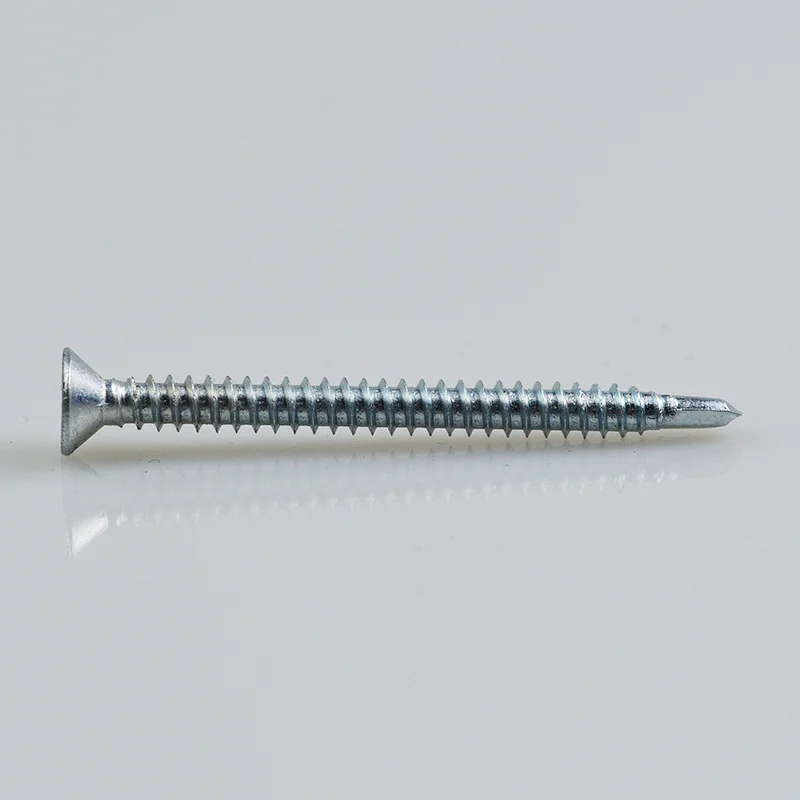
| Fastener type and joint function |
Match the fastener to the joint: bolt and nut, machine screw, self-drilling screw, anchor, washer, or rivet. |
Each type carries load and assembles differently. A self-drilling screw solves a different problem from a bolt used with a pre-drilled hole and nut. |
What materials are being joined, and does the fastener need to cut its own hole or clamp through an existing one? |
| Thread form and mating part |
Confirm thread diameter, pitch, length of engagement, and whether the fastener mates with a nut, tapped hole, insert, or sheet material. |
Incorrect thread fit can strip the mating part, loosen under vibration, or prevent full tightening. |
Can you provide the drawing, sample, or thread standard used on the mating component? |
| Material and surface treatment |
Ask for the base material and finish, such as plain steel, stainless steel, zinc plating, black oxide, or another coating suitable for the environment. |
Material affects strength and corrosion behavior, while the finish affects appearance, friction during tightening, and service life outdoors or in damp areas. |
Will the fastener be used indoors, outdoors, in contact with moisture, or against dissimilar metals? |
| Strength grade and tightening method |
Verify the required grade or class and how the fastener will be tightened, including hand tools, torque tools, or automated assembly. |
A fastener that is too weak can fail; one that is unnecessarily high strength may add cost or create compatibility issues with the joint design. |
Is there a specified grade, torque value, or assembly standard on the drawing or project document? |
| Head style and installation clearance |
Compare hex, pan, countersunk, flange, socket, and other head styles against the tool access and finished surface requirements. |
The head determines the driver, clearance, bearing area, and whether the fastener sits proud or flush. |
Does the assembly need a flush finish, a wide bearing surface, or access from only one side? |