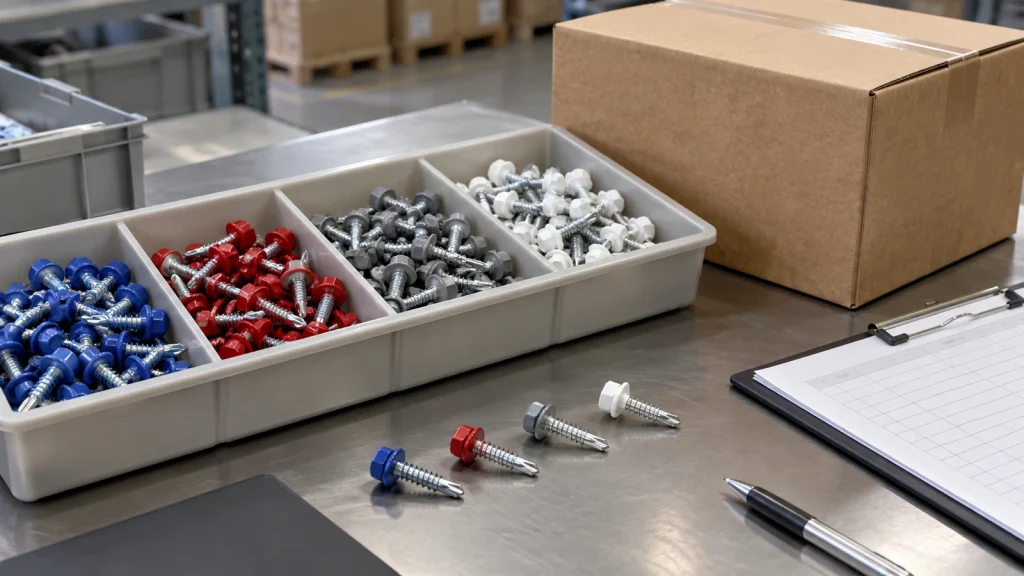
The first distinction to confirm is whether “Philips head” means only the drive recess, or whether the buyer also needs a particular head form such as countersunk, pan, wafer, truss, or hex washer with a cross recess. A countersunk Philips screw sits flush in furniture or fittings; a pan or truss head gives a broader bearing surface where the head remains visible.
Thread and point matter just as much as the drive. Coarse threads are often used for wood and fiberboard because they bite quickly, while self-tapping or self-drilling designs suit metal applications where the screw must form or cut its own path. Choosing the wrong thread for the base material can cause poor clamp load, damaged panels, or slow installation.
Start with the material being fastened. Solid wood, MDF, particle board, thin sheet metal, and steel sections do not behave the same way. A furniture screw may need a sharp point and deep thread for board retention, while a metal screw may need a tapping or drilling point and a coating suitable for the installation environment.
Match the head to the finished surface. Countersunk heads are useful when the screw must sit flush, but they require a suitable countersink and can damage thin material if overdriven. Pan, truss, and washer-style heads spread load over a larger area and may be better where pull-through is a concern.
Do not treat the cross recess as interchangeable with any driver bit. Poor bit fit is a common cause of cam-out, damaged recesses, scratched coatings, and inconsistent tightening. Confirm the recess size, compatible bit, and whether the assembly process uses hand tools, electric drivers, or automated feeding.
A useful inquiry should include the application material, head style, screw size or drawing, thread type, finish or coating requirement, packing preference, and expected order quantity. If an existing screw is being replaced, send photos or samples and explain the failure mode, such as stripping, corrosion, pull-out, or head breakage.