Pipe Fitting Unions Selection Guide | Hebei Wotu Fastener Manufacturing Co., Ltd.

Pipe Fitting Unions for Serviceable Connections

Pipe fitting unions let installers disconnect a pipe run without rotating the entire line. They are useful around pumps, valves, filters and other equipment that may need inspection or replacement, but the right union depends on the connection method, sealing arrangement, pipe material and service conditions.

Choose the union by matching its end connections and sealing surfaces to the adjoining pipe or fittings. A union that is easy to assemble but poorly matched to the medium, temperature or pressure can create leakage and repeated maintenance work.

Related Products

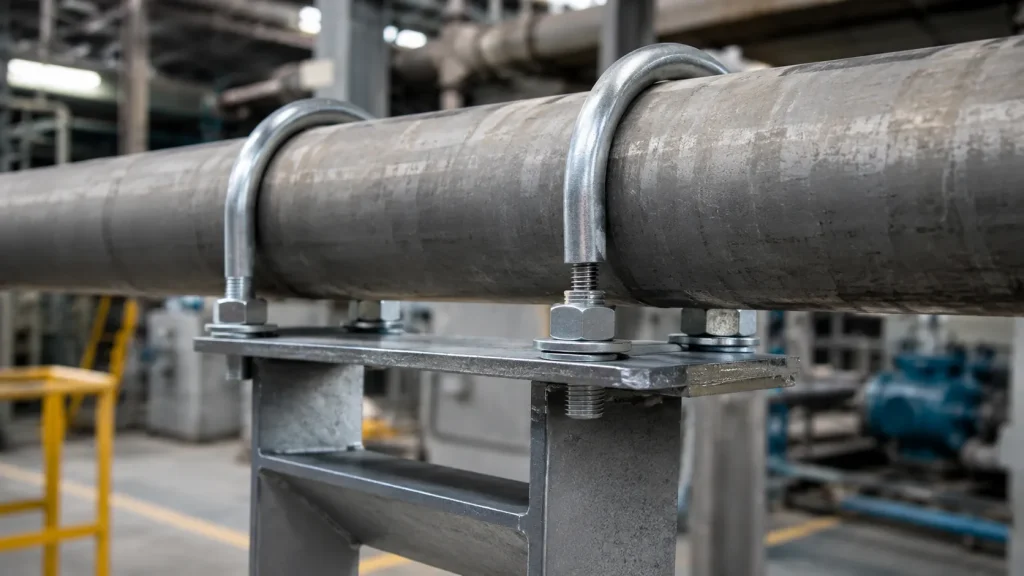
U-bolt ( / U-bolt, M10/M12/M16/M20/M24 multiple specifications)

U-bolt ( / U-bolt, M10/M12/M16/M20/M24 multiple specifications)

Brand: Wotu Surface: natural black oxide / hot-dip galvanized / blue-white zinc plated, multiple processes available Specifications: Based on common industry drawing parameters, suitable for pipe diameter 25mm~139.7mm, screw diameter M10~M24, total length can be nonstandard customized Matching: can be matched with nut, flat washer and spring washer of the same specifications for complete shipment Packaging: Bundling and packaging + 25kg export carton, full-container wooden pallet wrapped with film, supports private-label export packaging

Read More
Hot-Dip Galvanized Chinese National Standard Flat Washer (GB/T97.1A Level Flat Washer)

Hot-Dip Galvanized Chinese National Standard Flat Washer (GB/T97.1A Level Flat Washer)

Brand: Wotu Surface: overall hot-dip zinc plated anti-corrosion treatment, optional blue-white zinc plated, color zinc plated, black oxide Specifications: Execute GB/T97.1-2002 Chinese national standard, in stock M6-M64 full range of specifications, inner diameter, outer diameter, thickness strictly comply with Chinese national standard parameters, support nonstandard size customized Packaging: 25kg woven bag / export carton packaging, full pallets wrapped with film, supports private-label customization

Read More
Chinese National Standard / German Standard Hex Nut (thick Nuts, Thin Nuts, Flange Nuts, Multiple Categories)

Chinese National Standard / German Standard Hex Nut (thick Nuts, Thin Nuts, Flange Nuts, Multiple Categories)

Brand: Wotu Surface: color zinc plated, blue-white zinc plated, black oxide, hot-dip galvanized, various surface treatments available Specifications: Comply with DIN934, GB/T6170, GB/T6172.1, GB/T6177.1 standards, in stock M6-M64 full range of specifications, support nonstandard customized Packaging: woven bag inside/25kg export carton, full-container wooden pallet wrapped with film, supports private-label, neutral export packaging

Read More
Hot-Dip Galvanized Hex Nut (DIN934 Thickened/GB Thin Nut In Multiple Specifications)

Hot-Dip Galvanized Hex Nut (DIN934 Thickened/GB Thin Nut In Multiple Specifications)

Brand: Wotu Surface: high temperature hot dip zinc plated surface treatment Specifications: Comply with DIN934, GB/T6170, GB/T6172.1 Chinese national standard German standard, in stock M6-M64 full range of specifications, length is nonstandard customized as required Packaging: 25kg woven bag/export carton, full-container wooden pallet wrapped with film, supports neutral packaging, private-label customization

Read More
Hot-Dip Galvanized Hex Head Bolt (DIN931 Half Thread / DIN933 Full Thread / GB30 Chinese National Standard Bolt, Can Be Equipped With Nut And Washer Set)

Hot-Dip Galvanized Hex Head Bolt (DIN931 Half Thread / DIN933 Full Thread / GB30 Chinese National Standard Bolt, Can Be Equipped With Nut And Washer Set)

Brand: Wotu Surface: overall hot-dip zinc plating treatment Specifications: Comply with DIN and GB standards, in stock M6-M48 full range of specifications, length 20mm-300mm, supports nonstandard customized. Packaging: woven bag inside / 25kg export carton, film-wrapped wooden pallet; supports neutral packaging and customer private-label customization.

Read More

Compare union connections, materials and service fit

Union selection points

When comparing pipe fitting unions, review the end connection, nominal size, body and sealing materials, pressure and temperature suitability, overall dimensions and maintenance access. Also confirm the inspection or documentation available for the specific configuration and whether the supplier can match your existing pipe and fitting standard.

Criterion What To Check Why It Matters Buyer Tip
Connection standard and end configuration Compare the union’s thread form, end type, and nominal size with the pipe and mating fitting drawings. A mismatch can prevent assembly, damage threads, or create a leak even when the stated pipe size looks similar. Which connection standard and end configuration does this union use, and does it match our existing pipework?
Pipe size and wall thickness Verify the pipe outside diameter, nominal size, and wall thickness or schedule against the union’s dimensional information. The union must seat correctly and leave enough flow passage without forcing an unsuitable pipe into the connection. Can you confirm the compatible pipe dimensions and provide a dimensional drawing for our pipe size?
Material compatibility with the service Check the union body, sealing parts, and any plated or coated surfaces against the fluid, temperature, and surrounding environment. Incompatible materials or seals can corrode, swell, crack, or contaminate the line. Which materials and sealing compounds are used, and are they suitable for our fluid and operating environment?
Pressure and temperature suitability Compare the stated working limits for the complete union assembly with the system’s normal and peak conditions. A fitting that suits the pipe size may still be unsuitable for the line’s pressure or temperature range. What working pressure and temperature limits apply to this specific union and its seal?
Union design and service access Review the union’s joining method, wrench access, sealing face, and space needed for removal or replacement. A serviceable union can simplify maintenance, while poor access or a damaged sealing face can extend downtime. Can the union be installed and removed in our available space without disturbing the connected pipe?

Choose a union for access, sealing and compatibility

A union differs from a standard coupling because it can usually be separated at the union joint while the connected pipe remains in place. That distinction matters in confined installations and maintenance zones where removing a long pipe section would be disruptive.

Unions are not automatically the best choice for every joint. Compare the required service access, available installation space, connection type and expected movement with alternatives such as couplings, threaded fittings or flanged connections. The joining method must also suit the pipe and the sealing method used in the system.

Start with the line connection. Confirm whether each side needs a threaded, socket, welded or other end arrangement, and check that the pipe material and joining method are compatible. A mismatch between the union ends and the existing system can force adapters into the installation and create extra leak points.

Then define the service conditions: fluid or gas, operating temperature, working pressure, corrosion exposure and cleaning requirements. Material selection should account for the conveyed medium rather than relying only on the pipe's nominal size. Ask which body, nut and sealing materials are available for the intended application.

Consider how the union will be installed and serviced. A compact design may fit a restricted space, while a larger hand-tightening area may be easier to inspect and maintain. Check the available wrench clearance, the direction of assembly and whether the joint will be opened regularly. Avoid selecting solely by nominal diameter without confirming the actual connection dimensions and sealing face.

Before requesting a quotation, send the pipe size, connection type and service medium, along with the pressure and temperature conditions if known. Include a drawing or photographs when space is limited, and ask the supplier to confirm dimensions, materials, sealing details, applicable tolerances and whether the proposed union matches the adjoining fittings.


Criteria Importance Description Example Options
End connection and interface Critical because an incorrect connection can prevent assembly or create a leak path. Check the connection type on both sides, the applicable joining standard, actual dimensions and the sealing face. The union should connect directly where possible rather than adding unnecessary adapters. A threaded pipe run may require a union with compatible threaded ends, while a socket-joined or welded installation needs a different end arrangement.
Material and service compatibility Critical for preventing premature corrosion, seal damage or loss of suitability in service. Match the body, nut and sealing materials to the conveyed fluid or gas, operating temperature, working pressure, corrosion exposure and cleaning requirements. A union for a corrosive process medium may need a different material and sealing arrangement from one used on a general water line.
Access and maintenance space Important when the joint will be opened during inspection, cleaning or equipment replacement. Allow for wrench clearance, the direction of assembly, the space needed to separate the union and access for inspection after installation. A compact union may fit beside a filter, while a more accessible tightening area may be preferable where operators will open the joint regularly.
Union versus alternative joint Important because the removable feature adds a component and sealing interface that may not be needed in every location. Compare the required service access with a coupling, threaded fitting or flanged connection. Consider installation space, expected disassembly, alignment, inspection and the number of potential leak points. A union can suit a removable pump connection, whereas a coupling may be adequate for a section that is not expected to be dismantled.

Product Selection

Related Options

For a pump outlet, filter connection or equipment bypass that may need regular removal, prioritize a union with a compatible connection arrangement, dependable sealing interface and enough clearance for reassembly. The most suitable configuration is the one that reduces service disruption without adding an unsuitable joint to the line.

Blog Articles / Reviews

Why Do U Bolts Loosen in Pipe Supports? 6 Causes and Prevention Methods

Why Do U Bolts Loosen in Pipe Supports? 6 Causes and Prevention Methods

U bolts usually loosen in pipe supports because the connection loses clamping force, receives continuous vibration, restricts thermal pipe movement, uses an incorrectly sized U bolt, experiences surface settlement, or suffers from corrosion and inadequate inspection. This issue affects EPC contractors, pipe installers, industrial maintenance teams, equipment manufacturers and fastener distributors working with water, oil […]

Frequently Asked Questions

Where are pipe unions most useful?

They are useful where a section of pipe may need removal without rotating or dismantling the full line, such as near pumps, filters, valves or serviceable equipment. A union may be unnecessary where the joint will not need access and a simpler connection provides the required service fit.

Should I use a union instead of a coupling or flange?

A union is suited to compact connections that need to separate at the joint, while a coupling may be simpler for a relatively permanent pipe connection. Flanged connections can be preferable where equipment removal, inspection or frequent bolted access is already part of the installation, but they generally require more space and alignment work.

Does matching the nominal pipe size guarantee a correct fit?

No. The end connection type, thread or joining standard, sealing face, actual dimensions and pipe material must also match. Two components with the same nominal size can still require an adapter or fail to seal correctly if their connection details differ.

Can the same union be used for water, gas and chemical service?

Not automatically. The body, sealing materials and connection design must suit the medium, operating pressure, temperature, corrosion exposure and cleaning process. Ask the supplier to confirm suitability for the complete service condition and to provide the relevant material and dimensional information for the selected configuration.

What should I include when requesting a quotation?

Provide the pipe size, connection arrangement on each side, service medium and any known pressure or temperature conditions. Add the required body and seal materials, installation-space limits, maintenance frequency and a drawing or photograph when the layout is restricted; ask the supplier to verify that the proposed union matches the adjoining fittings.

Leave Your Message

Please provide the pipe size, connection type and service medium. If available, also include the operating pressure or temperature and a drawing or photo showing the installation space.