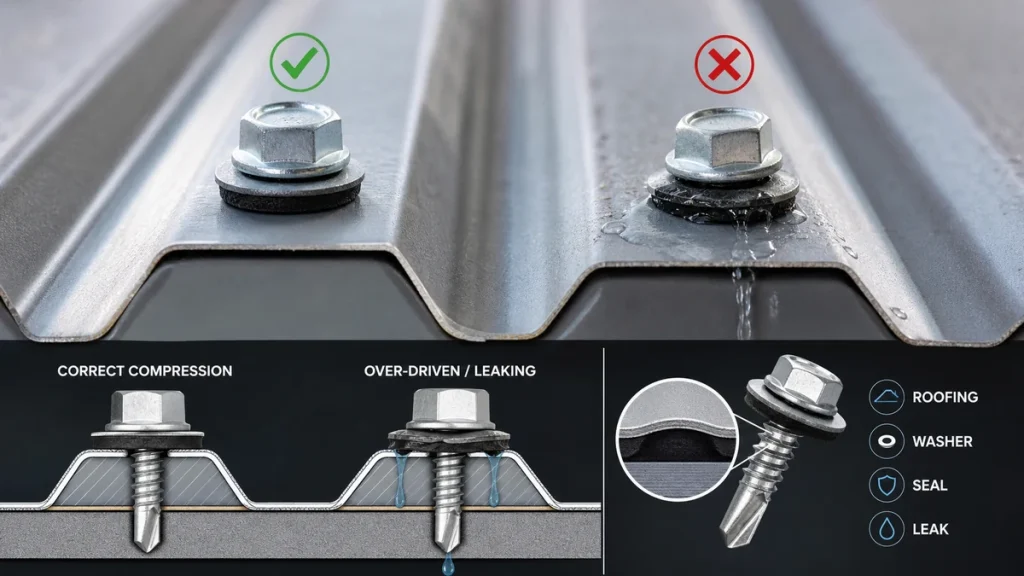
A rigid PVC roofing sheet and a metal roofing panel behave differently on a frame. PVC can expand and contract more noticeably with temperature changes, so fastener holes, washer pressure and edge clearances need more care. Overtightening a screw can deform the sheet or crush the sealing washer; undertightening can leave a path for water.
For buyers comparing sheet options, the practical distinction is between selecting the sheet alone and selecting a sheet-and-fastener system. The screw type, drilling point, washer material and thread choice should match the supporting structure, such as steel purlins or timber battens.
Start with the roof application. A small canopy, livestock building and industrial lean-to may all use PVC roofing sheet, but they place different demands on impact resistance, light transmission, colour stability and roof pitch. Ask the sheet supplier for installation guidance before choosing screws, because fixing positions and hole preparation can vary by sheet profile.
Match the fastener to the support material. Steel framing normally needs a screw point and thread designed to cut into metal; timber support needs a different thread form and holding behaviour. Using the wrong screw can give poor pull-out resistance, stripped holes or loose washers after movement.
Do not treat washer selection as an afterthought. The washer spreads pressure and seals the hole, so its diameter, material and compatibility with the sheet matter. A common mistake is driving screws too hard until the washer bulges or the sheet surface dimples; a sealed joint should be compressed evenly, not crushed.
For an inquiry, prepare the sheet profile, sheet thickness if known, support material, roof location and whether the fixing goes through crest or valley. Hebei Wotu Fastener Manufacturing Co., Ltd. can then be asked to recommend a compatible roofing screw and washer arrangement rather than guessing from sheet name alone.