

Rivet Punch Selection | Hebei Wotu Fastener Manufacturing Co., Ltd.
Rivet punch selection for setting, driving and removal
A rivet punch is chosen around the rivet head, shank size, base material and the operation you need to perform: forming, setting, marking, aligning or removing a rivet. The wrong punch can deform the head, scar the workpiece or leave an uneven joint.
For a purchasing inquiry, the key decision is not just the punch name. It is the fit between the punch face, rivet style and the force applied by your hand tool, press or production fixture.
Matching a rivet punch to the joint and tool
The practical distinction is between a punch used to drive or set a rivet and a punch used to remove or drift one out. A setting punch normally needs a face shape that supports the rivet head without flattening it incorrectly. A removal punch needs enough contact on the rivet shank to push it cleanly without enlarging the hole.
This matters because the same general tool shape can produce very different results depending on the rivet material and the workpiece. Softer rivets may mushroom easily, while harder rivets can damage a poorly matched punch or fixture. Confirm the rivet type, head form and operating method before treating a rivet punch as a standard interchangeable item.
Start with the rivet, not the tool name. Identify the rivet diameter, head style, material and whether the punch will contact the head or the shank. A domed head, countersunk head and tubular rivet each call for different contact geometry if you want a repeatable finish.
Match the punch to the process. A hand punch used for repair work may prioritize control and access in tight spaces. A punch used in a press or fixture needs consistent seating, alignment and material hardness suitable for repeated loading. If the punch will be used with pneumatic or automated equipment, ask what shank style or holder interface is required.
A common mistake is choosing a punch that is too narrow or too flat for the rivet head. Too little contact can mark the head or slip off center; too much flat contact can crush the head shape. Also check access around flanges, channels or curved surfaces, because the body shape of the punch can matter as much as the working face.
For the next step, share a drawing or photo of the rivet joint, the rivet dimensions, the material being fastened and the tool or machine that will apply force. If Hebei Wotu Fastener Manufacturing Co., Ltd. is being considered for supply, ask whether the required punch style, material treatment and working-face shape can be matched to your rivet application.
| Criteria | Importance | Description | Example Options |
|---|---|---|---|
| Working face profile | Critical for head finish and contact control | The face should suit the rivet head or shank area it contacts. A poor match can slip, flatten the head or leave visible marks. | A domed visible head may need a shaped face, while a removal operation may use a flatter driving face on the rivet shank. |
| Operation type | Defines the punch geometry and strength requirement | Setting, forming, aligning and removing rivets place different loads on the tool and require different contact points. | A punch used to set a rivet should protect the finished head; a punch used to remove a rivet should drive it out cleanly without damaging the hole. |
| Tooling method | Important for fit, control and repeatability | A hand tool, press fixture or pneumatic setup may require different shank shapes, lengths and holding methods. | A repair technician may need a compact hand punch, while a production fixture may need a punch that seats consistently in a holder. |
| Rivet and workpiece material | Affects wear, marking and deformation risk | Softer rivets can deform easily, while harder rivets or heavy workpieces may demand a tougher punch and better support under the joint. | A soft tubular rivet in thin sheet needs controlled forming; a harder solid rivet may require higher force and more robust tooling. |
| Access around the joint | Can determine whether the punch can be used at all | Flanges, channels, curved surfaces and nearby components may limit punch diameter, body shape or approach angle. | A narrow channel may need a slimmer punch body even if the working face size is otherwise correct. |
Product Selection
Related Options
For assembly or maintenance work, the main priority is a punch that seats squarely on the rivet without damaging the surrounding surface. For production fixtures, repeatable alignment and wear resistance usually matter more than general hand-tool convenience.







Blog Articles / Reviews
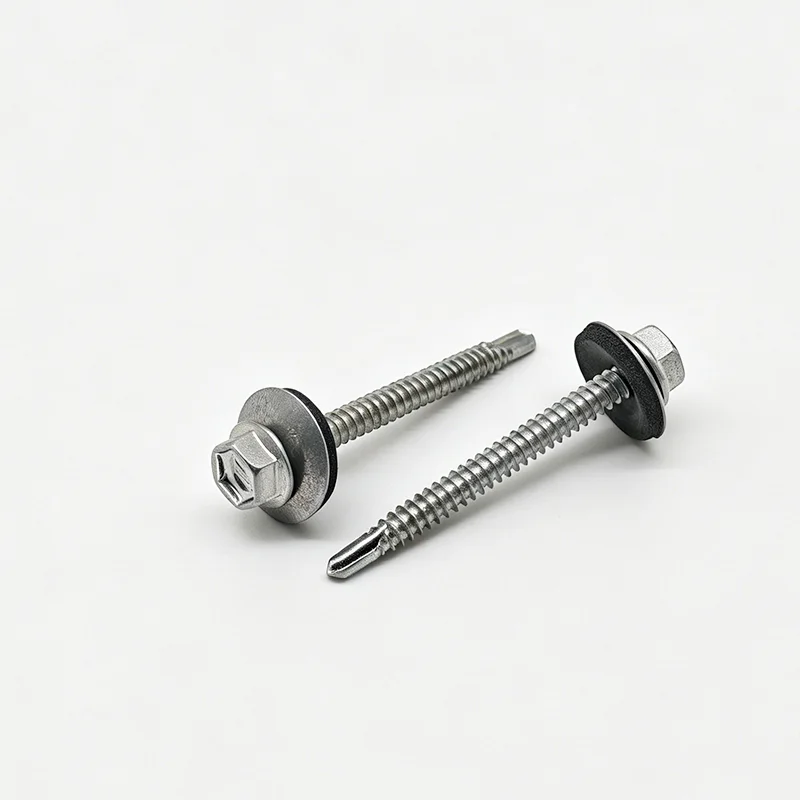
What Is a Fastener? Types, Functions and Industrial Uses
A fastener is a hardware component that mechanically joins or secures parts. Common examples include screws, bolts, nuts and rivets; washers are supporting components used in many fastening assemblies. Some connections can be dismantled by removing threaded fasteners, while others, such as riveted joints, normally require the fastener to be destroyed during removal. In industrial […]
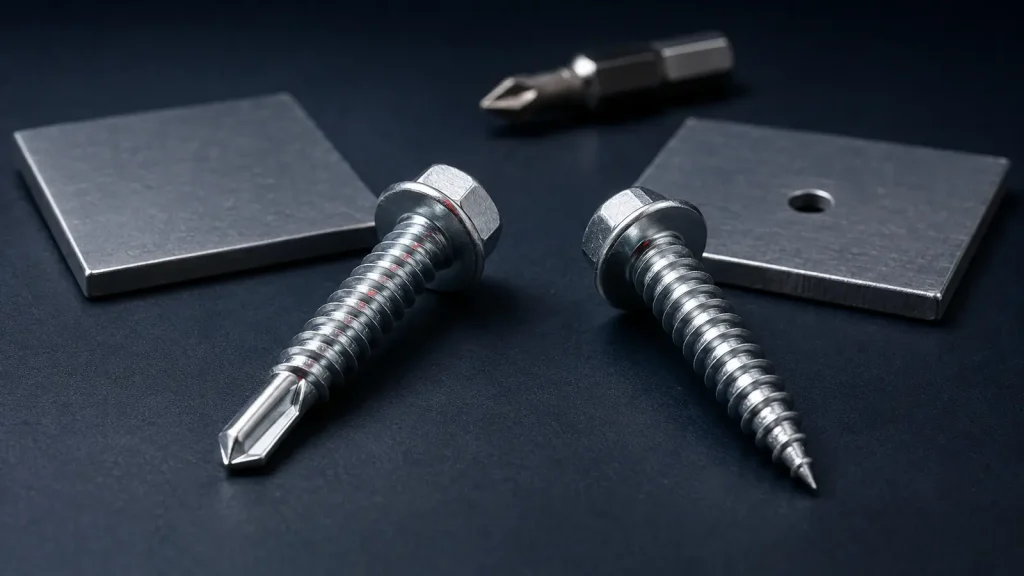
What Is the Difference Between Self Drilling and Self Tapping Screws?
Direct Answer: A self-drilling screw has a drill-shaped point that creates a hole and then forms mating threads in a suitable material. A self-tapping screw forms or cuts mating threads but may require a correctly sized pilot hole. Selection depends on substrate type and thickness, joint stack, point geometry, installation tool, finish and application testing—not […]

Self-Drilling vs Self-Tapping Screws: Which One Fits Metal-to-Metal, Metal-to-Wood, or Pre-Drilled Assemblies?
Direct answer: Choose a self-drilling screw when the fastener must create a hole through a verified metal stack before its threads engage. Choose a self-tapping screw when the assembly already has a correctly sized pilot hole or when the selected thread is intended to form or cut into the specified substrate. The decision must also […]

Choosing the Right Material for Self-Drilling Screws and Its Maintenance Requirements
Self-drilling screws are fundamental mechanical components with high demand. They are typically used in bolts, screws, rivets, etc., for safety or in harsh environments or other hazardous conditions where temperature effects are not a concern. Common materials for self-drilling screws include carbon steel, low-alloy steel, and non-ferrous metals. However, in specific applications, fastener materials need […]

The Concept of Hexagonal Self-Drilling Screws and High-Pressure Standard Parts
Hexagonal self-drilling screws, manufactured by Hebei Wotu Fastener Manufacturing Co., Ltd., operate under a modern enterprise system and strictly manage according to the ISO9001:2015 quality system. The company uses “Wotu” as its registered trademark. The term “standard parts” in China is a shorthand for “standard fasteners,” a narrow definition. High- and medium-pressure standard parts refer […]
Frequently Asked Questions
How do I know if the punch should contact the rivet head or the shank?
That depends on the job. Setting or forming usually contacts and supports the head, while removal or drifting usually contacts the shank or the upset end so the rivet can be pushed out without enlarging the hole.
Is a flat punch suitable for domed rivet heads?
Often it is not the best choice if the finished head must stay neat. A flat face can flatten or mark a domed head, while a matched concave or shaped face supports the head more evenly.
What is the trade-off between a hand punch and a press-mounted punch?
A hand punch is useful for access, repair work and low-volume jobs where the operator needs control. A press-mounted punch is usually better for repeated alignment and consistent force, but it needs the correct holder style, setup and work support.
Can one punch be used for several rivet sizes?
Sometimes one punch can handle nearby sizes for rough work, but it may not give a clean or repeatable result. For visible heads, thin materials or tight holes, the punch face and diameter should be matched more closely to the rivet.
What details should be sent with an inquiry?
Send the rivet diameter, head style, rivet material, workpiece material and the operation required, such as setting, forming, aligning or removal. A photo or drawing of the joint and the tool or machine interface will usually make the requirement much clearer.
Leave Your Message
Please include the rivet diameter and head style, the material being fastened, and whether the punch will be used by hand, in a press or with another tool.