| Nail shank type for the roof material |
Confirm whether the job needs smooth, ring-shank, screw-shank, or other roofing nail styles. |
The shank affects holding power in timber, sheathing, and underlayment. A nail that is easy to drive may not resist pull-out well in exposed or high-vibration areas. |
Ask: Which shank type do you recommend for my roof deck material and expected wind exposure? |
| Head size and sealing method |
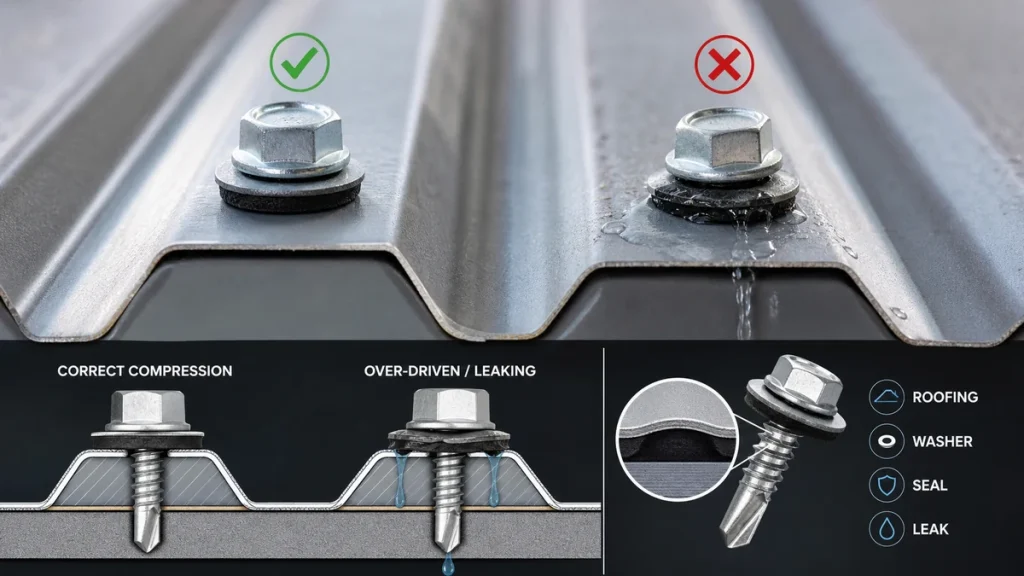
Compare the nail head diameter and whether a washer or sealing cap is required for the roofing material. |
The head spreads clamping force and helps secure sheets, felt, shingles, or flashing. Too small a head can tear through softer material or leave poor coverage around the hole. |
Ask: Will these roofing nails be used with washers, caps, or directly through the roofing material? |
| Nail length matched to build-up thickness |
Check the total thickness of roofing sheet, membrane, insulation, batten, and deck before selecting length. |
A nail that is too short may not hold securely, while an overly long nail can protrude, split timber, or interfere with the underside of the roof assembly. |
Ask: What nail length gives proper penetration for my roof build-up without excess projection? |
| Corrosion resistance for outdoor exposure |
Verify the coating or material finish and whether it suits rain, humidity, treated timber, or coastal conditions. |
Roofing nails sit in wet and temperature-changing conditions. Poor corrosion resistance can stain the roof, weaken the fixing, or shorten service life. |
Ask: Which finish is suitable for my roof material and site environment? |
| Compatibility with installation tools |
Confirm whether the nails are for hand nailing, coil nailers, or strip nailers, and check collation type if tools are used. |
Tool compatibility affects installation speed, driving consistency, and jamming risk. Nails made for one feeding system may not work in another. |
Ask: Are these roofing nails supplied loose or collated, and will they fit my nailer model? |