| Sheet material and coating |
Confirm whether the sheets are steel, aluminium, or another material, and record the coating or finish. |
Material compatibility affects corrosion risk, fastener selection, cutting practice, and long-term roof performance. |
What sheet material and coating will the screws contact, and are compatible fasteners recommended? |
| Sheet profile and overlap design |
Compare the sheet profile, crest or trough fixing points, side laps, and end laps against the roof layout. |
The profile determines where fasteners sit and how overlaps shed water; a mismatch can create leaks or poor seating. |
Can you review the sheet profile and overlap drawing before confirming the fixing arrangement? |
| Supporting substrate |
Identify whether the fasteners will enter steel purlins, timber, or another support, including the support thickness where relevant. |
Different substrates require different thread engagement and drilling behaviour. A screw suited to timber may not hold correctly in steel. |
Which screw point and thread form are intended for this substrate and its actual thickness? |
| Washer and sealing arrangement |
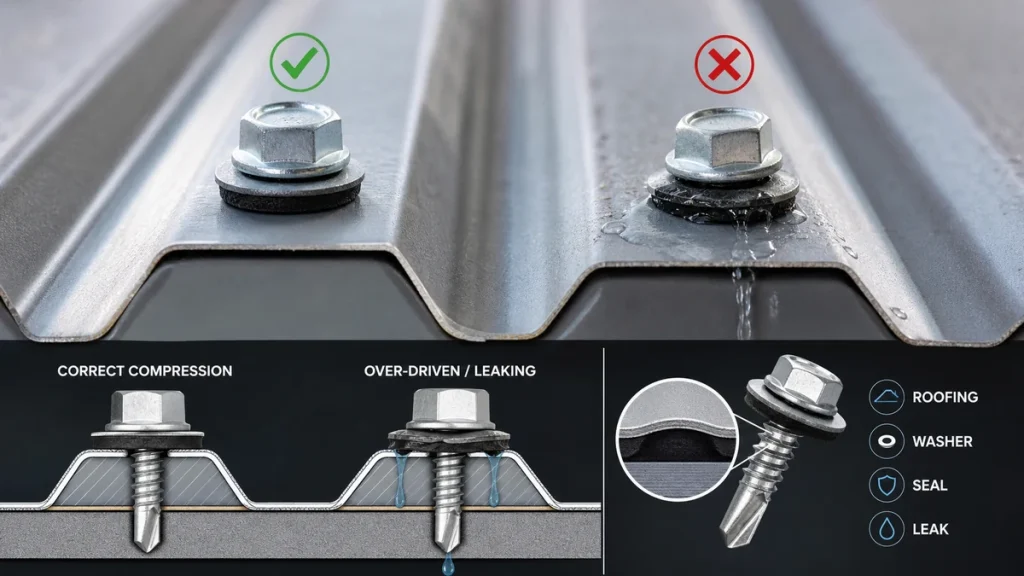
Check the washer material, diameter, sealing compound, and whether the washer sits squarely beneath the head. |
The washer seals the penetration and spreads clamp load. Poor compatibility, overdriving, or an uneven seat can allow water entry. |
What washer and sealing arrangement is specified for this sheet finish, and how should it be seated? |
| Exposure and corrosion conditions |
Describe the roof environment, including moisture, coastal exposure, industrial pollutants, and contact with dissimilar metals. |
Exposure and galvanic contact can accelerate corrosion at the fastener, washer, or sheet interface. |
Which corrosion-resistance option is recommended for this location and the specified sheet material? |