Screw Barrel Replacement | Hebei Wotu Fastener Manufacturing Co., Ltd.

Screw barrel replacement for extrusion and molding machines

A screw barrel is a matched wear component for an extrusion or injection-molding machine. The right combination must suit the machine model, screw geometry, processed material, output requirements and expected wear conditions—not just the barrel's outside dimensions.

For a replacement, the main decision is whether to reproduce the existing assembly or change the material, lining, cooling arrangement or internal geometry to address wear, corrosion, throughput or processing instability.

Related Products

7-letter, 9-letter L-shaped anchor bolt (Chinese national standard GB/T799-1988 embedded anchor screw)

7-letter, 9-letter L-shaped anchor bolt (Chinese national standard GB/T799-1988 embedded anchor screw)

Brand: Wotu Surface: Natural black oxide treatment, customized hot-dip galvanized, zinc plated as required Specifications: Follow Chinese national standard GB/T799-1988, in stock M12-M48, total length 120mm~1500mm, nonstandard customized diameter, bending length, total screw length available Matching: Nuts, flat washers and spring washers of the same specification can be supplied in complete sets. Packaging: Bundling and packaging, using wooden pallets and film-wrapped export packaging in large quantities

Read More
Countersunk Head Blue-White Zinc Plated Self-Drilling Screw (Chinese National Standard: Phillips Countersunk Head Self-Drilling And Self-Tapping Screw GB/T15856.2-2002)

Countersunk Head Blue-White Zinc Plated Self-Drilling Screw (Chinese National Standard: Phillips Countersunk Head Self-Drilling And Self-Tapping Screw GB/T15856.2-2002)

Brand: Hengzuan Surface: blue and white zinc plated, can be customized color zinc plated, black oxide plated Specifications: Comply with GB/T15856.2-2002 Chinese national standard, in stock ST4.2/ST4.8/ST5.5 full range of specifications, length 13mm~75mm optional, supports customized nonstandard rod lengths; drilling adaptation plate thickness 0.7~6mm Packaging: 25kg export cartons, full pallets wrapped with film, supports neutral export packaging, customer private-label customization

Read More
Countersunk Head Blue Zinc Self-Drilling Screw

Countersunk Head Blue Zinc Self-Drilling Screw

Brand: Hengzuan Surface: blue and white zinc plated, can be customized color zinc plated, black oxide plated Specifications: in stock 3.5/3.9/4.2/4.8/5.5 mainstream wire diameter, rod length 13mm~75mm full size range, nonstandard length can be customized as needed Packaging: 25kg export cartons, full wooden pallets wrapped with film, supports neutral export packaging, private-label customization

Read More
Wafer Head Self-Drilling Screw

Wafer Head Self-Drilling Screw

Brand: Hengzuan Surface: blue and white zinc plated, can be customized color zinc plated, black oxide plated Specifications: Comply with GB/T15856.2 Chinese national standard, in stock ST3.5/ST4.2/ST4.8/ST5.5 mainstream wire diameter, rod length 13mm~50mm full range of specifications, nonstandard length customization on demand, drilling applicable plate thickness 2~5mm Packaging: 25kg export cartons, full pallets wrapped with film, supports neutral export packaging, private-label customization

Read More

Match the barrel to the machine and material

Screw barrel selection criteria

When comparing screw barrel options, review machine compatibility first, then internal geometry, base material or lining, wear and corrosion requirements, heating or cooling interfaces, section arrangement and inspection information. The relevant choice depends on the machine and process rather than on a generic barrel description.

Criterion What To Check Why It Matters Buyer Tip
Barrel length versus clamped stack thickness Compare the barrel under-head length with the total thickness of the parts being fastened, including washers, panels, brackets or trim pieces. A barrel that is too short will not give enough thread engagement; one that is too long can bottom out before the joint clamps tightly. Ask: What material thickness range should the screw barrel clamp after coating, finishing or gasket compression?
Thread match between screw and barrel Confirm the thread diameter, pitch and thread standard for both mating parts, not just the outside barrel diameter. A close-looking screw may start in the barrel but bind, strip or loosen if the thread form does not match. Ask: Can you confirm the mating screw specification and provide a sample or drawing before production?
Head style and visible finish Check whether the barrel head needs to sit flush, stand proud, resist tampering or match the visible surface finish of the assembly. The head style affects appearance, clearance and tool access, especially on furniture, fixtures, panels and public-facing hardware. Ask: Should the installed head be decorative, low-profile, countersunk or tool-restricted?
Material and surface treatment Select the base material and coating according to indoor use, outdoor exposure, contact with other metals and the required appearance. The wrong material or plating can corrode, stain the assembly or cause galvanic issues in mixed-metal joints. Ask: What environment will the assembled product face, and does the finish need to match other fasteners?
Installation access and drive type Confirm whether the installer can hold both sides of the joint or must tighten from one side only, and check the drive recess used on the screw or barrel. Some assemblies need two-tool access, while others require a barrel that stays seated during tightening. Ask: During assembly, will the operator have access to both faces of the joint?

Specify a replacement screw barrel without dimensional surprises

The most important distinction is between a barrel for a single-screw machine and one for a twin-screw machine. Their internal arrangement, feed section, compression profile, screw engagement and operating conditions differ, so a barrel that matches the diameter alone may still be unsuitable.

Material choice also matters. General-purpose polymers may require a different wear or corrosion approach from glass-filled compounds, mineral-filled materials, recycled feedstock or abrasive additives. Confirming the processed material and failure mode helps prevent a replacement that wears out quickly or changes the process unnecessarily.

Start with the machine identity and existing assembly. Provide the manufacturer, model, screw diameter, barrel length or section arrangement, screw type and a drawing or clear photographs of the connection and internal sections. For a twin-screw machine, include the screw configuration and any conveying, kneading or mixing sections that affect the barrel layout.

Describe what the barrel must process and what went wrong with the current part. Resin type, fillers, reinforcements, recycled content, additives, operating temperature and cleaning method can change the balance between wear resistance, corrosion resistance and cost. A barrel selected only by polymer name may miss the effect of abrasive or corrosive ingredients.

Choose the replacement scope carefully. A complete barrel assembly may be appropriate when several sections are worn or when alignment and heating or cooling interfaces must be restored together. Replacing only a damaged section can reduce cost and downtime, but it requires reliable dimensional information and confirmation that the remaining sections are still compatible.

Before requesting a quotation, send the machine details, material being processed, failure symptoms, required quantity and any available drawing or sample. Ask the supplier to confirm dimensional compatibility, material or lining option, manufacturing tolerances, inspection documents and which details still need verification. Confirm separately whether Hebei Wotu Fastener Manufacturing Co., Ltd. can supply or arrange the specific screw barrel required for your machine.


Criteria Importance Description Example Options
Machine type and configuration Critical for fit and function Single-screw and twin-screw equipment use different barrel layouts, screw engagement and section arrangements. Matching diameter alone does not confirm compatibility. A twin-screw extruder barrel section cannot be treated as interchangeable with a single-screw injection molding barrel of similar bore size.
Processed material and wear condition High impact on service life Abrasive fillers, recycled content, corrosive additives and high-temperature processing can change the suitable material or lining choice. A line processing glass-filled resin may need a different wear approach from a line processing an unfilled general-purpose polymer.
Replacement scope Important for cost, downtime and reliability A complete assembly may restore alignment and interfaces, while replacing one section can reduce cost if the remaining parts are still usable. If only a feed section is damaged, a section replacement may be considered, but only after confirming dimensions and the condition of adjacent sections.
Internal geometry Directly affects processing performance Feed, compression, metering, venting and mixing features influence melting, conveying, pressure stability and material quality. A replacement that fits mechanically may still change output if the compression or mixing arrangement differs from the original.
Inspection and verification details Reduces installation risk Drawings, measured dimensions, interface checks and agreed inspection documents help confirm that the part matches the machine before shipment. A buyer may request confirmation of key connection dimensions, port locations and section layout before approving production.

Blog Articles / Reviews

How to Specify Countersunk Head Cross Thick Thread Fiberboard Screws for Furniture Assembly Projects

How to Specify Countersunk Head Cross Thick Thread Fiberboard Screws for Furniture Assembly Projects

Fiberboard screws are selected based on more than screw size alone. For furniture assembly and board-based applications, buyers need to match the screw structure with the characteristics of fiberboard, MDF, and similar engineered wood materials. A suitable specification should consider thread design, head style, screw length, diameter, installation method, and application requirements. For buyers sourcing […]

What Should an RFQ Include When Sourcing Dacromet Hex Head Self-Drilling Screw?

What Should an RFQ Include When Sourcing Dacromet Hex Head Self-Drilling Screw?

When sourcing dacromet hex head self drilling screw, a complete RFQ should define the application, screw configuration, coating requirement, dimensions, and supplier confirmation requirements. Buyers often receive different quotations because suppliers may interpret coating, size, drilling capability, or packaging scope differently. Before preparing a project inquiry, buyers can review the available fastener product categories to […]

How Should Buyers Evaluate Self Tapping Screws for Project Procurement?

How Should Buyers Evaluate Self Tapping Screws for Project Procurement?

#4 self tapping screws should not be purchased from the “#4” designation alone. For a usable B2B specification, the buyer still needs the actual screw diameter, thread form or pitch, overall length, substrate, pilot-hole condition, head and drive style, material, surface finish and quantity. This matters because suppliers may use different naming systems. Wotu Fastener’s […]

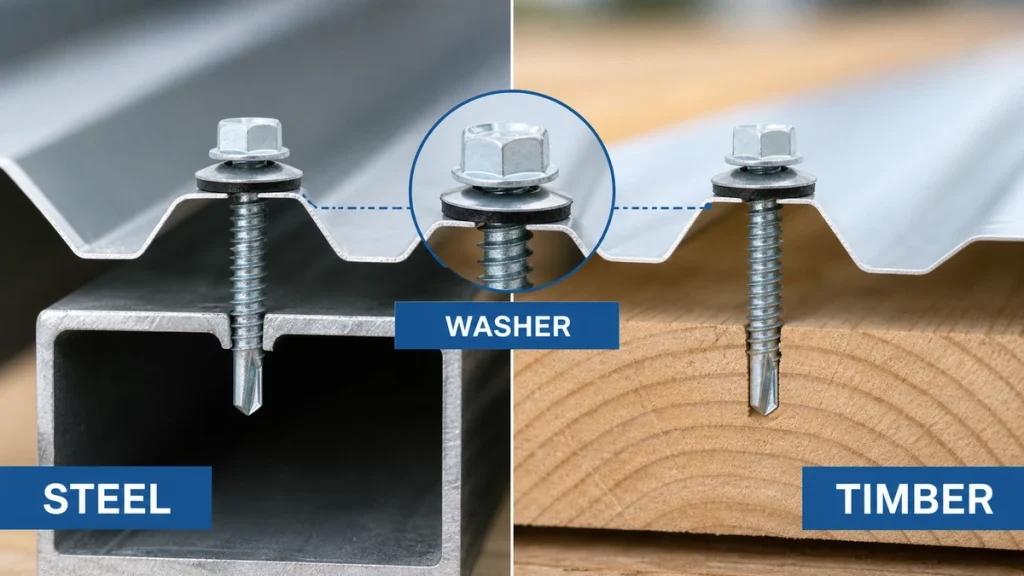
Which Self-Tapping Roofing Screw Specification Fits Metal Panels on Steel or Timber?

Which Self-Tapping Roofing Screw Specification Fits Metal Panels on Steel or Timber?

The correct self-tapping roofing screw depends on the complete panel-and-substrate stack-up. Steel supports typically require a point and thread matched to the support thickness and any pilot-hole requirement; timber supports require a wood-appropriate thread and sufficient embedment. In both cases, buyers must define diameter, length, head, sealing washer, material or coating, environment, pull-out requirements, and […]

Frequently Asked Questions

How do I know if a replacement barrel will fit my existing machine?

Fit depends on more than screw diameter. Confirm the machine make and model, barrel length, connection faces, feed throat position, heating or cooling interfaces, sensor ports, section layout and screw compatibility. A drawing, sample part or detailed measurement set reduces the risk of receiving a part that cannot be installed.

Should I replace the barrel only, or the screw and barrel together?

Replacing only the barrel can be practical if the screw is still within acceptable wear limits and the geometry remains compatible. If both parts are worn, replacing one component may shorten the life of the new part or leave processing problems unresolved. Ask for guidance based on measured wear, current output problems and the materials being processed.

Is a harder barrel always the better choice?

Not always. Higher wear resistance can help with glass-filled, mineral-filled or recycled materials, but it may increase cost and may not address corrosion or process stability issues. The better choice depends on whether the main failure is abrasion, chemical attack, poor heat control, contamination, or mechanical damage.

What is the common mistake when ordering one for extrusion or injection molding equipment?

A common mistake is ordering by diameter and overall length while ignoring internal geometry and machine interfaces. Compression ratio, feed section design, venting, mixing features and temperature-control layout can affect output and material quality. Send process details and drawings instead of relying on a short dimensional description.

What information should I send before asking for price and lead time?

Send the machine manufacturer and model, screw diameter, barrel length or section arrangement, processed material, fillers or additives, current failure symptoms, required quantity and any drawings or photos. If the old part is available, note whether it can be measured or supplied as a sample. Also confirm whether Hebei Wotu Fastener Manufacturing Co., Ltd. can support the exact machine type and barrel configuration you need.

Leave Your Message

Please provide the machine manufacturer and model, screw diameter or assembly drawing, and the material and process that caused the replacement need.