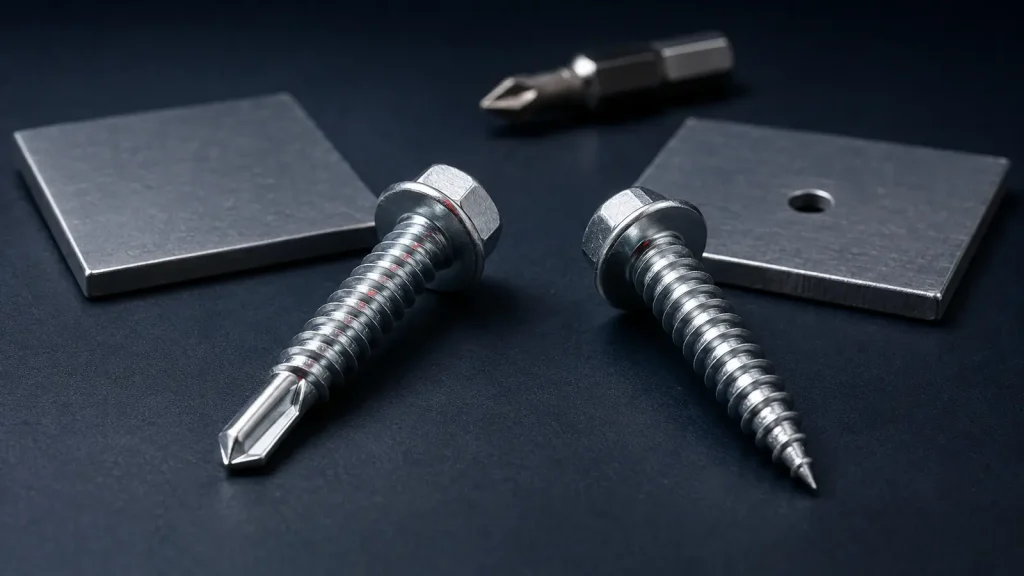
The key distinction is between self tapping and self drilling. A self tapping bolt or screw needs a suitable pilot hole and then forms the thread as it is driven. A self drilling fastener has a drill point that makes its own hole before the thread engages. That difference matters on steel because the pilot hole size, material thickness and tool control decide whether the thread holds or tears out.
Buyers should also separate thread-forming and thread-cutting designs. Thread-forming fasteners displace material and can give strong engagement in suitable steel, while thread-cutting designs remove material and may suit harder or less ductile materials. The better option depends on the steel grade, hole condition, required removability and the risk of swarf inside the assembly.
Start with the joint, not the catalogue name. Confirm the steel thickness, whether the fastener passes through one sheet or clamps several layers, and whether the back side is accessible. Thin sheet, structural sections and pre-punched brackets behave differently under the same fastener because thread engagement and pull-out resistance change with the amount of steel available.
Define the hole preparation before choosing the fastener. A pilot hole that is too small can cause high driving torque, damaged threads or broken fasteners. A hole that is too large can leave too little material for the thread to hold. If holes are punched, laser-cut or drilled, ask whether burrs, coating build-up or tolerance variation will affect seating.
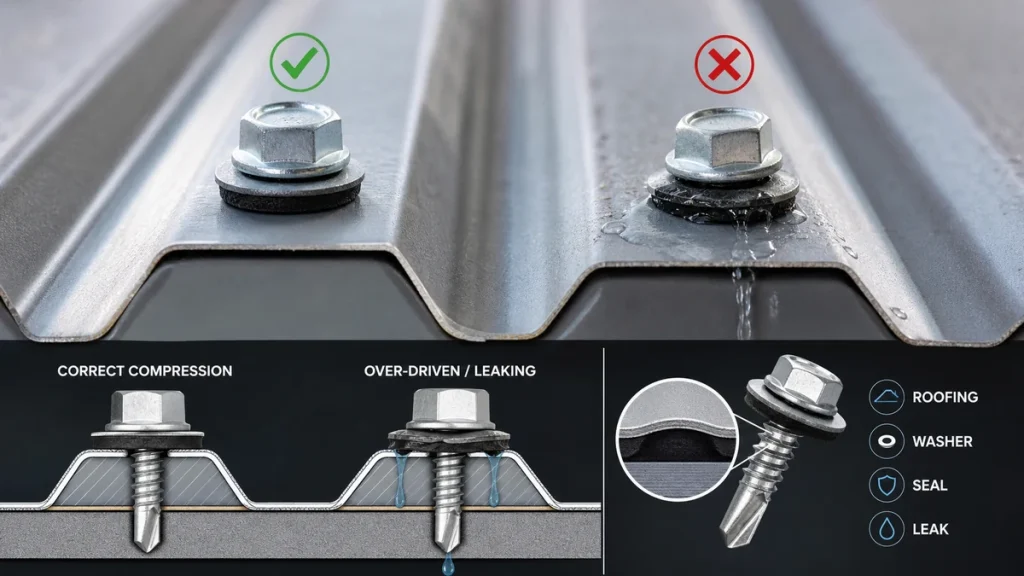
Match the head, drive and finish to the application. Hex heads may suit high-volume installation with sockets, while recessed drives can be useful where clearance or appearance matters. Outdoor steelwork, roofing-related parts and coated assemblies need attention to corrosion compatibility; the coating should protect the fastener without making installation unreliable.
Avoid treating self tapping bolts for steel as a direct substitute for every tapped hole or nut-and-bolt joint. If the assembly will be removed repeatedly, exposed to vibration, or loaded in tension, confirm the expected service conditions before ordering. A useful inquiry should include the steel thickness, pilot hole condition, head style, coating requirement and whether the joint is permanent or serviceable.