Self Tapping Screws For Plastic Selection Guide | Hebei Wotu Fastener Manufacturing Co., Ltd.

Self Tapping Screws for Plastic Parts

Self tapping screws for plastic need to form a secure thread without splitting the boss, stripping the hole, or loosening after repeated use. The main decision is not only screw size; it is the match between thread form, pilot hole, plastic material, boss design, and assembly torque.

For plastic housings, appliance parts, electrical enclosures, clips, covers, and molded components, the right screw can reduce insert cost and simplify assembly. The wrong screw can create stress cracks, weak clamp load, or poor serviceability.

Related Products

Countersunk Head Self-Tapping Screw

Countersunk Head Self-Tapping Screw

Brand: Hengzuan Surface: blue and white zinc plated, optional color zinc plated, black oxide treatment Specifications: Follow GB/T846-1985 Chinese national standard, in stock ST4.2/ST4.8/ST5.5 full range of specifications Packaging: 25kg export cartons, full pallets wrapped with film, supports neutral export packaging, private-label customization

Read More
Countersunk Head Blue-White Zinc Plated Self-Drilling Screw (Chinese National Standard: Phillips Countersunk Head Self-Drilling And Self-Tapping Screw GB/T15856.2-2002)

Countersunk Head Blue-White Zinc Plated Self-Drilling Screw (Chinese National Standard: Phillips Countersunk Head Self-Drilling And Self-Tapping Screw GB/T15856.2-2002)

Brand: Hengzuan Surface: blue and white zinc plated, can be customized color zinc plated, black oxide plated Specifications: Comply with GB/T15856.2-2002 Chinese national standard, in stock ST4.2/ST4.8/ST5.5 full range of specifications, length 13mm~75mm optional, supports customized nonstandard rod lengths; drilling adaptation plate thickness 0.7~6mm Packaging: 25kg export cartons, full pallets wrapped with film, supports neutral export packaging, customer private-label customization

Read More
Blue-White Zinc Plated Pan Head With Pad Self-Tapping Screw

Blue-White Zinc Plated Pan Head With Pad Self-Tapping Screw

Brand: Hengzuan Surface: blue and white zinc plated Specifications: in stock ST4.2/ST4.8full range of specifications, length 13~50mm in stock, support nonstandard length customization Packaging: 25kg cartons, solid wood packaging, support neutral packaging, private-label customization

Read More
Wafer Head Self-Drilling Screw

Wafer Head Self-Drilling Screw

Brand: Hengzuan Surface: blue and white zinc plated, can be customized color zinc plated, black oxide plated Specifications: Comply with GB/T15856.2 Chinese national standard, in stock ST3.5/ST4.2/ST4.8/ST5.5 mainstream wire diameter, rod length 13mm~50mm full range of specifications, nonstandard length customization on demand, drilling applicable plate thickness 2~5mm Packaging: 25kg export cartons, full pallets wrapped with film, supports neutral export packaging, private-label customization

Read More

Selecting self tapping screws for molded plastic parts

Product selection notes

Useful selection criteria include thread-forming versus cutting action, screw diameter and length, head style, drive type, coating, material, pilot hole fit, and expected service conditions. For plastic parts, the best option is the one that holds securely without cracking the molded feature or overstressing the joint during assembly.

Criterion What To Check Why It Matters Buyer Tip
Plastic type and wall thickness Confirm the exact plastic, any glass-fibre content, and the available wall thickness from the assembly drawing or sample. Hard, brittle, soft, and fibre-filled plastics respond differently to thread forming and tightening; thin walls can split or strip. Ask which screw geometry and installation method were tested in the actual plastic grade.
Pilot-hole diameter and thread engagement Compare the recommended pilot-hole range and engaged thread length with the screw drawing and the mating-part dimensions. A hole that is too small can crack plastic or overload the drive; a hole that is too large can reduce pull-out resistance. Request a sample trial using the production hole-making process, not only a hand-drilled sample.
Thread form, point, and head style Verify whether the screw uses a plastic-specific thread, a sharp or blunt point, and a head suited to the bearing surface or countersink. Thread shape affects material displacement, insertion force, stripping risk, and the load transferred to the plastic around the head. Ask for a drawing and compare the proposed profile against the joint’s clearance, countersink, and washer requirements.
Installation control and joint durability Check the recommended driver bit, tightening method, target installation limits, and any evidence from repeated assembly or environmental exposure tests. Overtightening can strip the plastic immediately, while creep, vibration, heat, or moisture can reduce clamping force over time. Ask how the screw was tested for repeated assembly and for the temperature and moisture conditions expected in service.

Key checks before specifying screws for plastic bosses

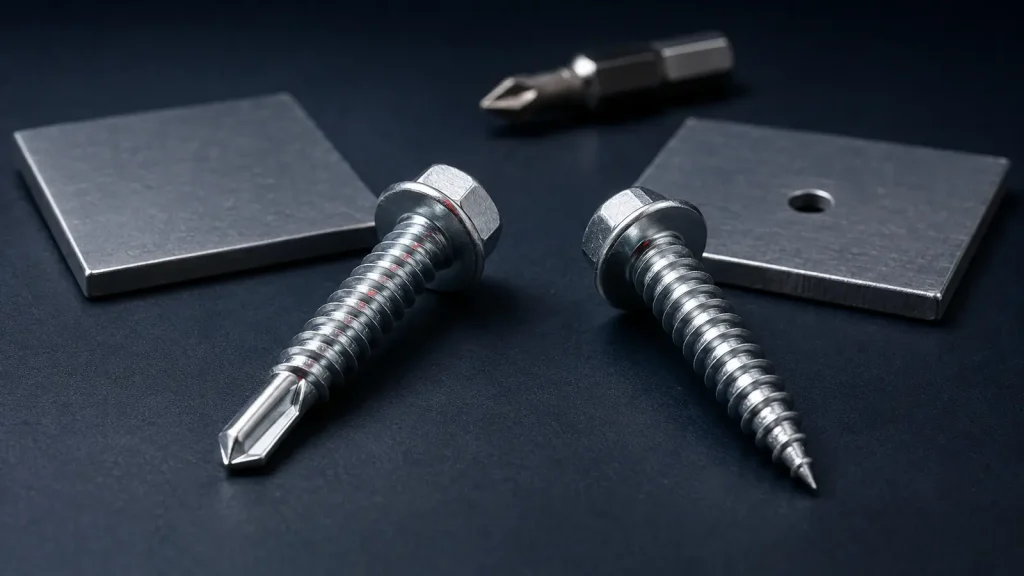
The practical distinction is between screws that cut material and screws that displace or form material. Cutting styles can work in harder plastics and may reduce drive torque, but they remove material and can leave weaker threads in some applications. Thread-forming styles displace plastic around the thread, which often improves holding strength in suitable materials but needs a well-controlled pilot hole and boss design.

This matters because plastics behave differently from metal. A screw that works in a soft molded part may strip in a brittle resin or crack a thin boss. Before choosing a screw, confirm the plastic grade, boss diameter, pilot hole target, required clamp force, and whether the joint will be opened and reassembled.

Start with the plastic, not the screw catalog. ABS, PP, PC, nylon, filled materials, and brittle transparent plastics can respond very differently to thread forming. Softer plastics may accept deeper thread engagement, while stiffer or glass-filled materials may need a thread style that controls stress and insertion torque.

Check the boss and pilot hole design early. A pilot hole that is too small can split the boss or create high assembly torque; one that is too large can reduce pull-out strength and make the screw feel tight without real thread engagement. If the molded part is already designed, ask whether the screw can be matched to the existing hole instead of changing the tool.

Choose the head and drive for the assembly method. Pan, washer, countersunk, or flange heads distribute load differently, and the wrong head can deform the plastic surface before the joint is secure. Drive style also affects automated assembly, bit life, cam-out risk, and field service.

Avoid treating all self tapping screws as interchangeable. For an inquiry, share the plastic material, molded boss or hole dimensions, required screw length and head style, expected assembly method, and whether the joint must be removable. If samples are available, pilot-hole and torque testing is usually the safest way to confirm the choice before bulk purchase.


Criteria Importance Description Example Options
Plastic material and toughness Usually the first decision factor Different plastics accept thread forming differently. Brittle, hard, soft, or filled materials may need different thread geometry and pilot hole control. A soft molded cover and a glass-filled structural part may not perform well with the same screw style.
Thread-forming versus thread-cutting action Important for holding strength and installation stress Thread-forming designs displace plastic around the thread, while cutting designs remove material. The better choice depends on material behavior, torque limits, and the required joint strength. A cutting style may lower drive torque in a hard plastic, while a forming style may give stronger engagement in a ductile molded boss.
Pilot hole and boss design Critical for avoiding cracks and stripped threads The screw must match the molded hole and the surrounding wall thickness. Too much interference can split the boss; too little can reduce pull-out resistance. An existing injection-molded boss may require matching the screw to the current pilot hole instead of changing the molded tool.
Head and drive style Important for assembly quality and surface condition The head controls load distribution on the plastic surface, while the drive affects torque transfer, tool wear, cam-out risk, and serviceability. A flange or washer-style head can spread load on a plastic cover better than a small bearing surface in some assemblies.
One-time assembly versus repeated removal Changes the acceptable trade-off A one-time factory joint may prioritize fast installation and consistent clamp load. A serviceable product may need better thread durability after removal and reinstallation. An internal appliance clip may have different requirements from an enclosure cover opened during maintenance.

Product Selection

Related Options

For molded plastic housings and covers, the priority is usually stable thread engagement with controlled installation torque. A screw for a serviceable enclosure may need better resistance to repeated removal, while a screw for a one-time factory assembly may focus more on fast installation and consistent clamp load.

Blog Articles / Reviews

How Should Buyers Evaluate Self Tapping Screws for Project Procurement?

How Should Buyers Evaluate Self Tapping Screws for Project Procurement?

#4 self tapping screws should not be purchased from the “#4” designation alone. For a usable B2B specification, the buyer still needs the actual screw diameter, thread form or pitch, overall length, substrate, pilot-hole condition, head and drive style, material, surface finish and quantity. This matters because suppliers may use different naming systems. Wotu Fastener’s […]

Why Do Self-Tapping Roofing Screws Leak Even When the Screw Length Looks Correct?

Why Do Self-Tapping Roofing Screws Leak Even When the Screw Length Looks Correct?

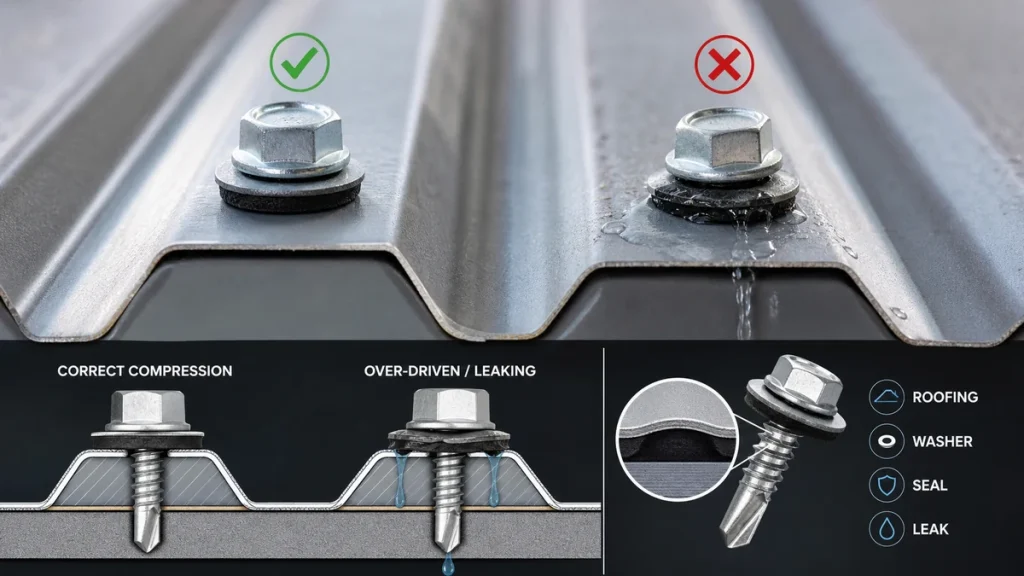
Direct answer: Correct screw length does not guarantee a watertight metal-roof connection. Self tapping roofing screws can leak because of incorrect washer compression, enlarged or stripped holes, insufficient thread engagement, panel movement, or an unsuitable coating-and-washer system. Buyers should diagnose the complete installed connection—including panel profile, support thickness, point type, washer condition, and exposure—rather than […]

What Is the Difference Between Self Drilling and Self Tapping Screws?

What Is the Difference Between Self Drilling and Self Tapping Screws?

Direct Answer: A self-drilling screw has a drill-shaped point that creates a hole and then forms mating threads in a suitable material. A self-tapping screw forms or cuts mating threads but may require a correctly sized pilot hole. Selection depends on substrate type and thickness, joint stack, point geometry, installation tool, finish and application testing—not […]

Rust Prevention Tips for Self-Drilling Screws

Rust Prevention Tips for Self-Drilling Screws

As we all know, the simplest way to prevent self-drilling screws from rusting is to properly isolate the screws from moisture-containing and humid environments. This can be achieved through selective application of protective coatings and sealants, or by purchasing specially formulated rust-resistant or rust-proof screws. This is why many businesses and households have rust prevention […]

Frequently Asked Questions

Can the same self tapping screw be used in all plastic parts?

No. Plastic grade, filler content, wall thickness, boss diameter, and pilot hole size all affect how the screw forms or cuts the thread. A screw that works in ABS may crack a brittle plastic or strip in a softer material if the hole and torque are not matched.

Should I choose a thread-forming or thread-cutting screw?

Thread-forming screws displace plastic and can give strong engagement in suitable materials, but they need enough material around the hole to absorb the stress. Thread-cutting screws remove material and may reduce insertion torque in harder plastics, but they can create weaker engagement in some molded parts.

Is a smaller pilot hole always better for pull-out strength?

Not always. A hole that is too small can raise drive torque, split the boss, or leave molded-in stress around the joint. The best pilot hole balances thread engagement, installation torque, boss strength, and the plastic’s ability to deform without cracking.

What information should be shared before asking for a screw recommendation?

Share the plastic material, boss or hole dimensions, required screw length, head type, drive type, assembly method, and whether the joint will be opened again. If the molded part is fixed, include a drawing or sample dimensions so the screw can be considered around the existing design.

Are these screws suitable for parts that need repeated service or repair?

They can be, but repeated removal depends on the plastic, thread form, engagement length, and tightening torque. If the joint will be opened often, say so early because the screw choice may need to prioritize thread durability rather than only first-assembly holding strength.

Leave Your Message

Send the plastic material, pilot hole or boss dimensions, and the preferred head or drive style. If the part will be opened for service, include that requirement as well.