Threaded Stud Selection Guide | Hebei Wotu Fastener Manufacturing Co., Ltd.

Threaded Stud Selection

A threaded stud is chosen by how it will be loaded, how it will be installed, and what it will fasten into. The main decision is not only diameter and length; thread form, material, surface finish, end style, and nut engagement all affect whether the joint tightens cleanly and stays secure.

For a buyer, the clearest inquiry starts with the application: machinery assembly, steel structure connection, equipment mounting, flange fastening, or repair work. That context helps separate a standard fully threaded stud from a double-end stud, weld stud, or custom-length fastener.

Related Products

Hot-Dip Galvanized Hex Head Bolt (DIN931 Half Thread / DIN933 Full Thread / GB30 Chinese National Standard Bolt, Can Be Equipped With Nut And Washer Set)

Hot-Dip Galvanized Hex Head Bolt (DIN931 Half Thread / DIN933 Full Thread / GB30 Chinese National Standard Bolt, Can Be Equipped With Nut And Washer Set)

Brand: Wotu Surface: overall hot-dip zinc plating treatment Specifications: Comply with DIN and GB standards, in stock M6-M48 full range of specifications, length 20mm-300mm, supports nonstandard customized. Packaging: woven bag inside / 25kg export carton, film-wrapped wooden pallet; supports neutral packaging and customer private-label customization.

Read More
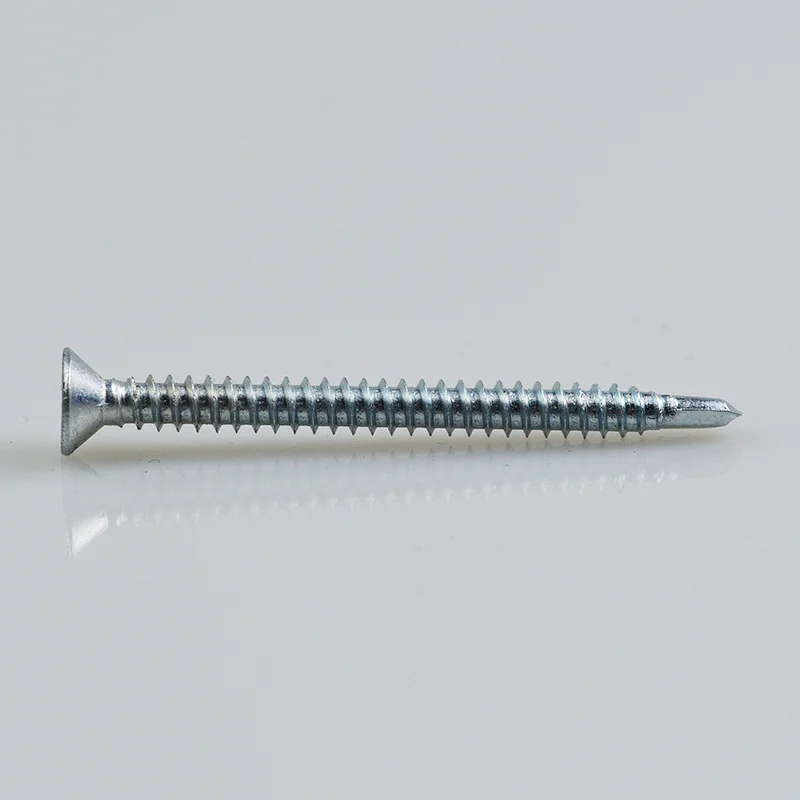
Countersunk Head Cross Thick Thread Fiberboard Screw

Countersunk Head Cross Thick Thread Fiberboard Screw

Brand: Wotu Surface: color zinc plated electroplating Specifications: in stock 3.5/4.0/4.5/5.0 regular wire diameter, rod length 16~80mm full range of specifications in stock, supports nonstandard length customization Packaging: 25kg cartons, whole wooden pallets

Read More

Threaded stud selection details that affect fit and assembly

Stud specification guide

Relevant threaded stud selection usually comes down to thread standard, length, material, finish, end configuration, and compatibility with the mating nut or tapped hole. A clear specification reduces back-and-forth and helps avoid receiving a fastener that is dimensionally close but unsuitable for assembly.

Criterion What To Check Why It Matters Buyer Tip
Thread form and fit Confirm the thread standard, pitch, diameter, and whether the stud is fully threaded or has an unthreaded shank. A threaded stud that does not match the mating nut or tapped hole can bind, strip, or give a false torque reading. Ask: Which thread standard and pitch should I specify for my mating parts?
Length and engagement Compare total length, threaded length on each end, and the required nut or hole engagement in the assembly drawing. Too little engagement weakens the joint, while excess length can interfere with covers, brackets, or moving parts. Ask: What overall length and usable thread length suit this joint stack-up?
Material and strength grade Identify the base material and mechanical property class required by the application or drawing. Stud strength must match the load, tightening method, and connected materials; a stronger stud is not always better if it damages softer threads. Ask: Which material and grade do you recommend for this load and mating material?
Surface finish and corrosion exposure State the operating environment, such as indoor dry use, outdoor exposure, moisture, chemicals, or temperature changes. The finish affects corrosion resistance, friction during tightening, and appearance after installation. Ask: Which coating or finish is suitable for this environment, and does it affect torque guidance?
End style and installation method Confirm whether the stud needs chamfered ends, a drive feature, a weld end, or equal threads on both ends. End style affects how the stud starts in the hole, how it is installed, and whether it can be removed without damaging the thread. Ask: How will the stud be installed, and do the ends need any specific preparation?

Key choices before ordering threaded studs

The practical difference between a fully threaded stud and a double-end stud is where the load and installation force sit. A fully threaded stud gives adjustment along most of its length and suits through-joints or general clamping. A double-end stud has threaded sections at both ends with an unthreaded shank in the middle, which can help with location, grip length, or repeated nut removal.

That distinction matters because a stud that looks correct on diameter may still fail the job if the thread length, exposed length, or material grade is wrong. Before ordering, confirm the mating nut, tapped hole depth, washer use, tightening method, and whether the stud must resist corrosion, vibration, heat, or frequent disassembly.

Start with the joint design. Specify the thread standard, diameter, pitch, total length, thread length, and end style if known. If the stud screws into a tapped component, include the required engagement depth and the material of the base part, because soft metals, castings, and steel structures place different demands on thread engagement.

Material and finish should match the service environment, not just the drawing note. Carbon steel may suit many dry indoor assemblies, while stainless steel or a protective coating may be needed where moisture, chemicals, or outdoor exposure are present. Coatings can change fit and tightening behavior, so confirm compatibility with the nut and any assembly requirements.

A common mistake is treating a stud as interchangeable with a bolt of the same diameter. Studs often remain in the base part while nuts are removed, so straightness, thread quality, and consistent nut run-down matter. Also check whether the order needs nuts and washers matched to the stud, rather than sourcing them separately and discovering a fit or finish mismatch during assembly.

For the next step, send a drawing, sample photo, or written specification with the application, quantity, material preference, finish, thread standard, and any packaging or marking needs. If you are unsure about the exact stud type, describe how it installs and what parts it connects so the discussion can focus on the right configuration.


Criteria Importance Description Example Options
Stud style Often the first choice because it determines how the fastener installs and clamps Fully threaded, double-end, weld, and custom-length studs serve different assembly methods. The right style depends on whether the stud passes through parts, screws into a tapped component, or remains fixed for repeated nut removal. A machine cover that is removed for service may use a stud fixed in the base with a nut on the outside.
Thread standard and pitch Critical for fit with nuts, tapped holes, and existing assemblies Thread form must match the mating parts. Diameter alone is not enough, because the wrong pitch can damage threads or prevent full engagement. Two studs with the same outside diameter can be incompatible if one uses a coarse pitch and the mating nut requires a fine pitch.
Material and finish Important for strength, corrosion resistance, and assembly behavior Material should suit the load and operating environment, while finish should suit corrosion exposure and thread compatibility. Coatings can affect run-down and tightening friction. An indoor dry assembly may have different material and finish needs than outdoor equipment exposed to moisture.
Engagement length and exposed length Important for reliable tightening and avoiding bottoming or weak engagement The stud must provide enough thread in the tapped part or nut while leaving the correct exposed length for washers, nuts, and clamped parts. Total length alone does not confirm this. A stud that is too long in a blind tapped hole may bottom out before the joint is properly clamped.
Matched nuts and washers Worth confirming when the assembly depends on consistent fit and finish Sourcing studs, nuts, and washers separately can create pitch, grade, coating, or fit mismatches. Confirm whether mating hardware should be supplied or specified together. A coated stud may need a compatible nut so assembly does not seize or bind during installation.

Blog Articles / Reviews

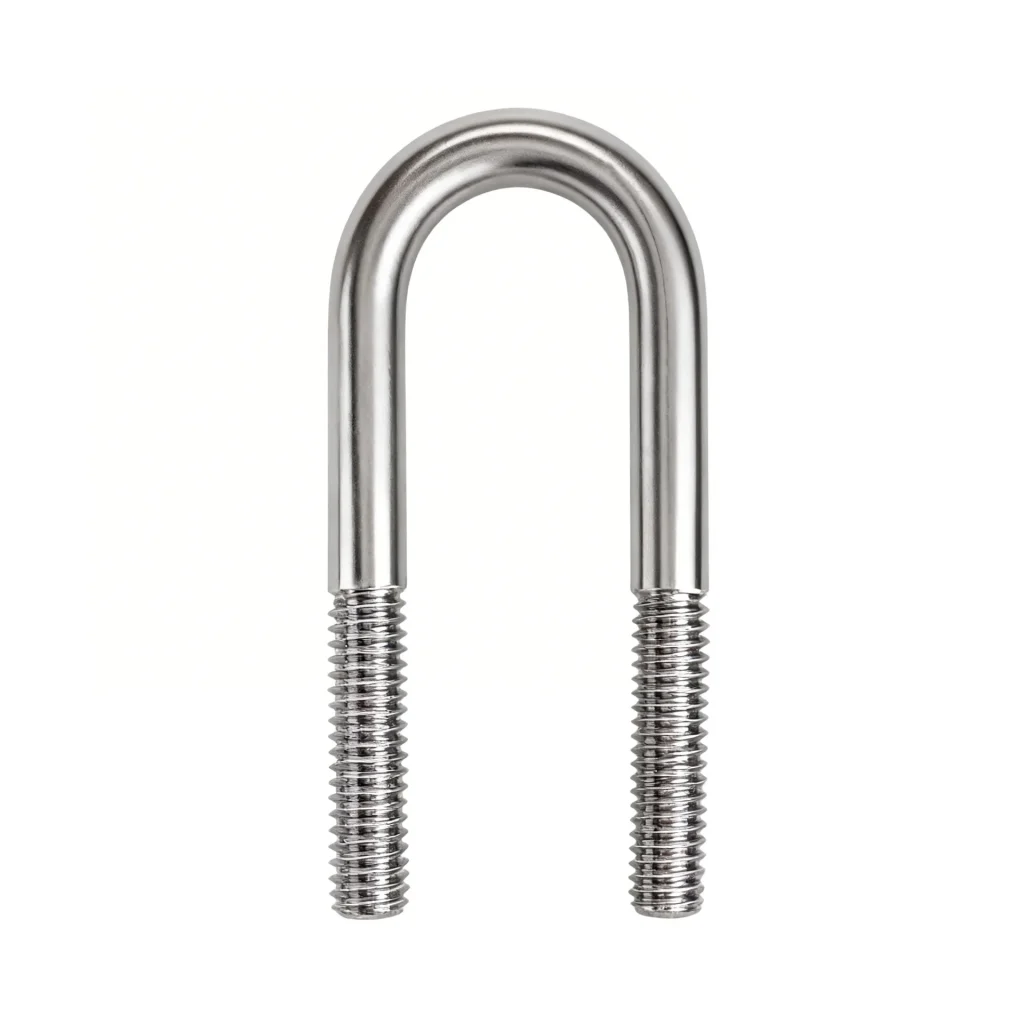
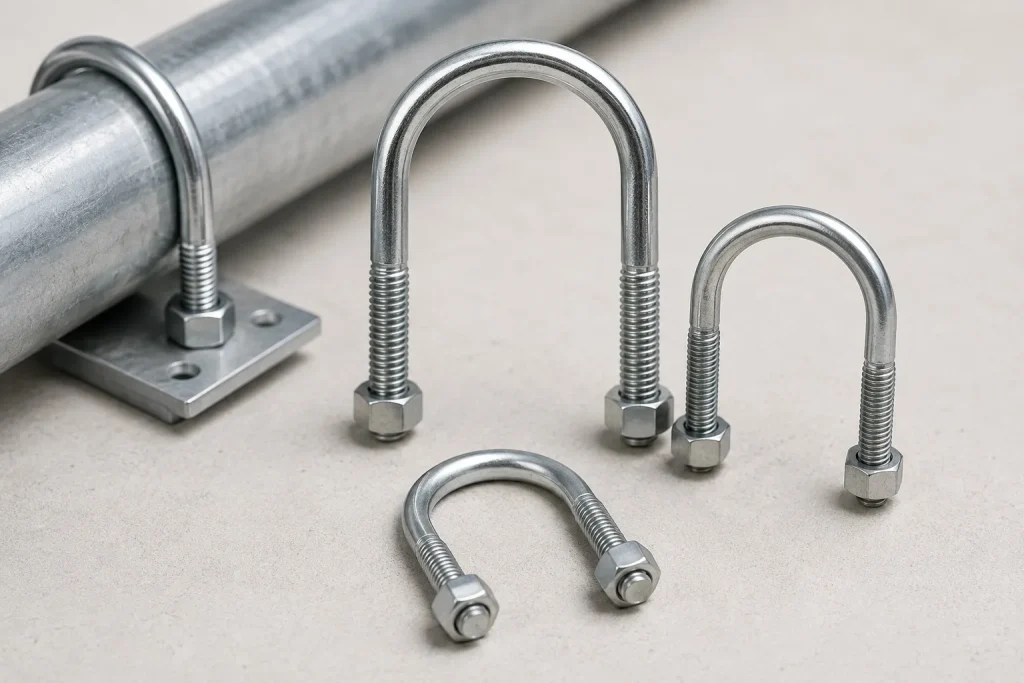
Which U-Bolt Measurements Must Buyers Provide Before a Quote?

Which U-Bolt Measurements Must Buyers Provide Before a Quote?

For an M10–M24 U-bolt RFQ, buyers should send a dimensioned drawing that defines thread diameter, inside width, leg or overall length, bend geometry, thread length, application diameter, material or grade requirement, surface finish, matching nuts/washers, quantity, and packing needs. Nominal thread size alone is not enough because different measurement datums can produce U-bolts that look […]

Hex Thin Nut vs Standard Hex Nut: Which Fits Space-Limited or Locking Assemblies?

Hex Thin Nut vs Standard Hex Nut: Which Fits Space-Limited or Locking Assemblies?

Direct Answer: Choose a hex thin nut when reduced nut height is genuinely required by the assembly or when the engineering design specifies it as part of a locking arrangement. Choose a standard hex nut when full nut height, normal thread engagement, and the specified load-bearing function are required. Buyers should compare nut height, thread […]

National Standards for Self-Drilling Screws – Fasteners

National Standards for Self-Drilling Screws – Fasteners

When using fasteners, are you familiar with the standards governing them? Today, Hebei Wotu Fastener Manufacturing Co., Ltd. will discuss the national standards for fasteners with you. Let’s take a look. 1. Standards for Fastener Product Dimensions: These specifically define the basic dimensions of the product; for threaded products, this also includes the basic dimensions […]

The Concept of Hexagonal Self-Drilling Screws and High-Pressure Standard Parts

The Concept of Hexagonal Self-Drilling Screws and High-Pressure Standard Parts

Hexagonal self-drilling screws, manufactured by Hebei Wotu Fastener Manufacturing Co., Ltd., operate under a modern enterprise system and strictly manage according to the ISO9001:2015 quality system. The company uses “Wotu” as its registered trademark. The term “standard parts” in China is a shorthand for “standard fasteners,” a narrow definition. High- and medium-pressure standard parts refer […]

What are the standard dimensions of a universal hexagonal self-drilling screw?

What are the standard dimensions of a universal hexagonal self-drilling screw?

Self-drilling screws, also known as “drill screws,” “self-drilling screws,” or “dovetail screws,” are classified into different types based on their application, material, and shape. A standard 6mm self-drilling screw has a flatness of 9.38mm or 9.8mm. A hexagonal self-drilling screw with dimensions 4.5*14*25 means the screw size is 4.5mm, the screw length is 25mm, and […]

Anchor Bolts: 7 Ordering Errors That Cause Site Rework

Anchor Bolts: 7 Ordering Errors That Cause Site Rework

ost anchor bolt ordering errors come from incomplete drawings, unclear dimensions, unsuitable material or coating choices, undefined tolerances, and mismatched nuts or washers. These mistakes affect steel fabricators, EPC contractors, equipment installers, importers, and distributors because anchor bolts are usually embedded before the connected structure arrives on site. Once concrete has cured, even a small […]

Frequently Asked Questions

Should I use a fully threaded stud or a double-end stud?

Choose a fully threaded stud when you need adjustment along the length or a simple through-joint with nuts. Choose a double-end stud when one end stays installed in a tapped part and the other end is used for clamping, or when the unthreaded center section helps locate the joint.

Can a stud replace a bolt of the same diameter?

Not always. A stud may stay fixed in one component while nuts are removed during maintenance, so thread engagement, straightness, exposed length, and nut run-down become more important than they might be with a standard bolt.

What information is needed to request the right stud?

Provide the diameter, thread standard and pitch, total length, threaded length at each end if applicable, material, surface finish, and quantity. Also describe the assembly: whether the stud goes through both parts, screws into a tapped hole, or will be welded or fixed in place.

Does surface coating affect the fit?

Yes, coatings can change thread fit, friction during tightening, and compatibility with nuts or tapped holes. If the joint uses a specific nut, washer, torque method, or corrosion requirement, confirm the finish before ordering rather than treating it as a cosmetic choice.

What is a common cause of stud installation problems?

A frequent issue is specifying only the diameter and total length while leaving out thread pitch, thread length, or required engagement depth. The stud may look correct but bottom out in a tapped hole, leave too little nut engagement, or fail to clamp the parts as intended.

Leave Your Message

Send the stud diameter, thread standard and pitch, total length, material or finish requirement, and a short description of the application. A drawing or sample photo is helpful if the end style or thread length is not standard.