Torque Screwdriver Selection | Hebei Wotu Fastener Manufacturing Co., Ltd.

Torque screwdriver selection for controlled fastening

A torque screwdriver applies a controlled tightening force to small fasteners, helping prevent loose joints, damaged threads and over-tightened components. The key purchase decision is whether you need a preset tool for one repeatable setting or an adjustable model for several torque values.

Choose the tool around the fastener size, required torque range, drive type and working environment. A suitable model should make the target setting clear and repeatable without slowing the assembly process.

Related Products

Hexagonal Wood Screws

Hexagonal Wood Screws

Brand: Wotu Surface: blue and white zinc plated Specifications: Chinese national standard 6#/8#/10#/12#/16#/20#, rod length 35mm~250mm full range of specifications in stock, supports nonstandard length customization Packaging: 25kg cartons, full pallets packed on wooden pallets, support neutral packaging, private-label customization

Read More
Blue-White Zinc Plated Pan Head With Pad Self-Tapping Screw

Blue-White Zinc Plated Pan Head With Pad Self-Tapping Screw

Brand: Hengzuan Surface: blue and white zinc plated Specifications: in stock ST4.2/ST4.8full range of specifications, length 13~50mm in stock, support nonstandard length customization Packaging: 25kg cartons, solid wood packaging, support neutral packaging, private-label customization

Read More
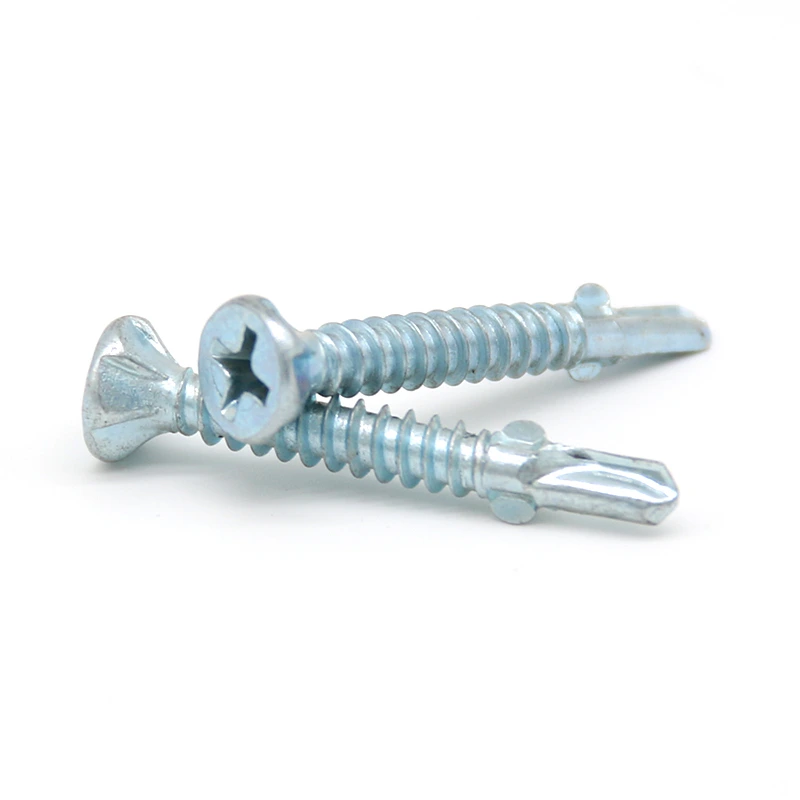
Countersunk Head Blue Zinc Self-Drilling Screw

Countersunk Head Blue Zinc Self-Drilling Screw

Brand: Hengzuan Surface: blue and white zinc plated, can be customized color zinc plated, black oxide plated Specifications: in stock 3.5/3.9/4.2/4.8/5.5 mainstream wire diameter, rod length 13mm~75mm full size range, nonstandard length can be customized as needed Packaging: 25kg export cartons, full wooden pallets wrapped with film, supports neutral export packaging, private-label customization

Read More

Torque screwdriver features for your fastener application

Compare tool requirements

Compare torque range, setting method, scale visibility, drive compatibility, repeatability information, operating direction and handling comfort. The right choice depends on the actual fastener and assembly process, not simply on the tool's maximum torque.

Criterion What To Check Why It Matters Buyer Tip
Torque range and adjustment method Compare the required tightening torque with the tool’s stated range and confirm whether it is preset or adjustable. A range that does not cover the joint’s target torque can cause loose or overstressed fasteners. Ask, “What torque range and adjustment increments are available for our fastener size and application?”
Drive size and bit compatibility Verify the drive interface, bit format, and compatibility with the fastener heads used in your assembly. The wrong interface can prevent proper engagement, increase slipping, or require extra adapters. Send the intended screw or bit details and ask which drive configuration fits without an adapter.
Torque indication and release mechanism Check how the tool signals the set torque, such as a click or other defined release, and whether the setting can be locked. A clear release helps the operator stop applying force at the target torque and reduces accidental setting changes. Ask for an explanation of the release action and how the selected setting is secured during repeated use.
Calibration and verification records Request available calibration documentation, the reference standard used, and the recommended verification process. Torque tools can require periodic checking, especially where joint consistency or process records matter. Ask, “Can you provide calibration evidence for the supplied tool and explain how we should verify it in service?”
Ergonomics and operating access Assess handle shape, tool length, adjustment access, and visibility of the torque setting in the actual working position. Poor access or an awkward grip can make consistent tightening difficult and increase operator fatigue. Describe the workspace and daily tightening pattern, then ask which configuration supports clear reading and controlled operation.

Choosing the right setting, drive and adjustment method

A preset torque screwdriver suits a production station where one fastener is tightened to the same setting repeatedly. An adjustable screwdriver is more practical for maintenance, service work or assembly lines handling several products, but its setting must be checked carefully between jobs.

It is also important to distinguish a click-style tool from a driver with a visible scale or digital indication. The mechanism and readout affect how easily operators can set, verify and repeat the required torque, especially when several people share the tool.

Start with the required torque values rather than the screwdriver body. The working setting should sit comfortably within the tool's usable range, not at an extreme limit. Confirm whether the specified value is given in N·m, cN·m, ozf·in or another unit, and check that the tool displays or supports that unit clearly.

Match the drive and bit system to the fasteners already used in the product. A mismatch can lead buyers to rely on adapters, unsuitable bits or excessive hand force. Check the required bit size, drive interface, access to recessed fasteners and whether the tool must operate clockwise, counterclockwise or in both directions.

Consider how the tool will be used. Repeated bench assembly may favour a lightweight, easy-to-reset design, while field service may require a compact body, clear adjustment and convenient bit changes. If several torque settings are used, plan how operators will prevent accidental adjustment between tasks.

Before ordering, provide the fastener type, target torque values, drive or bit size and intended application. Ask Hebei Wotu Fastener Manufacturing Co., Ltd. which torque screwdriver configuration can support that use, and confirm the available adjustment method, calibration or verification information, operating direction and documentation.


Criteria Importance Description Example Options
Preset or adjustable setting Important when the number of torque values and the risk of setting errors differ between jobs. Preset tools focus on one repeatable value, while adjustable tools support several settings but require clear identification and control of the selected value. A dedicated assembly station may use a preset setting; a maintenance team working on different products may need adjustment.
Torque range and target position Critical because the required fastener torque must fall within the tool's suitable working range. Compare the actual target values with the usable range rather than selecting by maximum torque alone. Check the units used for the specification and tool setting. A tool selected for several cN·m values may not be appropriate if the required specification is stated in N·m without confirming the conversion and display.
Setting visibility and repeatability Important where multiple operators share a tool or where each assembly must follow the same process. A clear scale, indication method and defined setting procedure make it easier to identify the selected torque and reduce accidental changes. A visible mechanical scale may suit a bench station, while a different indication method may be preferred where settings change frequently.
Drive and bit compatibility Essential because an unsuitable interface can prevent proper engagement or encourage improvised adapters. Match the screwdriver to the required bit size, drive interface, fastener head and available working clearance. Also confirm whether clockwise, counterclockwise or both-direction operation is needed. A recessed fastener may require a particular bit length or compact driver shape rather than simply a higher torque range.
Verification and documentation Important when the assembly process requires traceable settings or routine tool checks. Ask what information is supplied for checking the selected torque, operating the adjustment mechanism and maintaining consistent use. The required level of documentation depends on the buyer's internal quality process. A production buyer may request setting instructions and verification information, while occasional service use may require a simpler operating reference.

Blog Articles / Reviews

Hex Head Self-Drilling Screws with Cup Washers: Choosing Drill Point and Length

Hex Head Self-Drilling Screws with Cup Washers: Choosing Drill Point and Length

Choosing a hex head self-drilling screw with a cup washer requires more than selecting ST5.5 or ST6.3 and a nominal length. The drilling point must suit the steel it penetrates; the threaded section must engage the intended supporting material; and the head-and-washer assembly must seat correctly on the outer panel. A screw’s drilling capacity is […]

Why Do Self-Tapping Roofing Screws Leak Even When the Screw Length Looks Correct?

Why Do Self-Tapping Roofing Screws Leak Even When the Screw Length Looks Correct?

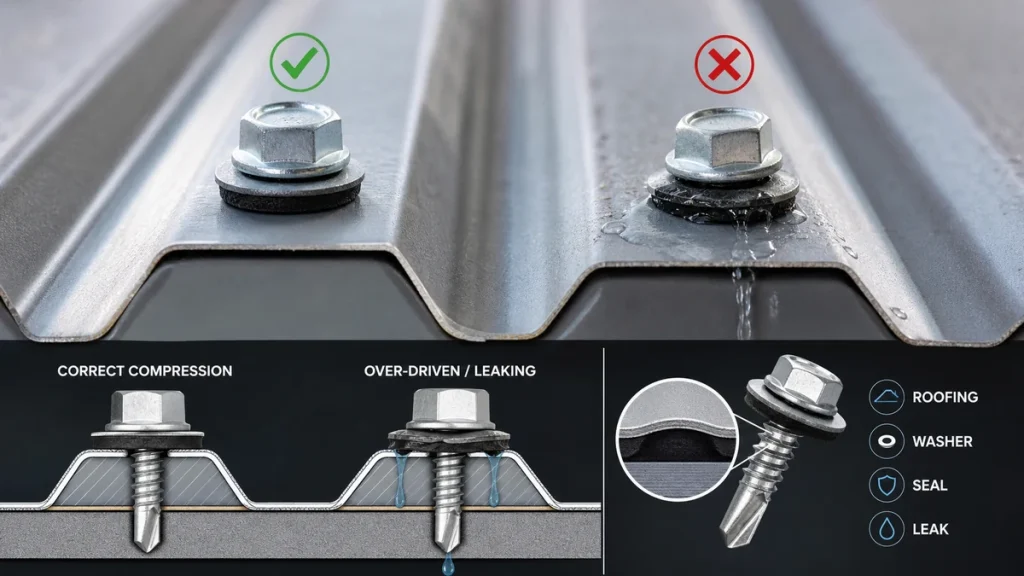
Direct answer: Correct screw length does not guarantee a watertight metal-roof connection. Self tapping roofing screws can leak because of incorrect washer compression, enlarged or stripped holes, insufficient thread engagement, panel movement, or an unsuitable coating-and-washer system. Buyers should diagnose the complete installed connection—including panel profile, support thickness, point type, washer condition, and exposure—rather than […]

Oxidation Treatment Specifications for Self-Drilling Screw Fasteners

Oxidation Treatment Specifications for Self-Drilling Screw Fasteners

The surface treatment of self-drilling screws requires specific procedures. What manufacturing processes are generally used for surface treatment? Hebei Wotu Fastener Manufacturing Co., Ltd. will explain oxidation treatment below. The surface treatment of self-drilling screws requires specific procedures. What manufacturing processes are generally used for surface treatment? Hebei Wotu Fastener Manufacturing Co., Ltd. will explain […]

Self-Drill Screw Manufacturer Shares Assembly Details

Self-Drill Screw Manufacturer Shares Assembly Details

Today, Hebei Wotu Fastener Manufacturing Co., Ltd. will show you the optimizations in strength aspects of self-drill screws. As the requirements for fixing objects continue to improve and evolve, the demands on self-drill screws are also increasing. Therefore, self-drill screws have undergone corresponding improvements, including the emergence of high-strength self-drill screws. Today, Hebei Wotu Fastener […]

A manufacturer of hexagonal self-drilling screws discusses their performance standards.

A manufacturer of hexagonal self-drilling screws discusses their performance standards.

Hebei Wotu Fastener Manufacturing Co., Ltd., founded in the 1990s, is located in Yongnian District, Handan City, Hebei Province, known as the “Hometown of Fasteners.” 1. Core Hardness: Standard: HRC32-40. Our products are measured at HRC31.7-39.0. 2. Surface Hardness: Standard: HV600-700. Our products are measured at approximately HV620. 3. Hardened Layer: 4#-6#: 0.05-0.18mm; 8#-12#: 0.10-0.23mm; […]

Why Do U Bolts Loosen in Pipe Supports? 6 Causes and Prevention Methods

Why Do U Bolts Loosen in Pipe Supports? 6 Causes and Prevention Methods

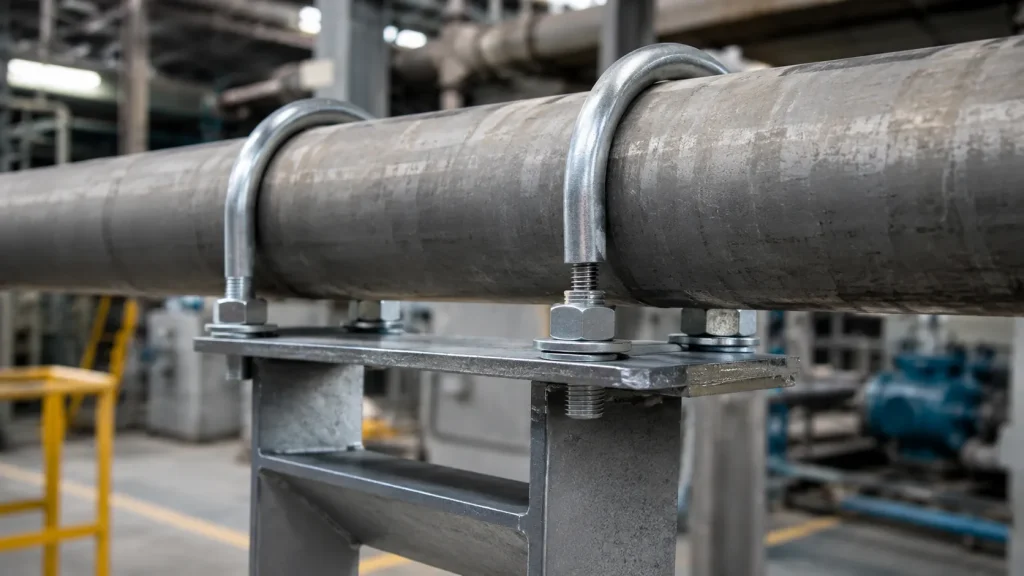
U bolts usually loosen in pipe supports because the connection loses clamping force, receives continuous vibration, restricts thermal pipe movement, uses an incorrectly sized U bolt, experiences surface settlement, or suffers from corrosion and inadequate inspection. This issue affects EPC contractors, pipe installers, industrial maintenance teams, equipment manufacturers and fastener distributors working with water, oil […]

Frequently Asked Questions

Is a torque screwdriver suitable for small or delicate assemblies?

It can be suitable when the fastener has a defined tightening torque and the tool can operate within that range with the correct bit. For delicate assemblies, confirm the required torque, access space and the tool's adjustment and verification method before selecting it.

When is an adjustable model better than a preset one?

An adjustable model is useful when one operator or workstation handles several products or torque values. A preset model is usually simpler for a repeatable production task because it reduces the chance of selecting the wrong setting between jobs.

Does a higher maximum torque mean the screwdriver is the better choice?

No. A broad maximum range does not show how well the tool suits the target setting, particularly if the required value is near one end of the usable range. Choose a tool whose practical range, scale and drive interface match the fastener application.

Could an ordinary screwdriver or electric driver replace a torque screwdriver?

An ordinary screwdriver does not provide the same controlled torque indication or setting method. An electric torque-controlled driver may suit higher-volume assembly, but it brings different requirements for power, access, controls and verification, so the choice depends on the production process.

What should I confirm before ordering one?

Provide the fastener type, target torque values and units, bit or drive size, operating direction and whether the work is production or service. Ask which adjustment method, setting display, verification or calibration information and documentation are available for the proposed configuration.

Leave Your Message

Tell us the fastener application, required torque range and units, plus the bit or drive size. If you need more than one setting, include the number of settings and whether the tool will be used for production or service work.