Bench Drill Selection Guide | Hebei Wotu Fastener Manufacturing Co., Ltd.

Bench Drill Selection for Fastener Joints

A bench drill gives repeatable, perpendicular holes in small metal parts, brackets, plates, wood panels and workshop fixtures. The main purchase decision is not only motor size; it is whether the drill can hold the work securely, run the right drill bits, and produce holes that match the fasteners used in the final assembly.

For buyers planning screw, bolt or self-drilling screw assemblies, hole quality affects thread engagement, clamp force and rework. Before choosing a bench drill or confirming fasteners for drilled parts, check the material, hole diameter, thickness stack-up and required finish around the hole.

Related Products

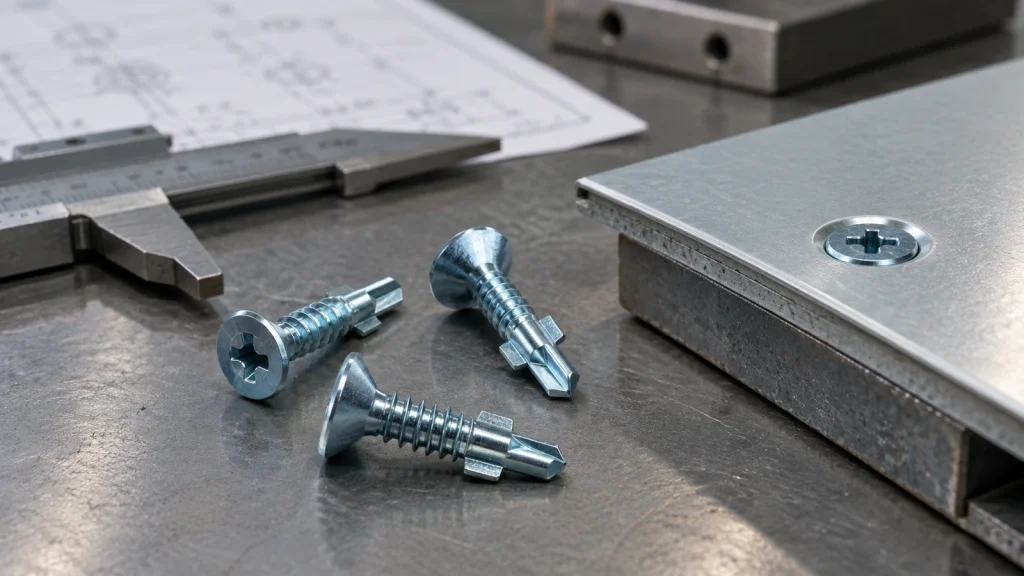
Countersunk Head Blue-White Zinc Plated Self-Drilling Screw (Chinese National Standard: Phillips Countersunk Head Self-Drilling And Self-Tapping Screw GB/T15856.2-2002)

Countersunk Head Blue-White Zinc Plated Self-Drilling Screw (Chinese National Standard: Phillips Countersunk Head Self-Drilling And Self-Tapping Screw GB/T15856.2-2002)

Brand: Hengzuan Surface: blue and white zinc plated, can be customized color zinc plated, black oxide plated Specifications: Comply with GB/T15856.2-2002 Chinese national standard, in stock ST4.2/ST4.8/ST5.5 full range of specifications, length 13mm~75mm optional, supports customized nonstandard rod lengths; drilling adaptation plate thickness 0.7~6mm Packaging: 25kg export cartons, full pallets wrapped with film, supports neutral export packaging, customer private-label customization

Read More
Hex Head No. 5 Point Self-Drilling Screw

Hex Head No. 5 Point Self-Drilling Screw

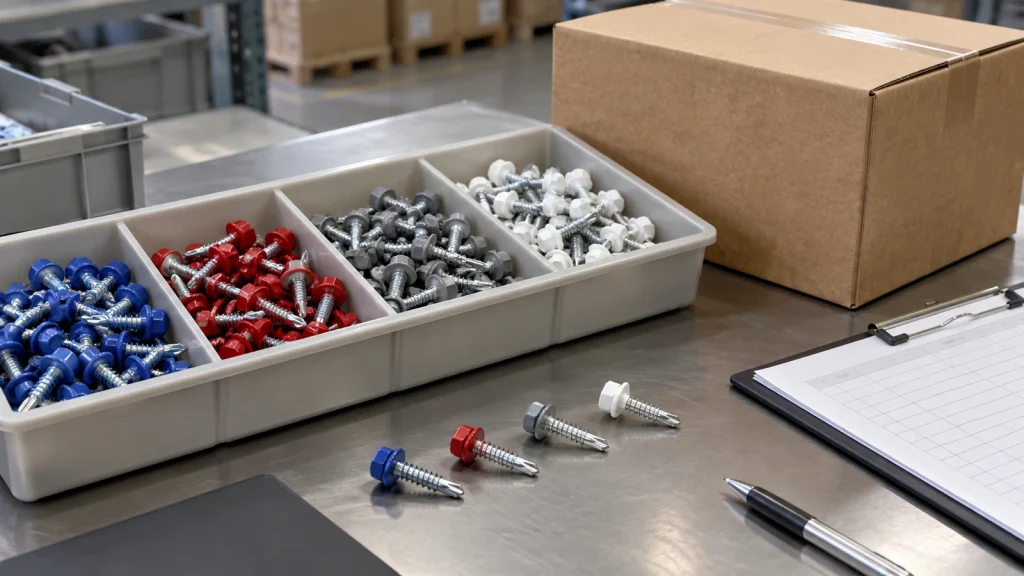
Brand: Wotu Surface: blue and white zinc plated, customized color zinc plated, Dacromet anti-corrosion coating available Specifications: ST5.5, ST6.3 mainstream specifications, rod length 20mm~125mm, full size range in stock, support nonstandard customization, drilling to adapt to steel sheet 2-6mm Packaging: 25kg cartons, whole wooden pallets

Read More
Wafer Head Self-Drilling Screw

Wafer Head Self-Drilling Screw

Brand: Hengzuan Surface: blue and white zinc plated, can be customized color zinc plated, black oxide plated Specifications: Comply with GB/T15856.2 Chinese national standard, in stock ST3.5/ST4.2/ST4.8/ST5.5 mainstream wire diameter, rod length 13mm~50mm full range of specifications, nonstandard length customization on demand, drilling applicable plate thickness 2~5mm Packaging: 25kg export cartons, full pallets wrapped with film, supports neutral export packaging, private-label customization

Read More
Countersunk Head Blue Zinc Self-Drilling Screw

Countersunk Head Blue Zinc Self-Drilling Screw

Brand: Hengzuan Surface: blue and white zinc plated, can be customized color zinc plated, black oxide plated Specifications: in stock 3.5/3.9/4.2/4.8/5.5 mainstream wire diameter, rod length 13mm~75mm full size range, nonstandard length can be customized as needed Packaging: 25kg export cartons, full wooden pallets wrapped with film, supports neutral export packaging, private-label customization

Read More

Match the bench drill task to the fastener joint

Drilling and fastener fit

Relevant selection criteria include the workpiece material, hole diameter range, drilling depth, table support, clamping access, speed control and the type of fastener that will be installed after drilling. For fastener-related assemblies, also confirm whether the hole must guide, clear, tap, countersink or simply locate the screw.

Criterion What To Check Why It Matters Buyer Tip
Drilling capacity in the materials you actually use Confirm the maximum bit size and material type the bench drill is intended to handle, such as mild steel, aluminum, wood, or plastic. A drill that is adequate for small pilot holes may struggle with larger holes, harder metals, or repeated production work. Ask: What is the largest hole diameter this model can drill reliably in my main workpiece material?
Spindle speed range and speed changes Compare the available speed range and how speeds are changed, such as belt adjustment or variable speed control. Small bits and soft materials often need higher speeds, while larger bits and metal usually need slower, controlled cutting speeds. Ask: Can the machine run at a suitable low speed for my largest drill size in metal?
Table size, travel, and work holding Look at the table dimensions, height adjustment, tilt function, and whether there are slots for a vise or clamps. A stable, well-supported workpiece improves hole position and reduces chatter, especially on metal parts or repeated drilling tasks. Ask: Will my usual parts fit on the table with enough room for a vise or fixture?
Quill travel and throat depth Check the vertical drilling stroke and the distance from the spindle center to the column. Quill travel affects how deep you can drill without moving the work, while throat depth limits how far from the edge of a part the hole can be placed. Ask: What is the deepest hole and farthest-in hole position I need on my typical parts?
Motor power, rigidity, and duty pattern Review the motor rating, column construction, base stability, and intended use pattern, such as occasional maintenance or daily workshop drilling. A light bench drill may suit small repair work, but repeated drilling in metal benefits from better rigidity and a motor that does not slow easily. Ask: Is this machine intended for intermittent light work or regular drilling of metal components?

Key choices before drilling holes for screws or bolts

A bench drill is usually chosen for controlled hole position and vertical drilling, while handheld drilling is chosen for mobility. That distinction matters when the fastener needs a consistent pilot hole, clearance hole or countersunk seat. A poorly aligned hole can make a screw bite unevenly, damage coatings, or leave the joint sitting proud.

Self-drilling screws can reduce or remove separate drilling in some sheet-metal assemblies, but they are not a direct replacement for every bench-drilled hole. If the assembly needs a close-tolerance clearance hole, a tapped hole, a countersunk finish, or drilling through mixed materials, a bench drill operation may still be the better route.

Start with the workpiece, not the machine label. Thin sheet, structural steel plate, aluminum extrusion, hardwood and laminated panels all behave differently under a drill bit. The material and thickness determine the required bit type, feed control, clamping method and whether the final fastener should cut its own thread or pass through a prepared hole.

Check the drilling task against the fastener. A clearance hole for a bolt, a pilot hole for a tapping screw and a hole for a self-drilling screw are different decisions. Common mistakes include drilling too large for thread formation, leaving burrs that prevent flush seating, or using a hole pattern that does not match the bracket or hinge being assembled.

Workholding is often more important than raw power. A drill press vise, clamps, backing plate and repeat stop can improve consistency and protect the operator. Avoid holding small metal parts by hand under the bit. For production or repeated batches, ask how the hole location will be controlled and how burrs, swarf and coating damage will be handled after drilling.

The next step is to share the material, thickness, intended fastener type, hole purpose and finish requirement. If the drilled part will use screws supplied by Hebei Wotu Fastener Manufacturing Co., Ltd., confirm the matching screw size, head style, coating and whether a pilot hole or clearance hole is expected for the assembly.

Criteria Importance Description Example Options
Hole alignment and repeatability High when several parts must share the same hole position or the fastener must sit squarely. A bench drill supports controlled vertical drilling, while a handheld drill depends more on operator positioning. Consider the required tolerance and whether a stop or fixture will be used. Repeated holes in a bracket pattern generally benefit from a fixed table, clamp and repeat stop.
Workpiece material and thickness High because material changes the suitable bit, speed, feed and clamping method. Sheet metal, steel plate, aluminum, hardwood and laminated panels do not respond identically to drilling. Match the machine and tooling to the hardest or most demanding material in the job. A thin coated sheet and a thick metal plate may require different bit choices and drilling control even when the hole diameter is the same.
Hole purpose High because a pilot hole, clearance hole, tapped hole and countersunk hole have different requirements. Define how the fastener will interact with the hole before choosing the drilling setup. Hole size, edge condition and seating surface can affect thread engagement, clamp force and appearance. A clearance hole for a bolt should not be sized like a pilot hole intended to help a screw form or cut a thread.
Workholding and operator control High for small parts, hard materials and repeated production work. A suitable vise, clamp, backing plate or fixture helps prevent movement and supports consistent drilling. Do not rely on hand pressure to hold a small metal part under the bit. A bracket held in a vise with a backing plate is easier to position consistently than a loose part held by hand.
Bench drill versus self-drilling fastening Important when the assembly could use either a prepared hole or a screw that drills during installation. A bench drill offers control over hole location and geometry; a self-drilling screw can reduce separate drilling in suitable sheet-metal joints. The trade-off depends on access, joint design, material stack-up and the required finish. A repeated clearance-hole pattern may call for bench drilling, while a suitable sheet-metal lap joint may be designed around self-drilling screws.

Blog Articles / Reviews

What Should an RFQ Include When Sourcing Dacromet Hex Head Self-Drilling Screw?

What Should an RFQ Include When Sourcing Dacromet Hex Head Self-Drilling Screw?

When sourcing dacromet hex head self drilling screw, a complete RFQ should define the application, screw configuration, coating requirement, dimensions, and supplier confirmation requirements. Buyers often receive different quotations because suppliers may interpret coating, size, drilling capability, or packaging scope differently. Before preparing a project inquiry, buyers can review the available fastener product categories to […]

What Is the Difference Between Self Drilling and Self Tapping Screws?

What Is the Difference Between Self Drilling and Self Tapping Screws?

Direct Answer: A self-drilling screw has a drill-shaped point that creates a hole and then forms mating threads in a suitable material. A self-tapping screw forms or cuts mating threads but may require a correctly sized pilot hole. Selection depends on substrate type and thickness, joint stack, point geometry, installation tool, finish and application testing—not […]

What RFQ Details Matter When Ordering Blue Zinc Winged Self-Drilling Screws?

What RFQ Details Matter When Ordering Blue Zinc Winged Self-Drilling Screws?

When ordering a blue zinc self drilling screw with a winged, countersunk configuration, diameter and length are not enough to define the application. The RFQ should identify the materials being connected, upper-material thickness, steel-substrate thickness, total material stack, required countersunk seating, screw diameter, total length, drill-point condition, wing geometry, surface treatment, installation method, quantity and […]

What Should Buyers Confirm When Ordering Color Nylon Head Hex Self-Drilling Screws?

What Should Buyers Confirm When Ordering Color Nylon Head Hex Self-Drilling Screws?

When ordering a chinese standard color nylon head hex self drilling screw, the RFQ should define more than a color name. Buyers should confirm the exact color reference, nylon head or cap configuration, base screw diameter and length, steel-sheet condition, metallic screw finish, visible-face requirement, color approval method, batch-consistency check and packaging or SKU separation. […]

Rust Prevention Tips for Self-Drilling Screws

Rust Prevention Tips for Self-Drilling Screws

As we all know, the simplest way to prevent self-drilling screws from rusting is to properly isolate the screws from moisture-containing and humid environments. This can be achieved through selective application of protective coatings and sealants, or by purchasing specially formulated rust-resistant or rust-proof screws. This is why many businesses and households have rust prevention […]

Frequently Asked Questions

Is a bench drill suitable for making holes in metal brackets and small fabrication parts?

Yes, it can suit repeatable drilling in brackets, plates and other small parts when the bit, speed, feed and workholding match the material. Thin sheet and thicker metal may need different drilling approaches, so confirm the material, thickness and hole diameter before selecting the machine and tooling.

When is a handheld drill a better choice?

A handheld drill is more practical when the workpiece is too large to position on the table or the hole must be made in place. A bench drill is generally preferable for repeated parts and holes that need consistent vertical alignment, but it gives up some mobility.

Can a self-drilling screw replace a bench-drilled hole in every assembly?

No. A self-drilling screw may combine drilling and fastening in some sheet-metal joints, but it does not replace a prepared hole for every clearance, tapped, pilot or countersunk application. Check the material stack-up, joint design and required seating before choosing between the two methods.

Is motor power the main specification to compare?

Not by itself. Table support, speed control, usable drilling depth, access for clamps and compatibility with the intended bits can affect the result as much as motor power. The machine should be matched to the material, hole size and production frequency rather than chosen from a power figure alone.

What information should I provide when asking about a suitable machine or fastener combination?

Provide the workpiece material, thickness, hole diameter, hole purpose, required finish and expected quantity of parts. If screws or bolts will be installed afterward, include the fastener type, size and head style, then ask how the hole should be prepared and whether the proposed machine can support the required workholding.

Leave Your Message

Send the workpiece material and thickness, the hole purpose such as pilot, clearance or countersunk, and the fastener type or size you plan to use.