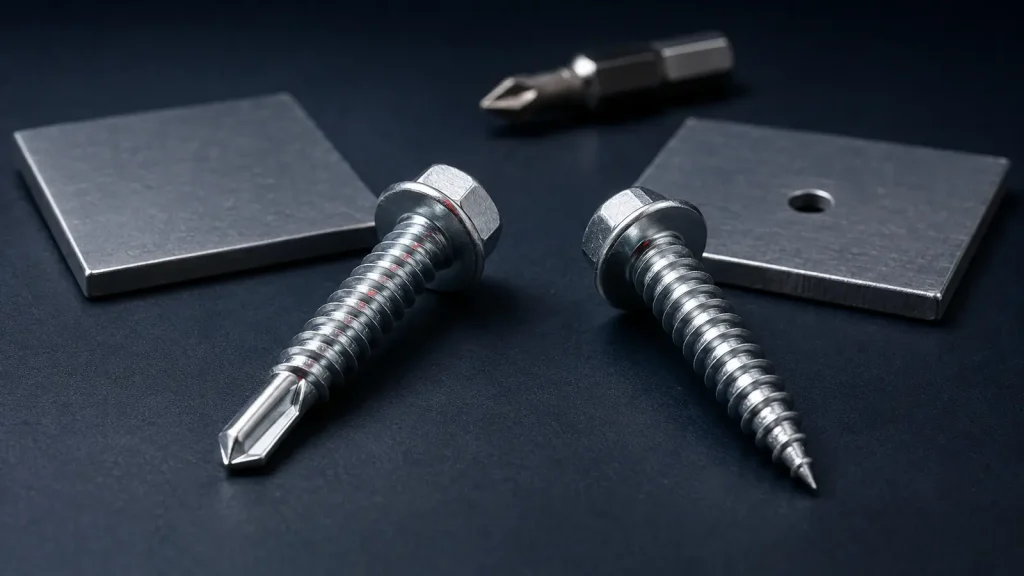
The most common confusion is between self-tapping and self-drilling screws. A self-tapping screw forms or cuts threads as it enters the material, but it may still need a pilot hole. A self-drilling screw has a drill-point tip that creates its own hole before threading. That distinction matters in sheet metal, because using the wrong point style can cause poor thread engagement, stripped holes, slow installation or damaged panels.
The black finish also needs clarification. “Black” may refer to black oxide, black phosphate, black zinc, painted coating or another surface treatment. These finishes do not all behave the same in outdoor exposure, friction during installation or appearance after driving. For a visible assembly, confirm both the functional coating and the acceptable appearance of the head after installation.
Start with the material stack. Thin sheet metal, thicker steel, aluminum, timber and plastic do not take threads the same way. A screw that works in light-gauge sheet may not hold well in soft wood or brittle plastic. Give the material type, thickness and whether the hole is pre-drilled so the thread form and point can be checked properly.
Choose the head and drive around the installed part, not just the screw size. Pan head, countersunk head, hex washer head and other styles distribute load differently and sit differently on the surface. A countersunk head can look clean but may split or distort thin material if the mating part is not designed for it. A washer-style head may improve clamping on panels but changes the visible profile.
Treat the black finish as a specification, not a color note. Indoor decorative use, cabinet hardware, electronics housings and outdoor panels may require different corrosion resistance and different coating thickness. If the screw will be exposed to weather, moisture or treated timber, ask which black coating options are available and whether they suit that environment.
Avoid ordering only by length and color. Thread diameter, point type, thread pitch, head type, drive recess, coating and packaging all affect fit and installation. A practical next step is to share a drawing, sample, current screw description or photos of the assembly, then confirm the required black finish and the material being fastened before placing a volume order.