

Fasteners for JSW Colouron Plus Roofing | Hebei Wotu Fastener Manufacturing Co., Ltd.
Fasteners for JSW Colouron Plus roofing sheets
JSW Colouron Plus is usually considered for colour-coated roofing and cladding where appearance, corrosion resistance and sheet life matter. For a buyer planning a roof with this material, the connected decision is not only the sheet profile and colour, but also the fasteners, washers and installation details that protect the coating after fixing.
If you are sourcing fixing hardware for a project using JSW Colouron Plus sheets, confirm the sheet profile, base structure and exposure conditions before selecting screws. A good fastener choice reduces leaks, coating damage and premature rust around fixing points.
What to confirm before buying roofing screws for colour-coated sheets
The practical distinction is between choosing a roofing sheet and choosing the fixing system for that sheet. JSW Colouron Plus defines the coated sheet surface and roofing material, while the fastener must suit the sheet thickness, rib shape, support material and weather exposure. A screw that works on a light purlin may not be right for a heavier steel frame or timber support.
Washer quality also matters. The washer must seal around the hole without cutting into the coating or loosening after thermal movement. For colour-coated roofing, buyers should ask about screw head style, washer material, corrosion protection and colour matching rather than buying only by screw diameter or length.
Start with the roof build-up. Share the JSW Colouron Plus sheet profile, the expected lap arrangement and the support material beneath it. Fasteners for metal purlins, timber supports and sandwich panels are not interchangeable, and the wrong drilling point or thread form can lead to weak fixing or damaged sheets.
Match the fastener finish to the service environment. Coastal, industrial and high-rainfall locations place more stress on exposed screws and washers. Do not assume the sheet coating alone protects the fixing point; the fastener finish and washer seal are part of the weathering system.
Avoid selecting screws only by appearance or by the cheapest available size. Common mistakes include using a screw that is too short for the build-up, overtightening until the washer deforms, mixing incompatible metals, or choosing a head colour that does not match the roof finish. These details affect both appearance and long-term leakage risk.
For an inquiry to Hebei Wotu Fastener Manufacturing Co., Ltd., prepare the sheet profile, substrate material, fixing position and environment. Ask which roofing screw, washer and head finish they recommend for your application, and confirm whether colour-matched heads or sample checks are available before placing a project order.
| Criteria | Importance | Description | Example Options |
|---|---|---|---|
| Support material | Critical to the screw type | The substrate determines the point and thread needed for secure fixing. A fastener that grips one support material may fail to hold properly in another. | A roof fixed to steel purlins may need a different screw from one fixed to timber supports. |
| Washer and sealing performance | High for leak prevention | The washer must seal the fixing hole without cutting into or over-compressing the coated sheet. Poor washer selection can create leak paths even when the sheet material is suitable. | A roofing screw with an appropriate sealing washer is generally more suitable than a bare metal screw for exposed roof fixing. |
| Fastener finish and exposure | Important for service life | Rainfall, humidity, industrial exposure and coastal conditions affect the corrosion risk around exposed screw heads and washers. The fastener finish should be selected as part of the roof weathering system. | A project in a high-rainfall area may justify asking for a more corrosion-resistant fastener finish than an indoor or sheltered application. |
| Head style and colour requirement | Relevant for appearance and installation | The head must suit the driver, installation method and visible roof finish. Colour matching can improve appearance, but it should not override mechanical fit or corrosion protection. | A visible roof surface may require a painted or capped head that coordinates with the sheet colour. |
| Screw length and build-up | Essential for proper engagement | The fastener must pass through the sheet and any lap or accessory layers while still achieving adequate grip in the support. Too short can reduce holding strength; too long can be unnecessary or interfere with the structure below. | A lap joint or accessory flashing may require a different length from a simple single-sheet fixing point. |
Product Selection
Related Options
On a warehouse, workshop or residential roof using colour-coated sheets, the main priority is a weather-tight fixing that stays secure through rain, heat and sheet movement. Focus on fasteners and washers designed for coated metal roofing rather than general-purpose screws.







Blog Articles / Reviews
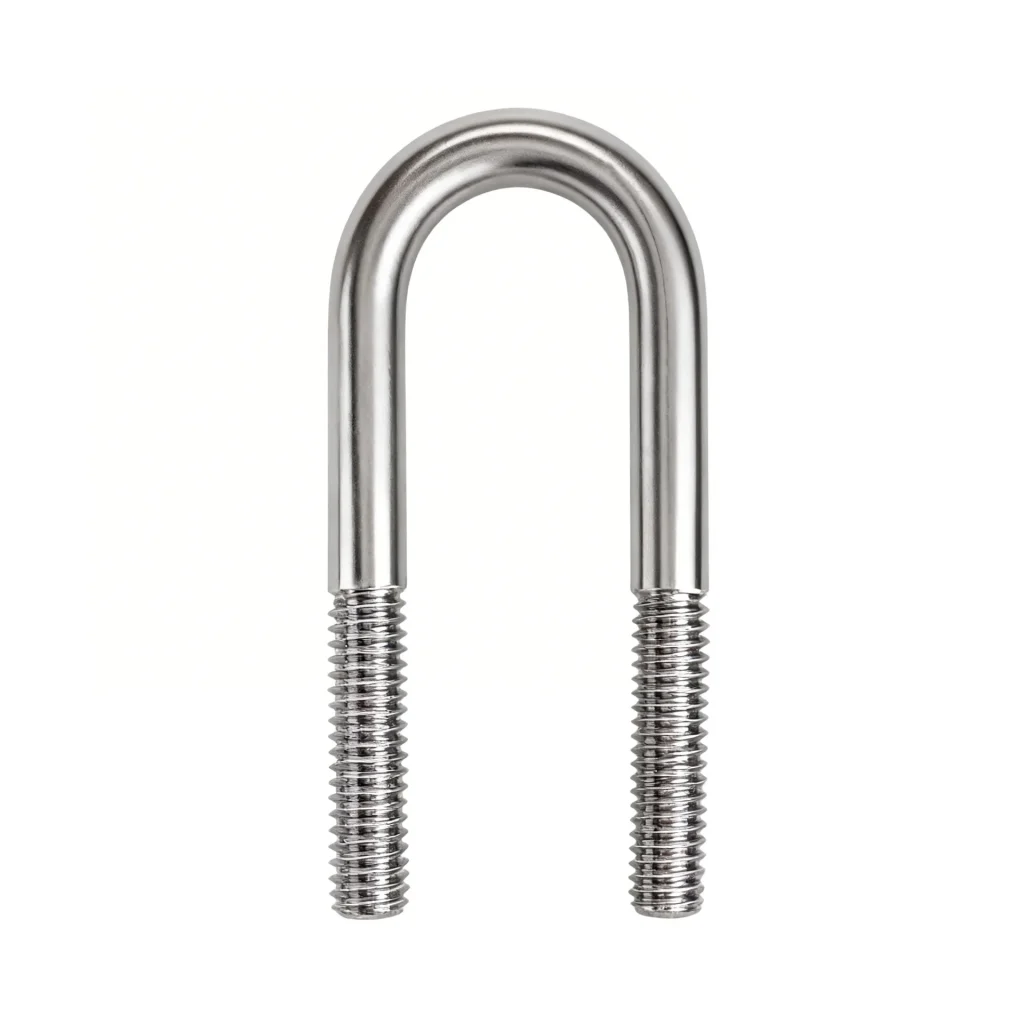
Which U-Bolt Measurements Must Buyers Provide Before a Quote?
For an M10–M24 U-bolt RFQ, buyers should send a dimensioned drawing that defines thread diameter, inside width, leg or overall length, bend geometry, thread length, application diameter, material or grade requirement, surface finish, matching nuts/washers, quantity, and packing needs. Nominal thread size alone is not enough because different measurement datums can produce U-bolts that look […]
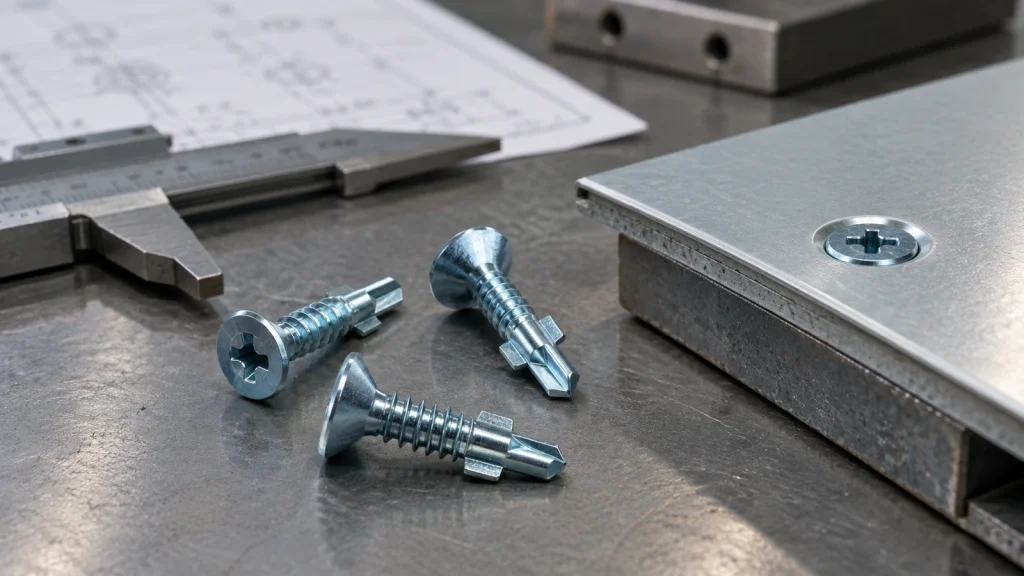
What RFQ Details Matter When Ordering Blue Zinc Winged Self-Drilling Screws?
When ordering a blue zinc self drilling screw with a winged, countersunk configuration, diameter and length are not enough to define the application. The RFQ should identify the materials being connected, upper-material thickness, steel-substrate thickness, total material stack, required countersunk seating, screw diameter, total length, drill-point condition, wing geometry, surface treatment, installation method, quantity and […]
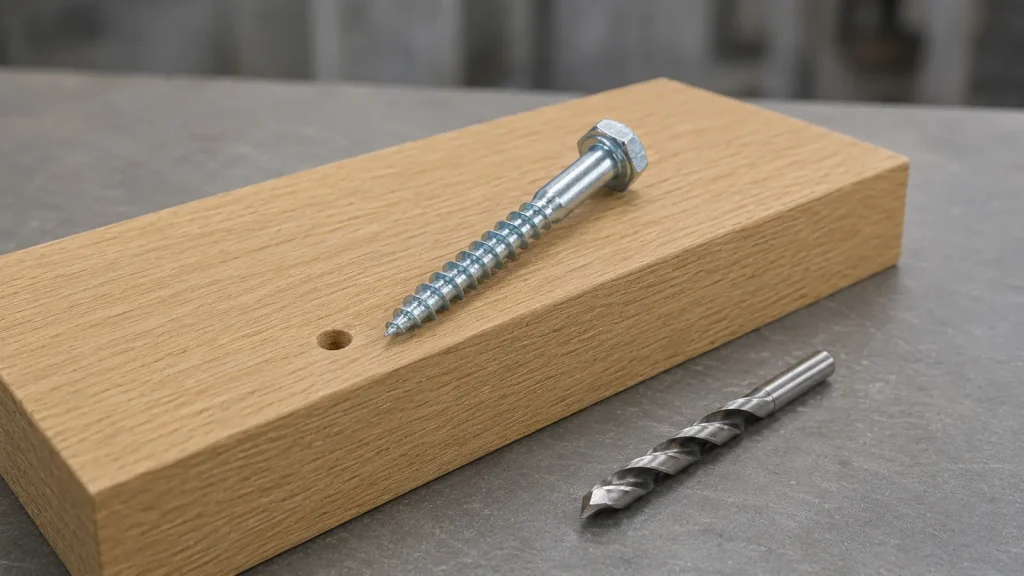
Which Hexagonal Wood Screw Specifications Should Buyers Freeze Before Production?
A hexagonal wood screw order should not be released from a gauge number and length alone. Before production, the buyer and supplier need one approved specification that fixes the screw diameter, length basis, thread geometry, point, hex-head dimensions, material, finish, installation method, substrate and acceptance evidence. The pilot hole belongs in the application specification as […]
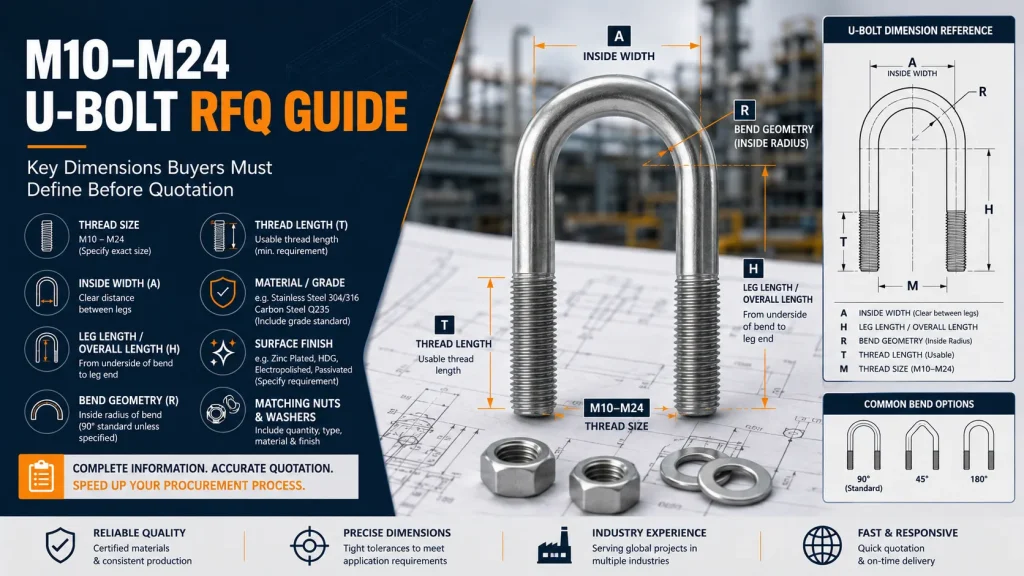
Which M10–M24 U-Bolt Measurements Must Buyers Send Before an RFQ?
Direct Answer: For an M10–M24 U-bolt RFQ, buyers should send a dimensioned drawing that defines thread diameter, inside width, leg or overall length, bend geometry, thread length, application diameter, material or grade requirement, surface finish, matching nuts/washers, quantity, and packing needs. Nominal thread size alone is not enough because different measurement datums can produce U-bolts […]

Self-Drilling vs Self-Tapping Screws: Which One Fits Metal-to-Metal, Metal-to-Wood, or Pre-Drilled Assemblies?
Direct answer: Choose a self-drilling screw when the fastener must create a hole through a verified metal stack before its threads engage. Choose a self-tapping screw when the assembly already has a correctly sized pilot hole or when the selected thread is intended to form or cut into the specified substrate. The decision must also […]

Wotu Discusses Improving Installation Techniques for Self-Drilling Screws
As we all know, self-drilling screws are now widely used in various fields, such as construction, road construction, power construction, factory construction, and equipment fixing. Since they are pre-embedded in concrete structures and are considered pre-installed fasteners, the technical quality of this concealed project is particularly important. Over the years, these manufacturers have gradually established […]
Frequently Asked Questions
Which screws suit colour-coated roofing sheets?
The screw should match the roof sheet profile, support material and fixing position. For coated sheets, buyers usually need roofing screws with a suitable drilling point, thread form, corrosion-resistant finish and sealing washer rather than a general-purpose fastener.
Is colour matching only an appearance issue?
No. A colour-matched head improves the finished roof appearance, but the functional part is still the fastener coating and washer seal. Do not choose a screw only because the head colour looks close; confirm the fixing performance and finish suitability as well.
What is the trade-off between self-drilling and pre-drilled fixing?
Self-drilling screws can speed installation on suitable metal supports and reduce separate drilling work. Pre-drilled fixing may be preferred where hole placement, substrate condition or site practice requires more control, but it adds labour and must still protect the sheet coating around the hole.
Can the same fastener be used for metal purlins and timber supports?
Usually not. Metal and timber supports need different thread forms and points to achieve proper holding strength. Tell the supplier what material sits beneath the sheet before confirming the screw type.
What details should be sent with an inquiry?
Send the sheet profile, approximate sheet build-up, support material, fixing location, environment and any colour requirement for the screw head. If the roof is in a harsh exposure area, ask what finish and washer option the supplier recommends for that condition.
Leave Your Message
Send the sheet profile, support material and project environment. If colour matching is needed, include the roof colour or finish reference as well.