Masonry Screws for Concrete and Brick | Hebei Wotu Fastener Manufacturing Co., Ltd.

Masonry Screws for Concrete, Brick and Block

Masonry screws fasten brackets, frames, clips and light-to-medium fixtures directly into concrete, brick or block after a drilled pilot hole. The main decision is not only screw size; it is whether the screw thread, head style, coating and hole preparation suit the base material and the load path.

For project buying, a clear specification reduces cracked masonry, stripped holes, loose fixtures and mismatched drive tools on site.

Related Products

Hexagonal Wood Screws

Hexagonal Wood Screws

Brand: Wotu Surface: blue and white zinc plated Specifications: Chinese national standard 6#/8#/10#/12#/16#/20#, rod length 35mm~250mm full range of specifications in stock, supports nonstandard length customization Packaging: 25kg cartons, full pallets packed on wooden pallets, support neutral packaging, private-label customization

Read More
Hex nut DIN934-1987 (A/B accuracy classification)

Hex nut DIN934-1987 (A/B accuracy classification)

Brand: Wotu Standard basis: German standard DIN934-1987, metric coarse thread/fine thread universal thread Surface: 304 stainless steel Specifications: M6~M24 full range of specifications Supporting equipment: same specification bolts, flat washer, spring washer complete set of shipment Packaging: 25kg standard carton, whole wooden pallet packaging

Read More
Blue-White Zinc Plated Pan Head With Pad Self-Tapping Screw

Blue-White Zinc Plated Pan Head With Pad Self-Tapping Screw

Brand: Hengzuan Surface: blue and white zinc plated Specifications: in stock ST4.2/ST4.8full range of specifications, length 13~50mm in stock, support nonstandard length customization Packaging: 25kg cartons, solid wood packaging, support neutral packaging, private-label customization

Read More
Countersunk Head Blue-White Zinc Plated Self-Drilling Screw (Chinese National Standard: Phillips Countersunk Head Self-Drilling And Self-Tapping Screw GB/T15856.2-2002)

Countersunk Head Blue-White Zinc Plated Self-Drilling Screw (Chinese National Standard: Phillips Countersunk Head Self-Drilling And Self-Tapping Screw GB/T15856.2-2002)

Brand: Hengzuan Surface: blue and white zinc plated, can be customized color zinc plated, black oxide plated Specifications: Comply with GB/T15856.2-2002 Chinese national standard, in stock ST4.2/ST4.8/ST5.5 full range of specifications, length 13mm~75mm optional, supports customized nonstandard rod lengths; drilling adaptation plate thickness 0.7~6mm Packaging: 25kg export cartons, full pallets wrapped with film, supports neutral export packaging, customer private-label customization

Read More
Countersunk Head Blue Zinc Self-Drilling Screw

Countersunk Head Blue Zinc Self-Drilling Screw

Brand: Hengzuan Surface: blue and white zinc plated, can be customized color zinc plated, black oxide plated Specifications: in stock 3.5/3.9/4.2/4.8/5.5 mainstream wire diameter, rod length 13mm~75mm full size range, nonstandard length can be customized as needed Packaging: 25kg export cartons, full wooden pallets wrapped with film, supports neutral export packaging, private-label customization

Read More

Key choices before specifying masonry screws

Selection criteria

Useful selection criteria for masonry screws include substrate type, screw diameter and length, head style, drive recess, coating, fixture thickness and installation method. If a project already has an engineering specification, the inquiry should reference it; if not, describe the application so the fastening choice can be checked against the real material and use case.

Criterion What To Check Why It Matters Buyer Tip
Base material and anchor style Confirm whether the screw is intended for concrete, brick, block, stone, or mortar joints, and whether it cuts its own thread or needs a plug or sleeve. Masonry materials vary in hardness and brittleness. A screw that holds well in solid concrete may loosen or crack weaker brick or hollow block. What material will the screw enter, and is the fixing into solid masonry, a hollow section, or a mortar joint?
Pilot hole diameter and drilling depth Ask for the recommended drill bit size, minimum hole depth, and cleaning method for the chosen screw size. Masonry screws depend on the hole fit. A hole that is too large reduces grip; a shallow or dusty hole can stop the screw from seating correctly. Can you provide the matching drill size and hole preparation instructions for each screw diameter?
Head type and fixture fit Compare hex, countersunk, pan, or washer-head options against the fixture hole, required surface finish, and driver access. The head style affects clamping area, flush seating, tool clearance, and whether the fixing looks acceptable after installation. Should the screw finish flush with the fixture, clamp through a bracket, or remain easy to remove later?
Corrosion protection and exposure State whether the screws will be used indoors, outdoors, in damp walls, or near treated timber or chemicals, then confirm the coating or material option. Masonry can hold moisture, and poor corrosion resistance can stain the surface, weaken the screw, or make later removal difficult. What coating or material is recommended for the actual exposure, and is it suitable for contact with the fixture material?
Load direction and embedment length Define the fixture thickness, required embedment into the masonry, and whether the load is mainly pull-out, shear, vibration, or light positioning. The same screw length may work for a light clip but not for a bracket carrying load. Too little embedment reduces holding strength; too much length can make installation harder. What fixture thickness and embedment should be specified for this application before selecting the screw length?

Practical checks for masonry screw procurement

The practical difference to confirm first is whether the fixing must hold in solid concrete, clay brick, hollow block or another masonry substrate. A screw that performs well in dense concrete may not grip reliably in soft or hollow materials without a different embedment approach, anchor type or installation method.

Masonry screws are also different from general self-tapping screws. They cut or form a thread in a pre-drilled masonry hole, so drill diameter, hole depth, dust removal and installation torque matter as much as the screw itself. If those details are not controlled, a stronger-looking screw can still fail to clamp properly.

Start with the base material and fixture thickness. Solid concrete usually supports a more predictable thread engagement than aged brick or hollow block. Tell the supplier what the screw is fastening, the substrate, and whether the load is mainly pull-out, shear or simple positioning. That information changes the recommended diameter, length and head style.

Choose the head and drive for the installed part, not just for stock availability. Hex heads suit exposed brackets and higher driving force. Flat or countersunk heads sit flush in plates or frames but need a matching countersink and enough fixture thickness. Pan or wafer heads can spread clamping force on thinner parts, but they may stand proud.

Match the finish to the environment. Indoor dry applications may not need the same corrosion resistance as outdoor facades, damp basements or coastal projects. If the screws will contact treated timber, dissimilar metals or wet masonry, ask what coating options are available and whether the finish is suitable for that exposure.

Avoid treating installation as an afterthought. Confirm the pilot hole diameter, drilling depth, cleaning method, compatible drill bit type and recommended driver setting before procurement. As a next step, send a drawing or photo of the fixture, the masonry type, required screw size if already specified, and the operating environment so Hebei Wotu Fastener Manufacturing Co., Ltd. can respond with relevant options to verify.

Criteria Importance Description Example Options
Base material Usually the first decision factor Concrete, clay brick, block and aged masonry do not hold threads in the same way. The material affects hole preparation, embedment and whether a direct screw fixing is suitable. A service clip fixed to solid concrete may use a different approach than the same clip fixed to hollow block.
Head style Important for fit, appearance and driving force The head must suit the fixture surface and the required clamping method. A flush installation, exposed bracket or thin plate may each need a different head form. A countersunk head can sit flush in a frame, while a hex head may be easier to tighten on a metal bracket.
Hole preparation Critical to holding performance Masonry screws depend on a correctly drilled and cleaned pilot hole. Oversize holes, shallow holes and dust left in the hole can reduce grip even when the screw size looks correct. Two screws of the same size can perform differently if one hole is drilled cleanly and the other is worn or full of debris.
Coating and exposure Important for service life Indoor dry use, damp interiors and outdoor exposure place different demands on the screw finish. Contact with wet masonry or dissimilar materials should be discussed before selecting a coating. A dry interior cable clip may not need the same corrosion protection as a fixing exposed on an exterior wall.
Direct screw versus anchor alternative Relevant when loads or substrate conditions are uncertain Direct masonry screws can be efficient for many fixtures, but anchors or plugs may be better where the material is weak, hollow or irregular. The right choice depends on load direction, base condition and installation control. A light bracket in sound concrete may suit a direct screw, while a heavier fixture in old brick may need a different fastening method.

Blog Articles / Reviews

How to Specify Countersunk Head Cross Thick Thread Fiberboard Screws for Furniture Assembly Projects

How to Specify Countersunk Head Cross Thick Thread Fiberboard Screws for Furniture Assembly Projects

Fiberboard screws are selected based on more than screw size alone. For furniture assembly and board-based applications, buyers need to match the screw structure with the characteristics of fiberboard, MDF, and similar engineered wood materials. A suitable specification should consider thread design, head style, screw length, diameter, installation method, and application requirements. For buyers sourcing […]

How Should Buyers Evaluate Self Tapping Screws for Project Procurement?

How Should Buyers Evaluate Self Tapping Screws for Project Procurement?

#4 self tapping screws should not be purchased from the “#4” designation alone. For a usable B2B specification, the buyer still needs the actual screw diameter, thread form or pitch, overall length, substrate, pilot-hole condition, head and drive style, material, surface finish and quantity. This matters because suppliers may use different naming systems. Wotu Fastener’s […]

Why Do Self-Tapping Roofing Screws Leak Even When the Screw Length Looks Correct?

Why Do Self-Tapping Roofing Screws Leak Even When the Screw Length Looks Correct?

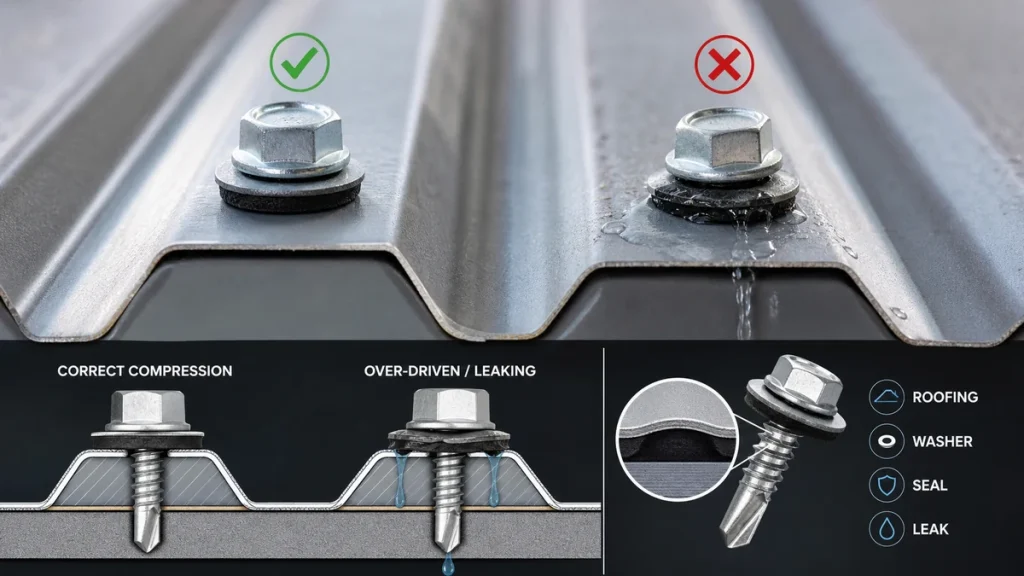
Direct answer: Correct screw length does not guarantee a watertight metal-roof connection. Self tapping roofing screws can leak because of incorrect washer compression, enlarged or stripped holes, insufficient thread engagement, panel movement, or an unsuitable coating-and-washer system. Buyers should diagnose the complete installed connection—including panel profile, support thickness, point type, washer condition, and exposure—rather than […]

What Is the Difference Between Self Drilling and Self Tapping Screws?

What Is the Difference Between Self Drilling and Self Tapping Screws?

Direct Answer: A self-drilling screw has a drill-shaped point that creates a hole and then forms mating threads in a suitable material. A self-tapping screw forms or cuts mating threads but may require a correctly sized pilot hole. Selection depends on substrate type and thickness, joint stack, point geometry, installation tool, finish and application testing—not […]

Frequently Asked Questions

Can the same screw be used in concrete, brick and hollow block?

Not always. Solid concrete usually gives more consistent thread engagement, while soft brick or hollow block may crumble, crack or provide less pull-out resistance. Confirm the base material and condition before selecting diameter, length and embedment depth.

How are masonry screws different from plastic plugs with regular screws?

A masonry screw is designed to form its own thread in a drilled masonry hole, so it can give a direct mechanical grip without a separate plug. A plug-and-screw fixing can be useful in softer or more irregular materials, but it adds another component and depends on the plug expanding correctly.

Is a longer screw always safer?

No. Extra length does not help if the hole is too shallow, full of dust, drilled oversize or placed near an edge. The useful length is the part that passes through the fixture and achieves proper embedment in sound masonry.

What installation details should be confirmed before ordering?

Ask for the pilot hole diameter, minimum hole depth, required embedment, drill bit type and recommended driver setting. These details help avoid stripped holes, broken heads and loose fixtures during site installation.

Which head style works best for brackets or frames?

Hex heads are common for exposed brackets where strong driver engagement matters. Flat or countersunk heads suit frames or plates that need a flush surface, but the fixture must have a suitable countersink and enough thickness to support the head.

What should be included in a purchasing inquiry?

Share the substrate, fixture thickness, required screw size if known, head style, coating preference and installation environment. A photo, drawing or sample of the assembly can also help confirm whether the proposed fastener matches the application.

Leave Your Message

Please share the masonry material, fixture thickness and head style required. If available, include the screw size, coating requirement and whether the installation is indoor, outdoor or damp.