Mini Cordless Drill for Light Fastening | Hebei Wotu Fastener Manufacturing Co., Ltd.

Mini Cordless Drill for Light Drilling and Screw Driving

A mini cordless drill is usually chosen for light assembly, pilot holes, small screws, cabinet work, maintenance kits, and jobs where a full-size drill is too heavy or awkward. The main decision is not simply size; it is whether the tool has enough torque control, chuck range, battery runtime, and speed control for the fasteners and materials you use.

For buyers installing screws into thin sheet metal, wood, plastic, or pre-drilled parts, the right compact drill can reduce hand fatigue and improve repeatability. The wrong one may strip screw heads, stall during drilling, or lack the control needed for smaller fasteners.

Related Products

Chinese-standard Color Nylon Head Hex Self-Drilling Screw

Chinese-standard Color Nylon Head Hex Self-Drilling Screw

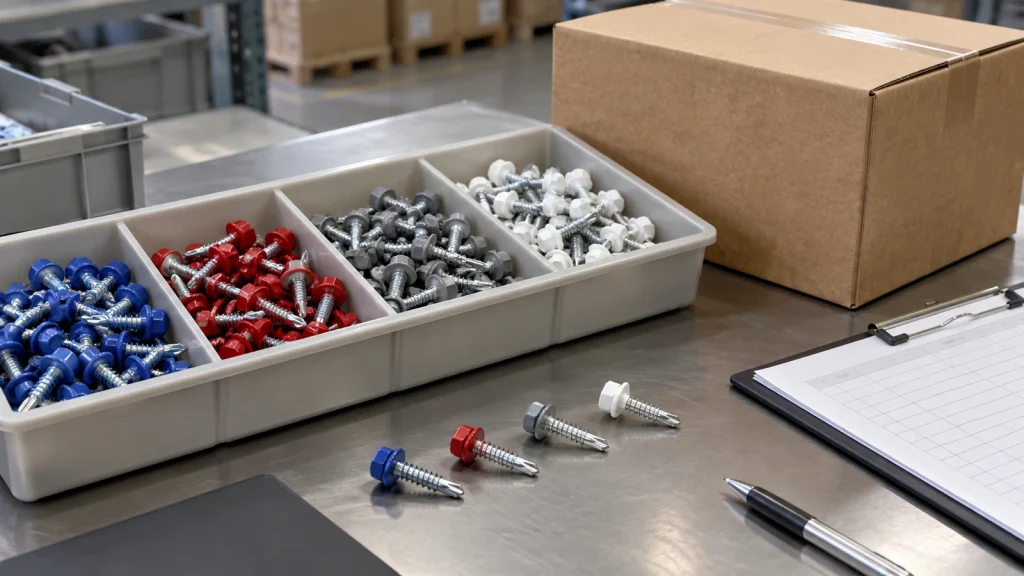
Brand: Hengzuan Surface: screw color zinc plated, head color nylon protective cap, multiple colors available Specifications: Chinese national standard ST5.5, ST6.3 mainstream caliber, rod length 25mm~125mm full range of specifications in stock, supports nonstandard length customization, suitable for drilling steel sheet thickness 2~6mm Packaging: 25kg cartons, full pallets packed on wooden pallets, support neutral packaging, private-label customization

Read More
Wafer Head Self-Drilling Screw

Wafer Head Self-Drilling Screw

Brand: Hengzuan Surface: blue and white zinc plated, can be customized color zinc plated, black oxide plated Specifications: Comply with GB/T15856.2 Chinese national standard, in stock ST3.5/ST4.2/ST4.8/ST5.5 mainstream wire diameter, rod length 13mm~50mm full range of specifications, nonstandard length customization on demand, drilling applicable plate thickness 2~5mm Packaging: 25kg export cartons, full pallets wrapped with film, supports neutral export packaging, private-label customization

Read More
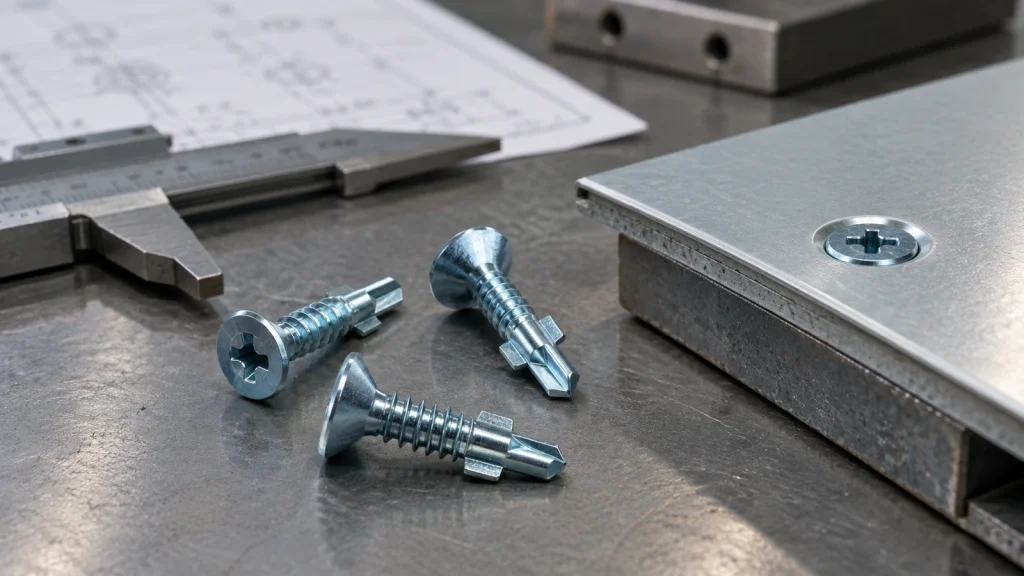
Countersunk Head Blue-White Zinc Plated Self-Drilling Screw (Chinese National Standard: Phillips Countersunk Head Self-Drilling And Self-Tapping Screw GB/T15856.2-2002)

Countersunk Head Blue-White Zinc Plated Self-Drilling Screw (Chinese National Standard: Phillips Countersunk Head Self-Drilling And Self-Tapping Screw GB/T15856.2-2002)

Brand: Hengzuan Surface: blue and white zinc plated, can be customized color zinc plated, black oxide plated Specifications: Comply with GB/T15856.2-2002 Chinese national standard, in stock ST4.2/ST4.8/ST5.5 full range of specifications, length 13mm~75mm optional, supports customized nonstandard rod lengths; drilling adaptation plate thickness 0.7~6mm Packaging: 25kg export cartons, full pallets wrapped with film, supports neutral export packaging, customer private-label customization

Read More
Countersunk Head Blue Zinc Self-Drilling Screw

Countersunk Head Blue Zinc Self-Drilling Screw

Brand: Hengzuan Surface: blue and white zinc plated, can be customized color zinc plated, black oxide plated Specifications: in stock 3.5/3.9/4.2/4.8/5.5 mainstream wire diameter, rod length 13mm~75mm full size range, nonstandard length can be customized as needed Packaging: 25kg export cartons, full wooden pallets wrapped with film, supports neutral export packaging, private-label customization

Read More

Choosing a Mini Cordless Drill for Light Drilling and Screw Driving

Mini Drill Selection Points

Compare mini cordless drills by application fit: drilling versus driving, torque control, chuck or bit holder type, battery arrangement, grip shape, accessory set, and suitability for the materials and screw sizes in your assembly. The best choice is the one that gives enough control without adding unnecessary weight or complexity.

Criterion What To Check Why It Matters Buyer Tip
Chuck or bit interface Confirm whether it accepts the bits and driver sockets required for your screws and pilot holes. A compact drill is only useful if its interface matches the fasteners and materials in your work. Ask, “What chuck or bit system is fitted, and which bit sizes are compatible?”
Torque and speed adjustment Review the available speed settings and clutch or torque positions for controlled fastening. Too much torque can strip screw heads or damage soft materials, while too little may leave fasteners loose. Ask for a demonstration or specification showing how the tool handles your target screw size and material.
Battery and charging arrangement Confirm the battery type, whether it is removable, the included charger, and replacement-battery availability. Battery access affects working time, downtime, storage, and the cost of keeping a second battery ready. Ask, “Is the battery replaceable, and can you supply compatible spare batteries and chargers?”
Size, weight, and grip Compare the tool’s overall dimensions, weight with the battery installed, grip shape, and access to tight spaces. A mini drill is often chosen for cabinets, fittings, and light assembly, where bulk and hand fatigue can limit control. Ask for the loaded weight and a dimensional drawing, then compare them with the narrowest space on your job.

Match the Drill to the Fastener, Material, and Work Pattern

The useful distinction is between a mini cordless drill and a compact cordless screwdriver. A mini drill normally has a chuck for drill bits and driver bits, variable speed, and enough power for light drilling. A cordless screwdriver is often better for repetitive low-torque fastening, but it may not handle pilot holes or harder materials well.

This matters when matching the tool to screws. Self-drilling screws, self-tapping screws, machine screws, and wood screws place different loads on the motor and clutch. If the work includes drilling through metal or driving fasteners into dense material, confirm the tool’s torque range, speed settings, bit compatibility, and battery type before ordering.

Start with the application, not the tool size. A mini cordless drill for electronics repair, light furniture assembly, and small pilot holes can prioritize low weight and fine speed control. A drill used for roofing accessories, brackets, thin metal sheet, or frequent self-drilling screw installation needs more attention to torque, bit grip, and heat buildup during repeated use.

Check control features carefully. A clutch helps prevent overdriving and stripped heads, especially on small screws or coated fasteners. Variable speed matters when starting a hole cleanly, while a reverse function is useful for removing misdriven screws. A common mistake is choosing the smallest drill available and then using it on materials that require a heavier-duty driver.

Battery format affects daily work. Built-in batteries keep the tool simple and compact, but replaceable packs are better when the drill must run through longer shifts. Also consider charging method, spare battery availability, storage case requirements, and whether the drill accepts the bit types already used in your workshop.

For a practical inquiry, provide the screw type, material being drilled or fastened, approximate duty cycle, preferred battery arrangement, and any packaging or accessory requirements. If the drill will be used with specific fasteners from Hebei Wotu Fastener Manufacturing Co., Ltd., confirm the screw size, head style, and substrate so the drive tool can be matched to the fastening job.

Criteria Importance Description Example Options
Drilling versus screw driving Important for avoiding an underpowered or poorly controlled tool A tool used mainly for pilot holes needs clean speed control and bit compatibility. A tool used mainly for screws needs clutch control, reverse, and steady low-speed operation. A workshop drilling small pilot holes in wood may choose a mini drill, while a line installing many small screws may prefer a compact driver with precise clutch settings.
Material and fastener load Critical when screws are driven into metal, dense wood, or pre-drilled assemblies Harder materials and self-drilling screws place more load on the motor and bit. Light-duty tools may work for occasional small fasteners but can stall or overheat in repeated heavy use. Driving small screws into plastic is a lighter task than installing self-drilling screws into thin sheet metal.
Torque control Highly important for small screws and finished surfaces A clutch or adjustable torque setting helps stop the screw before the head strips or the workpiece is damaged. Lack of control is a common cause of inconsistent fastening. Cabinet hardware, coated screws, and small machine screws benefit from lower, repeatable torque settings.
Battery arrangement Depends on work duration and charging routine Built-in batteries reduce size and simplify storage, while replaceable packs support longer shifts and less downtime. The right choice depends on how often the drill is used between charges. A maintenance kit may use a built-in battery tool, while a production bench may need spare battery packs.
Bit holding and accessory fit Important for accuracy and reducing worn screw heads The chuck or bit holder must match the drill bits and driver bits required for the job. Poor fit can cause wobble, slipping, or damaged screw recesses. If the work uses hex driver bits for self-tapping screws, confirm the drill or adapter holds those bits securely.

Blog Articles / Reviews

What Should an RFQ Include When Sourcing Dacromet Hex Head Self-Drilling Screw?

What Should an RFQ Include When Sourcing Dacromet Hex Head Self-Drilling Screw?

When sourcing dacromet hex head self drilling screw, a complete RFQ should define the application, screw configuration, coating requirement, dimensions, and supplier confirmation requirements. Buyers often receive different quotations because suppliers may interpret coating, size, drilling capability, or packaging scope differently. Before preparing a project inquiry, buyers can review the available fastener product categories to […]

What Is the Difference Between Self Drilling and Self Tapping Screws?

What Is the Difference Between Self Drilling and Self Tapping Screws?

Direct Answer: A self-drilling screw has a drill-shaped point that creates a hole and then forms mating threads in a suitable material. A self-tapping screw forms or cuts mating threads but may require a correctly sized pilot hole. Selection depends on substrate type and thickness, joint stack, point geometry, installation tool, finish and application testing—not […]

What RFQ Details Matter When Ordering Blue Zinc Winged Self-Drilling Screws?

What RFQ Details Matter When Ordering Blue Zinc Winged Self-Drilling Screws?

When ordering a blue zinc self drilling screw with a winged, countersunk configuration, diameter and length are not enough to define the application. The RFQ should identify the materials being connected, upper-material thickness, steel-substrate thickness, total material stack, required countersunk seating, screw diameter, total length, drill-point condition, wing geometry, surface treatment, installation method, quantity and […]

What Should Buyers Confirm When Ordering Color Nylon Head Hex Self-Drilling Screws?

What Should Buyers Confirm When Ordering Color Nylon Head Hex Self-Drilling Screws?

When ordering a chinese standard color nylon head hex self drilling screw, the RFQ should define more than a color name. Buyers should confirm the exact color reference, nylon head or cap configuration, base screw diameter and length, steel-sheet condition, metallic screw finish, visible-face requirement, color approval method, batch-consistency check and packaging or SKU separation. […]

Rust Prevention Tips for Self-Drilling Screws

Rust Prevention Tips for Self-Drilling Screws

As we all know, the simplest way to prevent self-drilling screws from rusting is to properly isolate the screws from moisture-containing and humid environments. This can be achieved through selective application of protective coatings and sealants, or by purchasing specially formulated rust-resistant or rust-proof screws. This is why many businesses and households have rust prevention […]

Frequently Asked Questions

Is a small cordless drill suitable for self-drilling screws?

It can be suitable for light-gauge material and smaller screws, but the drill must have enough torque, stable bit holding, and controllable speed. For thicker metal, frequent installation, or larger self-drilling screws, a stronger driver may be more reliable and less likely to stall.

What is the difference between a mini drill and a cordless screwdriver?

A mini drill usually accepts drill bits as well as driver bits, so it can make pilot holes and drive screws. A cordless screwdriver is often lighter and easier to control for repetitive low-torque fastening, but it may struggle with drilling or harder materials.

Will higher speed always make fastening easier?

No. High speed can help with drilling small holes, but screw driving often needs lower speed and better torque control. Too much speed can strip screw heads, damage coatings, or overdrive fasteners into softer materials.

Should I choose a built-in battery or a replaceable battery pack?

A built-in battery keeps the tool compact and simple for occasional use, maintenance kits, and light assembly. Replaceable packs are better for longer work periods because one battery can charge while another is in use.

What details should be checked before buying for assembly work?

Confirm the screw type and size, the material being drilled or fastened, the expected daily use, and the bit style required by the screw head. Also check whether the drill has clutch settings, reverse, variable speed, and a chuck or holder that fits the bits you already use.

Leave Your Message

Tell us the screw type and size, the material being drilled or fastened, and whether you need a built-in battery, replaceable battery pack, or accessory kit.