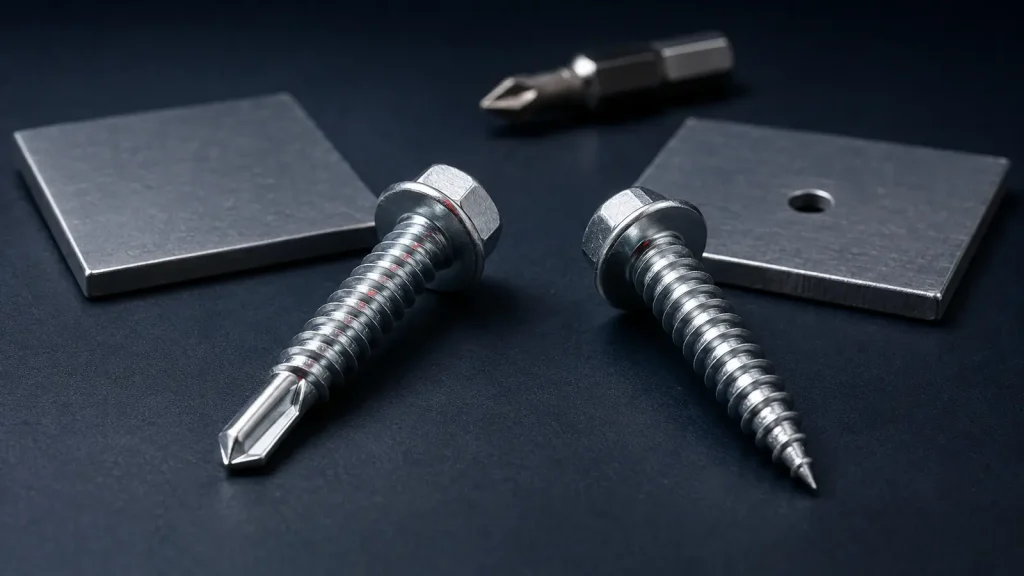
The main distinction is between screws that form their own thread in a prepared hole and self-drilling screws that can pierce thinner metal before forming the thread. Self-tapping screws are useful when a pilot hole or pre-drilled opening is already defined; self-drilling screws can reduce separate drilling steps where the material and screw point are compatible.
Head style also affects the result. A countersunk head can sit flush in a suitable countersunk surface, while a pan or washer-style head provides a different bearing arrangement. Choosing by length alone can leave too little thread engagement, interfere with the underlying material or fail to accommodate the mounted part.
Start with the joint materials. Identify whether the screw enters wood, fiberboard, plastic, sheet metal or a pre-drilled metal part, and note whether the joint is metal-to-metal, metal-to-wood or panel-to-frame. Thread pitch and point design should suit that substrate; a coarse thread commonly serves a different purpose from a fine thread used in a metal assembly.
Set the length from the complete stack-up. Include the thickness of the mounted component, any washer or bracket, and the depth available in the receiving material. Avoid selecting a length from the visible part alone. Excessive length can strike an obstruction, while insufficient engagement can loosen under vibration or handling.
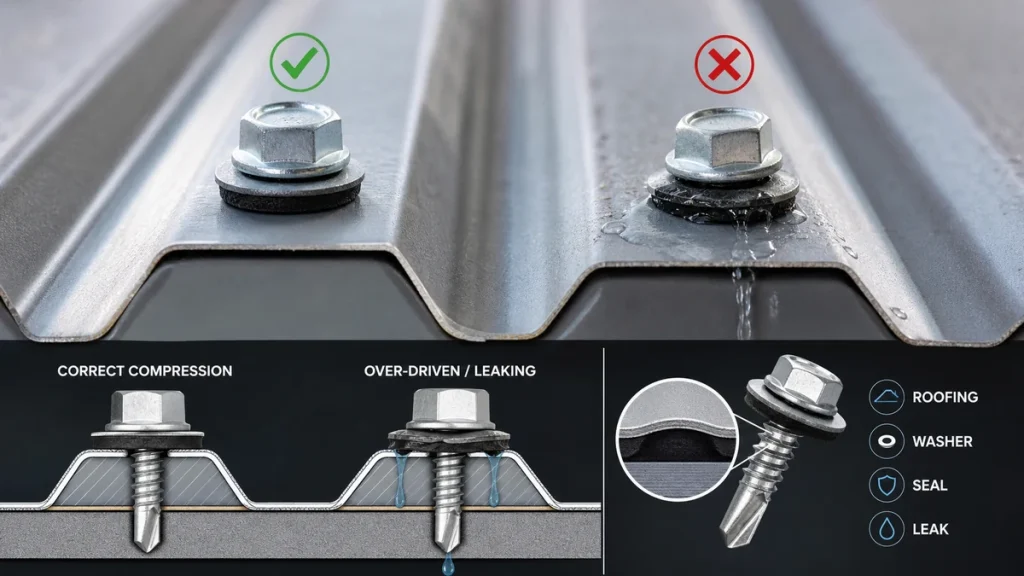
Match the head and drive to the installation. Use a head that gives adequate bearing without damaging the mounted part, and specify a drive that fits the intended installation method. For a flush surface, confirm that the mating material can accept the countersunk profile; for exposed or wet locations, confirm the required material or coating and whether the head includes the needed sealing arrangement.
Prevent avoidable fit problems before ordering. Confirm the pilot-hole approach, thread engagement, screw diameter, finish, packaging and tolerance requirements with the supplier. Send a drawing or a sample screw if the joint is a replacement or repeat assembly, and state the substrate, total material thickness and expected environment so the proposed mounting screw can be checked against the application.