The main difference buyers should check is whether the roof uses solid PVC sheets, corrugated PVC panels or a PVC-related plastic roofing panel with a different formulation. Corrugated panels need fixings that follow the profile and hold the sheet without crushing it. Flatter or multi-wall panels may need different support and edge treatment. Treating all plastic roof panels as the same product is a common cause of cracking, rattling or water entry.
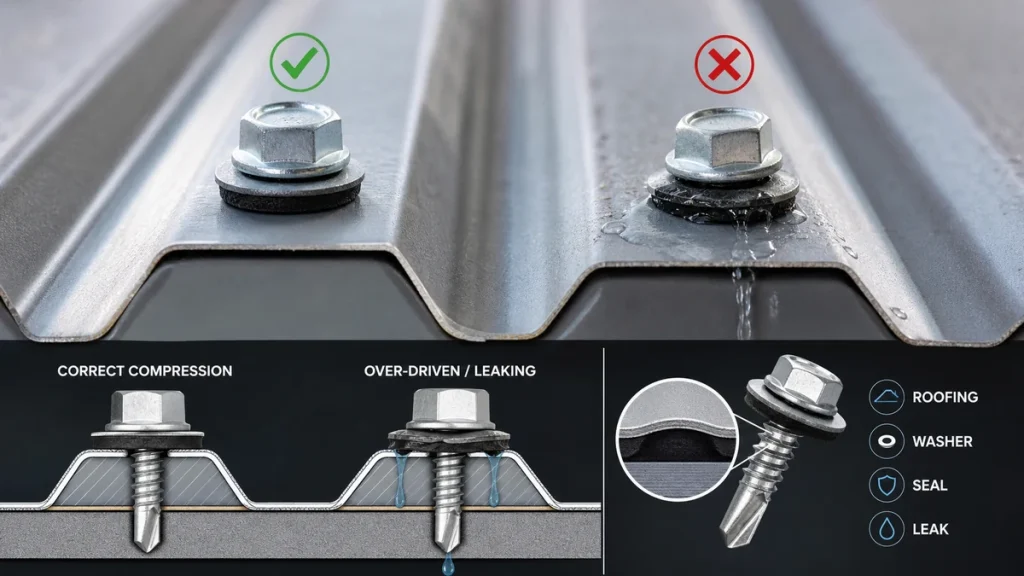
Fastening also differs from metal roofing. Metal sheets tolerate tighter clamping, while PVC panels need allowance for movement from temperature changes. The right screw must suit the base material, such as timber purlins or steel framing, and the sealing washer must compress enough to seal without deforming the panel.
Start with the roof application. A small garden shelter, livestock cover, greenhouse-style roof and warehouse canopy do not place the same demands on a panel. Check whether the priority is daylight, weather protection, chemical resistance, low weight or appearance. Clear and translucent panels transmit light but may need more attention to heat, glare and ageing than opaque sheets.
Match the panel profile to the support frame before choosing fasteners. Corrugated panels need proper contact at the fixing point, and the purlin layout should support the sheet without excessive flexing. If the roof frame is steel, confirm the screw point and thread type. If it is timber, confirm the screw length, pull-out requirement and washer diameter with the roof build-up in mind.
Avoid over-tightening. The washer should seal the hole, not crush the PVC panel. Many leaks around plastic roof panels come from distorted washers, misaligned holes, fixings placed in the wrong part of the profile or screws driven at an angle. Pre-drilling requirements, expansion allowance and side/end laps should be confirmed from the panel maker’s installation guidance.
The next useful step is to share the panel profile, panel thickness if known, roof frame material, lap arrangement and whether the roof is exposed to strong sun, wind-driven rain or chemical vapour. With those details, the fixing method can be checked more accurately instead of selecting screws by length alone.