PVC Roofing Fixings | Hebei Wotu Fastener Manufacturing Co., Ltd.

PVC Roofing Fixings

PVC roofing does not use one universal fixing method. Corrugated or profiled PVC sheets typically need fasteners with a sealing washer and a head that sits securely on the sheet, while PVC membrane systems may use fastening plates, specialized screws, adhesive, or a combination selected for the roof assembly.

The main buying decision is compatibility: match the fastener to the PVC roof product, supporting structure, exposure conditions, and required water seal. A suitable fixing should hold the material without cracking, crushing, or allowing movement to turn the penetration into a leak path.

Related Products

Chinese-standard Color Nylon Head Hex Self-Drilling Screw

Chinese-standard Color Nylon Head Hex Self-Drilling Screw

Brand: Hengzuan Surface: screw color zinc plated, head color nylon protective cap, multiple colors available Specifications: Chinese national standard ST5.5, ST6.3 mainstream caliber, rod length 25mm~125mm full range of specifications in stock, supports nonstandard length customization, suitable for drilling steel sheet thickness 2~6mm Packaging: 25kg cartons, full pallets packed on wooden pallets, support neutral packaging, private-label customization

Read More
Countersunk Head Self-Tapping Screw

Countersunk Head Self-Tapping Screw

Brand: Hengzuan Surface: blue and white zinc plated, optional color zinc plated, black oxide treatment Specifications: Follow GB/T846-1985 Chinese national standard, in stock ST4.2/ST4.8/ST5.5 full range of specifications Packaging: 25kg export cartons, full pallets wrapped with film, supports neutral export packaging, private-label customization

Read More
Painted Hex Head Self-Drilling Screw

Painted Hex Head Self-Drilling Screw

Brand: Hengzuan Surface: screw color zinc plated + hex head outdoor paint Specifications: ST5.5, ST6.3, rod length 25mm~120mm in stock, supports nonstandard customization, suitable for drilling steel sheets 2~5mm Packaging: 25kg cartons, whole wooden pallets

Read More
Blue-White Zinc Plated Pan Head With Pad Self-Tapping Screw

Blue-White Zinc Plated Pan Head With Pad Self-Tapping Screw

Brand: Hengzuan Surface: blue and white zinc plated Specifications: in stock ST4.2/ST4.8full range of specifications, length 13~50mm in stock, support nonstandard length customization Packaging: 25kg cartons, solid wood packaging, support neutral packaging, private-label customization

Read More
Hex Head Self-Drilling Screw With Cup Washer

Hex Head Self-Drilling Screw With Cup Washer

Brand: Hengzuan Surface: color zinc plated Specifications: in stock ST5.5/ST6.3 regular diameter, rod length 19mm~75mm in stock, supports nonstandard customized, suitable for drilling steel sheet thickness 2~5mm Packaging: carton packaging, full pallets wooden pallet packaging, support neutral packaging, private-label customization

Read More

Match the fastener to the PVC roof system

PVC roofing fixing criteria

Compare fastener type, thread form, length, head and washer arrangement, substrate compatibility, corrosion resistance, and resistance to PVC damage during installation. The correct combination depends on the roof system and support structure, so confirm the full assembly rather than reviewing the screw in isolation.

Criterion What To Check Why It Matters Buyer Tip
Roof sheet profile and fixing point Confirm the PVC sheet profile, crown or valley fixing position, and whether the sheet supplier requires oversize holes or washers. PVC roofing moves with temperature. The wrong fixing point or hole size can cause cracking, distortion, or leaks around the fastener. Ask: “Where should this PVC profile be fixed, and what washer or hole detail does the sheet manufacturer specify?”
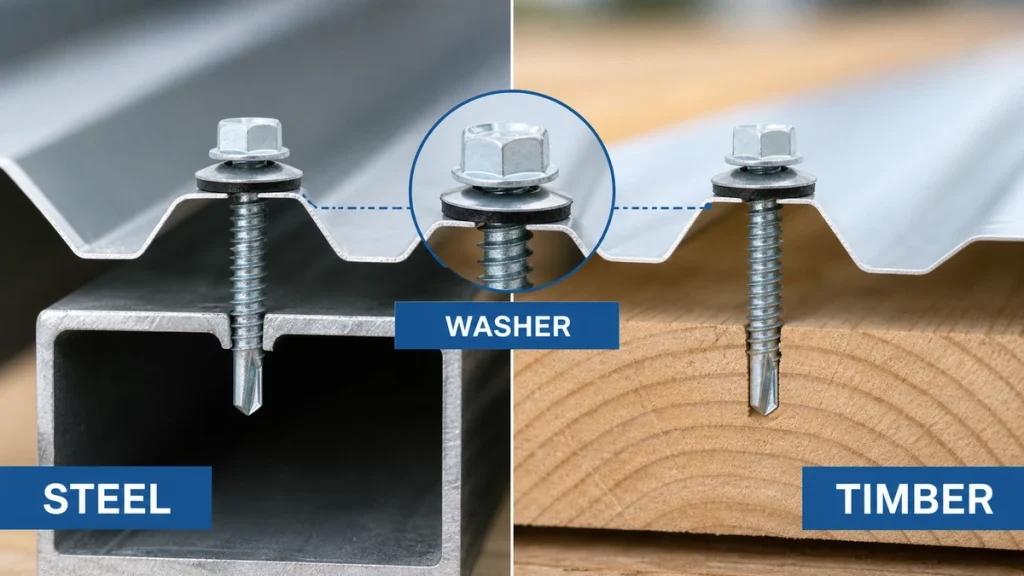
Screw type for the supporting frame Match the screw point and thread to the substrate: steel purlin, timber batten, or another backing material. A screw that suits steel may not grip timber correctly, and a timber screw may not drill cleanly into metal framing. Ask: “What is the base material and thickness the screw must bite into?”
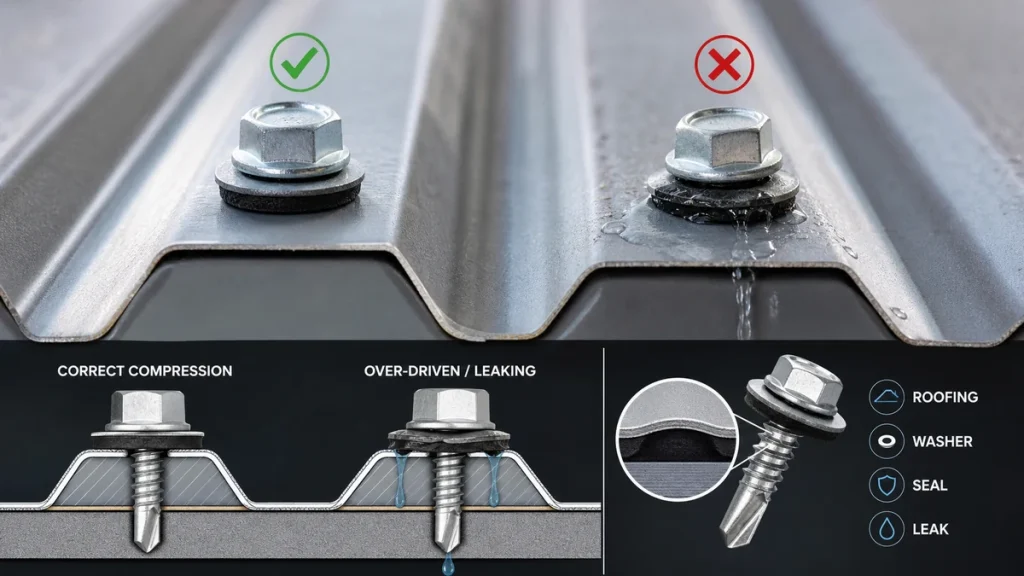
Washer material and sealing face Check the washer diameter, sealing material, and whether it sits flat on the PVC profile without over-compressing. The washer creates the weather seal. Too small, too hard, or unevenly seated washers can let water in or stress the sheet. Ask: “Which bonded washer is recommended for this PVC sheet profile and expected roof exposure?”
Fastener length and embedment Verify the total stack-up: PVC sheet height, washer, any overlap or insulation layer, and the required penetration into the frame. A screw that looks long enough may still fail if it does not engage the frame properly or if it bottoms out before sealing. Ask: “Can you calculate the screw length from my sheet profile and support material?”
Corrosion exposure around the roof Review whether the roof faces coastal air, industrial fumes, animal housing, or regular chemical cleaning. Roof fasteners fail early when the coating or material does not match the exposure, even if the sheet itself remains serviceable. Ask: “What fastener coating or material do you recommend for this site environment?”

Avoid leaks and sheet damage at the fixing point

No. A screw suitable for a PVC roofing sheet is not automatically suitable for a PVC membrane. Sheet roofing depends on the profile, fixing point, washer seal, and substrate. Membrane roofing depends on the membrane system, plate or washer design, pull-out requirements, and whether the attachment is exposed or covered by another roof layer.

The supporting material also changes the choice. Timber and steel usually require different thread forms and engagement, while an unsuitable washer, over-tightened head, or fixing placed too close to an edge can damage the PVC even when the screw length appears correct.

Start by identifying the roof product: rigid PVC sheet, corrugated panel, PVC membrane, or an insulated roof assembly. Provide the sheet or membrane profile, thickness, overlap arrangement, and whether the fixing passes through a crest, valley, seam, or reinforced zone. These details determine the head, washer, plate, and penetration arrangement.

Next, match the fastener to the substrate. Timber needs a thread and length that provide dependable engagement without emerging unnecessarily through the support. Thin steel and heavier steel supports call for different drilling or tapping behavior. Do not select by overall length alone; account for the PVC thickness, any washer or plate, overlap layers, and the amount of thread that must enter the support.

Water sealing is a system choice, not just a screw choice. Check the washer material and diameter, its compatibility with the PVC and roof exposure, and whether the head can be tightened without deforming the sheet. A washer that is too small may not seal the fixing point; excessive tightening can crush the sheet or distort the seal. Follow the roofing system's fixing pattern rather than creating an improvised pattern.

For an enquiry, send the PVC roofing type, substrate, roof exposure or application, and the preferred fixing location. Ask the supplier to confirm compatible fastener and washer combinations, available finishes or materials, and whether the proposed design is intended for exposed PVC roofing or a concealed membrane assembly.

Criteria Importance Description Example Options
Roof material type Critical starting point PVC sheet roofing and PVC membrane roofing use different fixing concepts. A sheet usually relies on a screw and washer seal at the profile, while a membrane may rely on plates, laps, adhesive, or concealed attachment. A corrugated PVC sheet over purlins is assessed differently from a flat PVC membrane over insulation.
Supporting structure Changes the thread and drilling choice The substrate determines how the fastener grips. Timber, thin steel, and heavier steel supports do not use the same thread form or point style. A screw intended for timber may not perform correctly in a thin steel purlin.
Washer or plate design Directly affects water sealing The sealing component must suit the PVC surface, fixing point, and roof exposure. Too little bearing area can leak; too much tightening pressure can deform the material. A broad sealing washer may be suitable for a profiled sheet, while a membrane system may require a fastening plate.
Fastener length and engagement Important, but not the only selection factor Length must account for the PVC material, overlaps, washer or plate, and the amount of thread needed in the support. Choosing by overall length alone can still leave poor holding strength or a damaged seal. A screw that looks long enough may fail if most of its length is taken up by sheet build-up and little thread enters the support.
Installation tolerance Reduces cracking, crushing, and later leaks PVC materials can be damaged by poor placement or excessive tightening. The chosen fastener should allow a secure hold while maintaining the intended washer compression. Over-driving a screw can flatten the washer and distort the sheet instead of improving the seal.

Blog Articles / Reviews

Which Self-Tapping Roofing Screw Specification Fits Metal Panels on Steel or Timber?

Which Self-Tapping Roofing Screw Specification Fits Metal Panels on Steel or Timber?

The correct self-tapping roofing screw depends on the complete panel-and-substrate stack-up. Steel supports typically require a point and thread matched to the support thickness and any pilot-hole requirement; timber supports require a wood-appropriate thread and sufficient embedment. In both cases, buyers must define diameter, length, head, sealing washer, material or coating, environment, pull-out requirements, and […]

Why Do Self-Tapping Roofing Screws Leak Even When the Screw Length Looks Correct?

Why Do Self-Tapping Roofing Screws Leak Even When the Screw Length Looks Correct?

Direct answer: Correct screw length does not guarantee a watertight metal-roof connection. Self tapping roofing screws can leak because of incorrect washer compression, enlarged or stripped holes, insufficient thread engagement, panel movement, or an unsuitable coating-and-washer system. Buyers should diagnose the complete installed connection—including panel profile, support thickness, point type, washer condition, and exposure—rather than […]

Frequently Asked Questions

Can the same fastener be used for PVC sheets and PVC membrane roofing?

Usually not without confirmation from the roof system supplier. Rigid or corrugated PVC sheets often need a screw and sealing washer suited to the sheet profile, while PVC membrane systems may need a plate, washer, or concealed attachment method designed for that membrane.

What causes leaks around screws in a PVC roof?

Leaks often come from the fixing arrangement rather than the screw length alone. Common causes include a washer that is too small, over-tightening that deforms the sheet, poor placement on the profile, insufficient thread engagement, or using a fastener that does not match the substrate.

Is it better to fasten through the crest or valley of a PVC roofing sheet?

That depends on the sheet profile and the roofing manufacturer's installation instructions. The fixing point must allow the washer or cap to seal properly without crushing the sheet, and the support below must give the screw enough holding strength.

How should I choose between fasteners for timber and steel supports?

Timber and steel need different thread behavior. For timber, the screw must bite securely without splitting or excessive protrusion; for steel, the drill point or tapping action must suit the support thickness and material.

What information should I send before asking for a PVC roofing fastener recommendation?

Send the roofing type, sheet or membrane thickness, profile shape, overlap arrangement, fixing location, and supporting material. Also mention whether the fastener will be exposed to weather and whether the roof system requires a specific washer, cap, or plate.

Leave Your Message

Tell us whether you need fasteners for PVC sheets or a PVC membrane, the supporting material such as timber or steel, and the roof product thickness or fixing arrangement.