Reciprocating Saw Blades For Metal Selection Guide | Hebei Wotu Fastener Manufacturing Co., Ltd.

Reciprocating saw blades for metal cutting

Reciprocating saw blades for metal must match the material being cut, its thickness and the saw’s shank connection. A blade selected for thin sheet will behave differently from one intended for pipe, structural steel or thicker stock, so the main decision is balancing cutting speed, control and blade life.

For a reliable specification, start with the metal type and thickness range, then confirm the tooth pattern, blade length and compatibility with the intended saw.

Related Products

Hex flange nut (Chinese national standard GB/T6177.1-2000)

Hex flange nut (Chinese national standard GB/T6177.1-2000)

Brand: Wotu Surface: zinc plated Specifications: in stockM6/M8/M10/M12/M14/M16/M20 Chinese national standardfull range of specifications, support nonstandard thickness, tooth pitch customized Matching: can be matched with bolts of the same specification, flat washer, spring washer complete set of shipment Packaging: 25kg cartons, whole wooden pallets

Read More

White Zinc Plated Hex Head Self-Drilling Screw

White Zinc Plated Hex Head Self-Drilling Screw

Brand: Hengzuan Surface: blue and white zinc plated, optional black oxide, color zinc plated coating Specifications: in stock 4.2/4.8/5.5/6.3mm wire diameter, length 16mm~165mm full size range, supports nonstandard customized rod length Packaging: 25kg export cartons, full-container wooden pallets wrapped with film, supports neutral packaging, private-label customization

Read More
Wafer Head Self-Drilling Screw

Wafer Head Self-Drilling Screw

Brand: Hengzuan Surface: blue and white zinc plated, can be customized color zinc plated, black oxide plated Specifications: Comply with GB/T15856.2 Chinese national standard, in stock ST3.5/ST4.2/ST4.8/ST5.5 mainstream wire diameter, rod length 13mm~50mm full range of specifications, nonstandard length customization on demand, drilling applicable plate thickness 2~5mm Packaging: 25kg export cartons, full pallets wrapped with film, supports neutral export packaging, private-label customization

Read More

Selecting a blade for your metal-cutting application

Metal-cutting blade selection

Compare metal-cutting blades by tooth construction, pitch, blade length, cutting width, shank compatibility and intended material. The most suitable option depends on the combination of workpiece thickness, required cutting control, expected blade life and the saw used in the application.

Criterion What To Check Why It Matters Buyer Tip
Tooth pitch matched to the metal thickness Compare the blade’s stated tooth pitch with the thinnest and thickest material you will cut. A pitch that is too coarse can catch or strip teeth in thin sheet; one that is too fine can cut slowly in thicker sections. Ask which tooth-pitch range is recommended for your material type and thickness range.
Blade material and tooth construction Confirm whether the blade uses carbon steel, high-speed steel, bi-metal construction, or another stated tooth material. Construction affects resistance to tooth breakage, heat and wear during metal cutting. Ask for the intended metal applications and the expected trade-off between cutting life and purchase cost.
Blade length and usable cutting reach Compare the overall length and stated working length with the depth and access of the cut. A blade that is too short may not pass through the workpiece safely; excessive length can flex more in restricted cuts. Send the maximum material thickness and available clearance around the cut.
Shank pattern and saw compatibility Match the blade shank to the exact reciprocating saw model or holder design. An incorrect shank prevents secure fitting and can interrupt work or create an unsafe setup. Provide the saw brand and model and ask the supplier to confirm shank compatibility before ordering.
Tooth geometry for the intended cut Check whether the blade is designed for straight cuts, flush cuts, demolition work or controlled metal cutting. Tooth geometry influences starting behavior, cut control, vibration and the finish on the workpiece. Describe whether you are cutting sheet, tube, solid bar or mixed materials, and ask which blade geometry fits.

Match tooth pattern, material and saw fit

Bi-metal blades are a practical choice for many general metal-cutting jobs because their construction combines a flexible body with a harder cutting edge. Carbide-tipped or carbide-grit blades may be more suitable for demanding materials or applications where longer edge life is more important than the lowest initial cost.

Tooth pitch also matters. Finer teeth generally give better control on thinner material, while a coarser pattern can clear chips more effectively from thicker sections. Choosing the wrong pitch can cause slow cutting, vibration, premature tooth wear or snagging.

Match the blade to the workpiece. Identify whether the job involves mild steel, stainless steel, cast material, pipe, tubing, sheet or mixed metal. Stainless and harder alloys may need a different cutting edge from ordinary carbon steel, while thin sheet requires enough teeth engaged in the material to avoid rough, unstable cutting.

Choose tooth pitch for thickness. Fine or variable tooth patterns are often better for thin sections and tubing; coarser patterns can suit thicker stock. A blade that is too coarse for thin metal may catch and damage the workpiece, while one that is too fine for thick metal may cut slowly and wear quickly.

Check the blade dimensions and saw fit. Confirm the shank style, usable cutting length and overall blade length against the saw and the required cutting depth. Extra length is not automatically an advantage: excessive flex can reduce control, while insufficient usable length may prevent a clean pass through the workpiece.

Specify the operating use before requesting a quotation. Send the metal type, approximate thickness range, cutting application, saw model or shank requirement, preferred blade length and expected order quantity. If the job involves frequent production cutting, ask which construction and tooth pattern are recommended for repeated use rather than selecting only by unit price.

Criteria Importance Description Example Options
Tooth pitch High for cut control and blade life Fine teeth generally suit thinner metal, tubing and sheet because more teeth stay engaged in the work. Coarser teeth can clear chips better in thicker sections but may catch on thin material. Thin-wall tube may call for a finer or variable pitch, while thicker steel bar may need a coarser pattern.
Blade construction Important when balancing cost, durability and material difficulty Bi-metal construction is commonly used for general metal cutting because it combines flexibility with a harder cutting edge. Carbide-tipped or carbide-grit designs may be considered for tougher materials or longer service life, depending on the job. A maintenance kit for mixed mild steel may use bi-metal blades; repeated cutting of harder material may justify asking about carbide options.
Workpiece form and thickness Critical because the same metal can cut differently in different shapes Sheet, tube, pipe, angle steel and solid stock place different loads on the teeth. Wall thickness, interrupted cuts and vibration all affect the suitable tooth pattern and blade rigidity. Cutting thin sheet requires different tooth engagement than cutting a thick-walled pipe.
Blade length and rigidity Important for reach, accuracy and operator control The blade needs enough usable length for the cut and the saw stroke, but extra length can increase flex. Shorter, stiffer blades often give better control where access allows. A deep cut through pipe may need a longer blade; trimming small metal brackets may be easier with a shorter blade.
Saw and shank compatibility Essential before ordering A blade that does not fit the saw cannot be used safely or effectively. Confirm the shank style, saw model and any holder requirements before comparing blade options. Two blades with similar tooth patterns may not be interchangeable if the saw connection differs.

Product Selection

Related Options

For a maintenance team cutting mixed metal pipe and tubing on site, shank fit and a suitable fine or variable tooth pattern may be the first priorities. For repeated cuts through thicker steel, buyers may place more weight on tooth durability, chip clearance and resistance to flex. Compare options against the actual workpiece instead of treating one blade design as suitable for every metal-cutting task.

Blog Articles / Reviews

How to Specify Countersunk Head Cross Thick Thread Fiberboard Screws for Furniture Assembly Projects

How to Specify Countersunk Head Cross Thick Thread Fiberboard Screws for Furniture Assembly Projects

Fiberboard screws are selected based on more than screw size alone. For furniture assembly and board-based applications, buyers need to match the screw structure with the characteristics of fiberboard, MDF, and similar engineered wood materials. A suitable specification should consider thread design, head style, screw length, diameter, installation method, and application requirements. For buyers sourcing […]

How Should Buyers Evaluate Self Tapping Screws for Project Procurement?

How Should Buyers Evaluate Self Tapping Screws for Project Procurement?

#4 self tapping screws should not be purchased from the “#4” designation alone. For a usable B2B specification, the buyer still needs the actual screw diameter, thread form or pitch, overall length, substrate, pilot-hole condition, head and drive style, material, surface finish and quantity. This matters because suppliers may use different naming systems. Wotu Fastener’s […]

Which Self-Tapping Roofing Screw Specification Fits Metal Panels on Steel or Timber?

Which Self-Tapping Roofing Screw Specification Fits Metal Panels on Steel or Timber?

The correct self-tapping roofing screw depends on the complete panel-and-substrate stack-up. Steel supports typically require a point and thread matched to the support thickness and any pilot-hole requirement; timber supports require a wood-appropriate thread and sufficient embedment. In both cases, buyers must define diameter, length, head, sealing washer, material or coating, environment, pull-out requirements, and […]

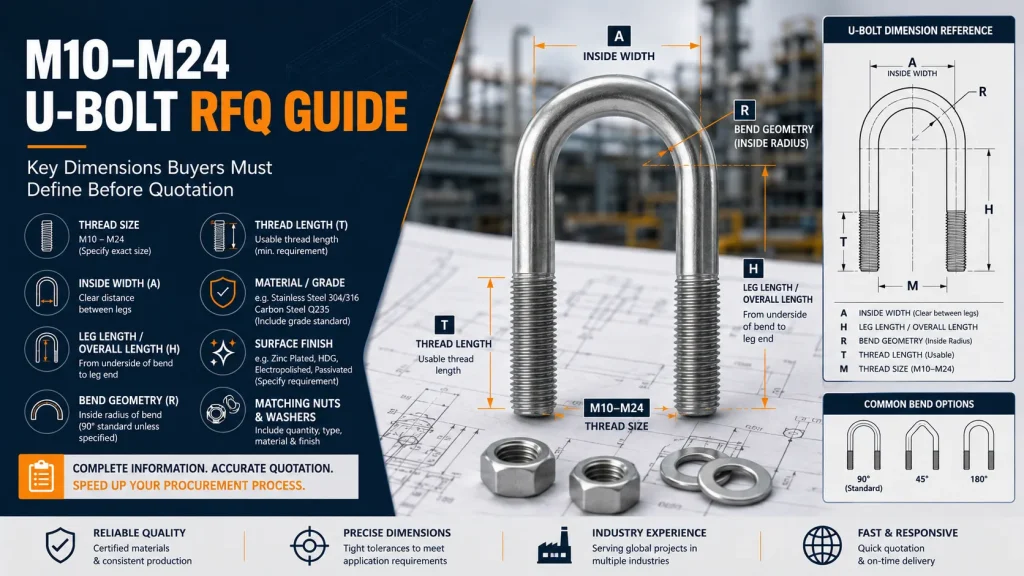
Which M10–M24 U-Bolt Measurements Must Buyers Send Before an RFQ?

Which M10–M24 U-Bolt Measurements Must Buyers Send Before an RFQ?

Direct Answer: For an M10–M24 U-bolt RFQ, buyers should send a dimensioned drawing that defines thread diameter, inside width, leg or overall length, bend geometry, thread length, application diameter, material or grade requirement, surface finish, matching nuts/washers, quantity, and packing needs. Nominal thread size alone is not enough because different measurement datums can produce U-bolts […]

Which Hexagonal Wood Screw Specifications Should Buyers Freeze Before Production?

Which Hexagonal Wood Screw Specifications Should Buyers Freeze Before Production?

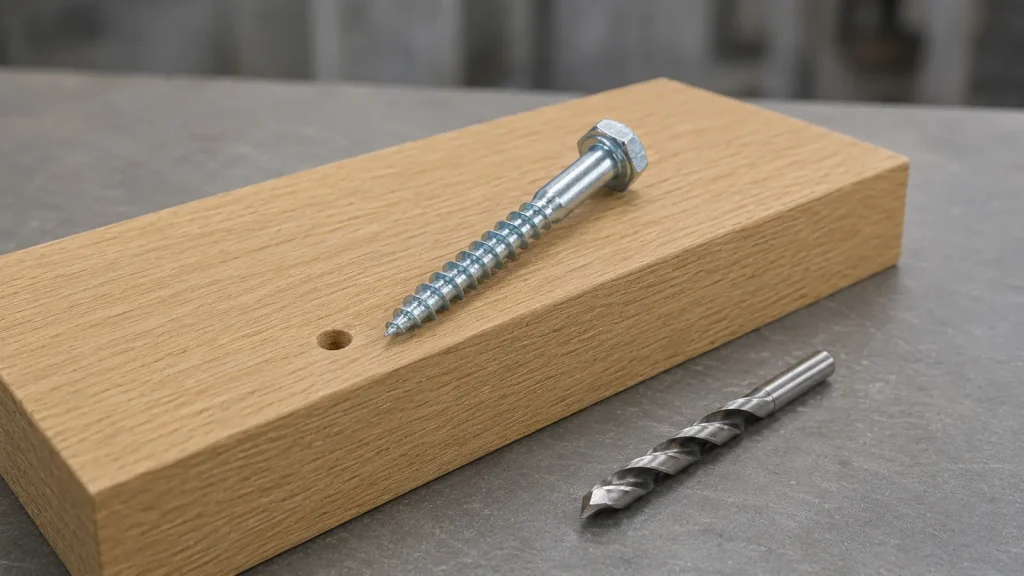
A hexagonal wood screw order should not be released from a gauge number and length alone. Before production, the buyer and supplier need one approved specification that fixes the screw diameter, length basis, thread geometry, point, hex-head dimensions, material, finish, installation method, substrate and acceptance evidence. The pilot hole belongs in the application specification as […]

Frequently Asked Questions

Which blade type is usually suitable for cutting steel pipe or tubing?

For common steel pipe or tubing, buyers often consider bi-metal blades with a fine or variable tooth pattern. The wall thickness matters: thin-wall tube needs enough teeth in contact to reduce catching, while heavier pipe may need better chip clearance and a more durable cutting edge.

Are carbide blades always better than bi-metal blades?

Not always. Carbide options can make sense for tougher materials or frequent cutting where edge life is a priority, but they usually cost more and may not be necessary for ordinary mild steel work. Bi-metal blades are often a practical general-purpose choice when flexibility, cost control and mixed maintenance use matter.

What is the most common mistake when choosing a metal-cutting blade?

A common mistake is choosing by blade length alone and ignoring tooth pitch. A coarse blade can snag thin sheet or tubing, while a very fine blade can cut slowly and overheat in thicker metal. Match the tooth pattern to the workpiece thickness before comparing price.

How should I decide the blade length?

The blade must be long enough to pass through the material while allowing for the saw’s stroke. However, a blade that is much longer than needed can flex and reduce control, especially in tighter cuts. Confirm both overall length and usable cutting length for the application.

What details should be sent before asking for a quotation?

Send the metal type, approximate thickness or wall thickness, cutting shape such as sheet, pipe, tube or solid stock, preferred blade length, shank requirement or saw model, and expected quantity. If the work involves repeated production cutting, also explain the cut frequency so the recommended tooth construction is not based only on the lowest unit price.

Leave Your Message

Please provide the metal type and thickness, the saw model or shank requirement, and the blade length or cutting application you need.