Screwed Meaning in Fastener Terms | Hebei Wotu Fastener Manufacturing Co., Ltd.

What “screwed” means in fastener applications

In a fastener context, “screwed” means joined or secured with a screw. The screw’s threads engage the material directly or enter a tapped hole, allowing the parts to be held together and often removed later.

The word also has informal meanings in everyday English, including being in serious difficulty. For a purchasing or engineering inquiry, clarify whether you mean a screw-fastened joint, a threaded connection, or the general expression.

Related Products

Countersunk Head Cross Thick Thread Fiberboard Screw

Countersunk Head Cross Thick Thread Fiberboard Screw

Brand: Wotu Surface: color zinc plated electroplating Specifications: in stock 3.5/4.0/4.5/5.0 regular wire diameter, rod length 16~80mm full range of specifications in stock, supports nonstandard length customization Packaging: 25kg cartons, whole wooden pallets

Read More

Countersunk Head Self-Tapping Screw

Countersunk Head Self-Tapping Screw

Brand: Hengzuan Surface: blue and white zinc plated, optional color zinc plated, black oxide treatment Specifications: Follow GB/T846-1985 Chinese national standard, in stock ST4.2/ST4.8/ST5.5 full range of specifications Packaging: 25kg export cartons, full pallets wrapped with film, supports neutral export packaging, private-label customization

Read More
Hexagonal Wood Screws

Hexagonal Wood Screws

Brand: Wotu Surface: blue and white zinc plated Specifications: Chinese national standard 6#/8#/10#/12#/16#/20#, rod length 35mm~250mm full range of specifications in stock, supports nonstandard length customization Packaging: 25kg cartons, full pallets packed on wooden pallets, support neutral packaging, private-label customization

Read More
Blue-White Zinc Plated Pan Head With Pad Self-Tapping Screw

Blue-White Zinc Plated Pan Head With Pad Self-Tapping Screw

Brand: Hengzuan Surface: blue and white zinc plated Specifications: in stock ST4.2/ST4.8full range of specifications, length 13~50mm in stock, support nonstandard length customization Packaging: 25kg cartons, solid wood packaging, support neutral packaging, private-label customization

Read More
Color Zinc Plated Hex Flange Wood Screw With Washer

Color Zinc Plated Hex Flange Wood Screw With Washer

Brand: Hengzuan Surface: color zinc plated, can be customizedblue-white zinc plated Specifications: in stock 4.8/5.5 common wire diameter, rod length 16~125mm full range of specifications, supports nonstandard customized Packaging: 25kg cartons, whole wooden pallets, support neutral packaging, private-label customization

Read More

Match the screw to the material and joint

Fastener selection criteria

Relevant selection criteria include the receiving material, thread form, screw or shank diameter, length, head and drive style, surface finish, corrosion exposure and expected installation method. Confirm how the fastener is intended to engage the joint rather than relying on the word “screwed” alone.

Criterion What To Check Why It Matters Buyer Tip
Context of the word Read the full sentence and identify whether it discusses a fastener, a damaged part, or a person's situation. “Screwed” can describe an object fixed with a screw, a thread that no longer works, or an informal predicament. Ask, “Is this sentence about assembly, damage, or a problem?”
Literal fastening meaning Look for nearby words such as screw, panel, bracket, hole, thread, or tighten. In a technical or product context, “screwed” usually means joined or secured with a screw. Confirm the screw type, thread, and mating material before treating the term as a complete assembly instruction.
Damage or fit meaning Check whether the sentence refers to a stripped head, cross-threading, looseness, or a screw that will not engage. The word may describe a failed fastening condition rather than a correctly installed joint. Ask, “Does ‘screwed’ mean installed, stripped, cross-threaded, or simply stuck?”
Informal predicament meaning Look for people, deadlines, money, or consequences near the word, especially in casual speech. “Screwed” can mean in serious trouble or facing a poor outcome, with tone depending on the speaker. Use a neutral alternative such as “in difficulty” or “at risk” in formal business writing.
Tone and audience Check whether the wording appears in technical documentation, customer communication, or casual conversation. The term can be ordinary technical language but also vulgar or blunt slang in other contexts. For a specification or enquiry, replace ambiguity with a precise phrase such as “secured with screws” or “thread damaged.”

Choose the right type of screwed connection

A screwed joint is not exactly the same as a bolted joint. A screw normally forms its own thread in a suitable material or engages an existing internal thread, while a bolt commonly passes through a clearance hole and tightens with a nut. Terminology can vary by industry, so the joint design matters more than the label.

The distinction affects the required thread type, hole preparation, tightening method, service load and ease of disassembly. A screw may suit a panel, sheet, timber or tapped metal assembly, while a bolt-and-nut arrangement may be more appropriate where access exists on both sides and the joint needs controlled clamping.

Start with the materials being joined. Wood, thin sheet, plastics and solid metal need different thread forms and points. A thread that works well in one material may strip, split or fail to achieve reliable engagement in another. Confirm whether the receiving material is self-tapping, pre-tapped or requires a separate nut or insert.

Consider how the joint will carry load and how often it may be opened. A removable service panel may need a durable thread and a suitable drive, while a permanent assembly may prioritise installation speed or resistance to loosening. Do not select a screw by diameter alone; thread engagement, head style and clamping method also affect the result.

Check the installation conditions before choosing the finish and material. Moisture, chemicals, outdoor exposure and contact with dissimilar metals can change the corrosion risk. The head, drive recess and available tool access should match the assembly process; a recess that is easily damaged can create avoidable rework.

For an enquiry, provide the materials and thicknesses being joined, the intended use and whether the joint must be removable. A drawing or photograph showing the hole, access direction and preferred head or drive can resolve terminology differences before the screw type is discussed.

Criteria Importance Description Example Options
Receiving material Critical to the fastener type The material determines whether the screw needs to cut its own thread, enter a pre-tapped hole, bite into timber, or work with an insert or nut. A screw for thin sheet metal is selected differently from one used in timber or tapped steel.
Screw versus bolt arrangement Important for joint design and access A screw is often installed from one side into the receiving material, while a bolt-and-nut assembly normally needs access to both sides. A service cover may use screws, while a bracket with through-holes may use bolts and nuts.
Thread engagement High impact on holding strength and reliability The fastener must have enough effective thread engagement without stripping the material, bottoming out, or damaging the part. A screw that is too short may not hold; one that is too long may interfere with parts behind the panel.
Removability Important where maintenance is expected Some screw-fastened joints are opened repeatedly, so the thread and drive should tolerate removal and reinstallation. Others are intended mainly for quick permanent assembly. A removable access panel may need a durable drive recess and suitable receiving thread.
Head and drive style Affects installation quality and tool access The head shape controls how the screw sits on the surface, while the drive style affects installation speed, torque transfer and risk of recess damage. A countersunk head may sit flush, while a pan head may be preferred where a raised bearing surface is acceptable.

Blog Articles / Reviews

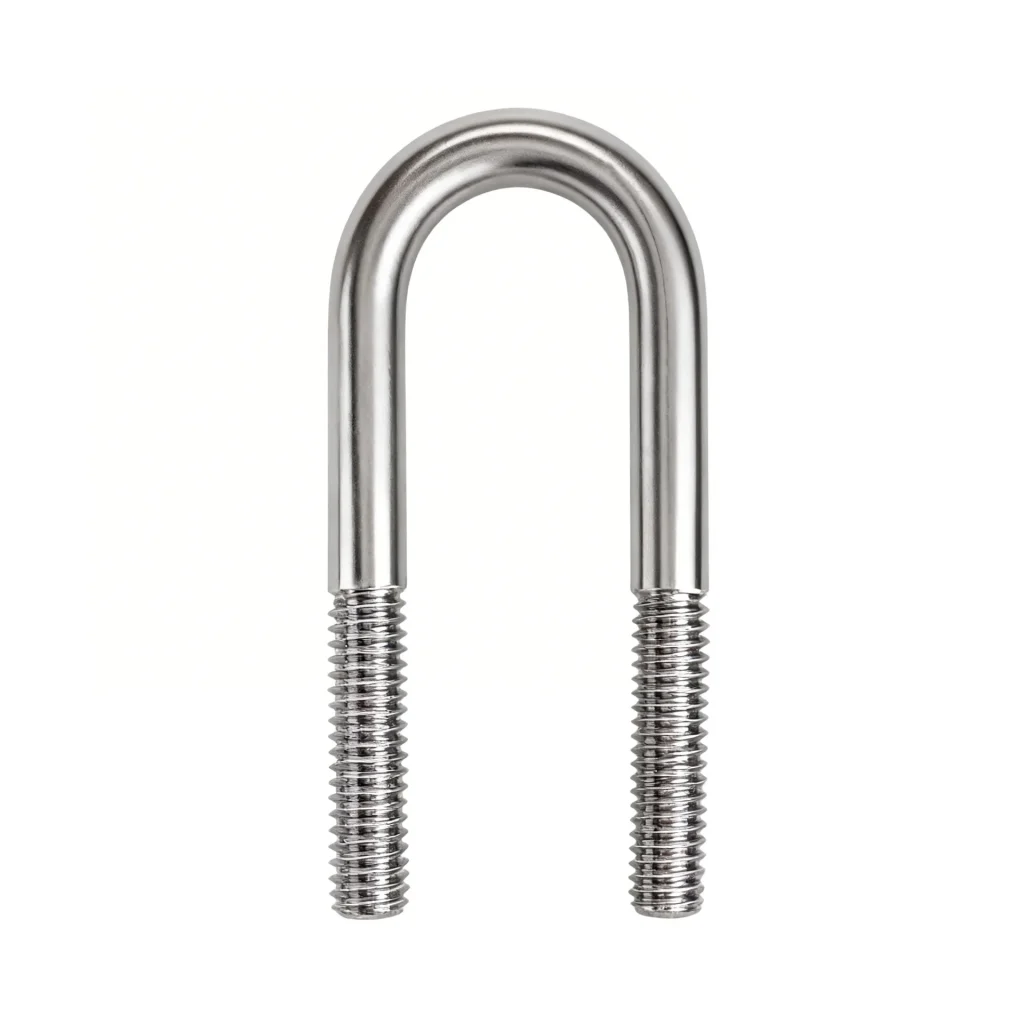
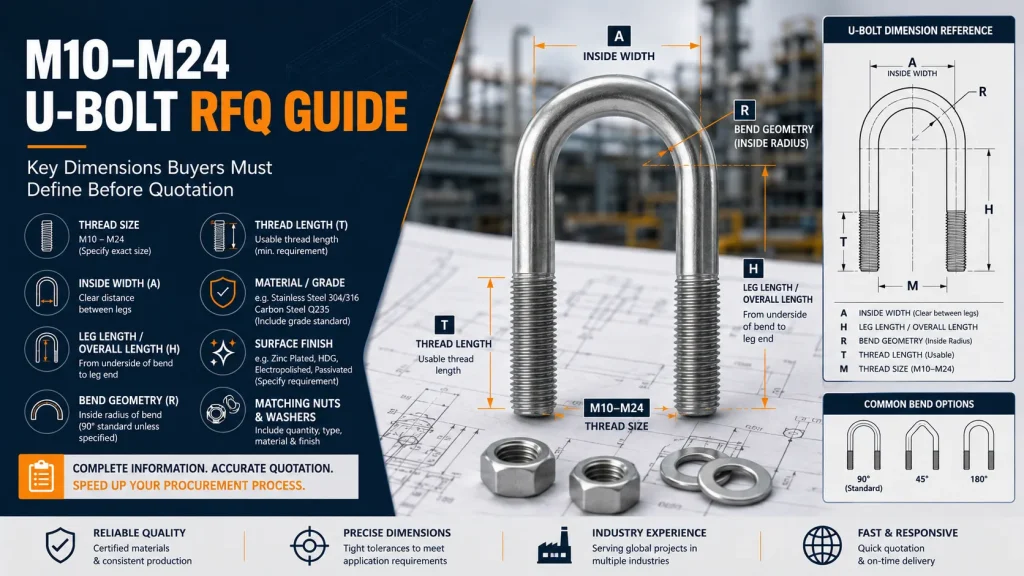
Which U-Bolt Measurements Must Buyers Provide Before a Quote?

Which U-Bolt Measurements Must Buyers Provide Before a Quote?

For an M10–M24 U-bolt RFQ, buyers should send a dimensioned drawing that defines thread diameter, inside width, leg or overall length, bend geometry, thread length, application diameter, material or grade requirement, surface finish, matching nuts/washers, quantity, and packing needs. Nominal thread size alone is not enough because different measurement datums can produce U-bolts that look […]

How Should Buyers Evaluate Self Tapping Screws for Project Procurement?

How Should Buyers Evaluate Self Tapping Screws for Project Procurement?

#4 self tapping screws should not be purchased from the “#4” designation alone. For a usable B2B specification, the buyer still needs the actual screw diameter, thread form or pitch, overall length, substrate, pilot-hole condition, head and drive style, material, surface finish and quantity. This matters because suppliers may use different naming systems. Wotu Fastener’s […]

Which M10–M24 U-Bolt Measurements Must Buyers Send Before an RFQ?

Which M10–M24 U-Bolt Measurements Must Buyers Send Before an RFQ?

Direct Answer: For an M10–M24 U-bolt RFQ, buyers should send a dimensioned drawing that defines thread diameter, inside width, leg or overall length, bend geometry, thread length, application diameter, material or grade requirement, surface finish, matching nuts/washers, quantity, and packing needs. Nominal thread size alone is not enough because different measurement datums can produce U-bolts […]

What are self-tapping screws?

What are self-tapping screws?

What is the working principle of self-tapping screws? Let’s discuss this with Wotu Fasteners. As the name suggests, self-tapping screws are screws that can tap their own threads. Regular screws require pre-drilled holes to be screwed in. Self-tapping screws tap their own threads as they are screwed in. To achieve this self-tapping, these screws are […]

Frequently Asked Questions

What does “screwed” mean in a fastener enquiry?

It usually means that two parts are fixed together with a screw or a threaded connection. To avoid confusion, state whether the screw goes into timber, plastic, sheet metal, a tapped hole, or a nut.

Is a screwed connection the same as a bolted connection?

Not always. A screw typically engages directly with the receiving material or an internal thread, while a bolt often passes through a clearance hole and is tightened with a nut. The correct term depends on the joint design, not only on the fastener’s appearance.

When is a screw a better choice than a bolt and nut?

A screw can be more practical where access is available from one side only, such as a cover plate, panel, timber part, or tapped component. A bolt and nut may be better where both sides are accessible and the assembly needs stronger or more controlled clamping.

What is a common misunderstanding about screw-fastened joints?

Many buyers focus only on diameter and length, but the thread form, head type, drive style and receiving material are just as important. A screw that fits the hole may still strip the material, loosen in service, or be difficult to remove later.

What information should I provide when asking about a screwed joint?

Provide the materials being joined, thicknesses, hole condition, access direction, and whether the joint must be removable. A drawing or photo can help clarify whether you need a self-tapping screw, machine screw, wood screw, or another threaded fastener.

Leave Your Message

Describe the materials and thicknesses being joined, the intended application, and whether the connection must be removable. Include a drawing or photo if the thread, head style or installation access is uncertain.