Sd Screws Selection Guide | Hebei Wotu Fastener Manufacturing Co., Ltd.

SD Screws for Metal and Roofing

SD screws usually refers to self-drilling screws: fasteners with a drill-point tip that cuts its own hole before the threads engage. The main decision is not just diameter and length, but whether the drill point, thread form, head style and finish match the material stack you are fastening.

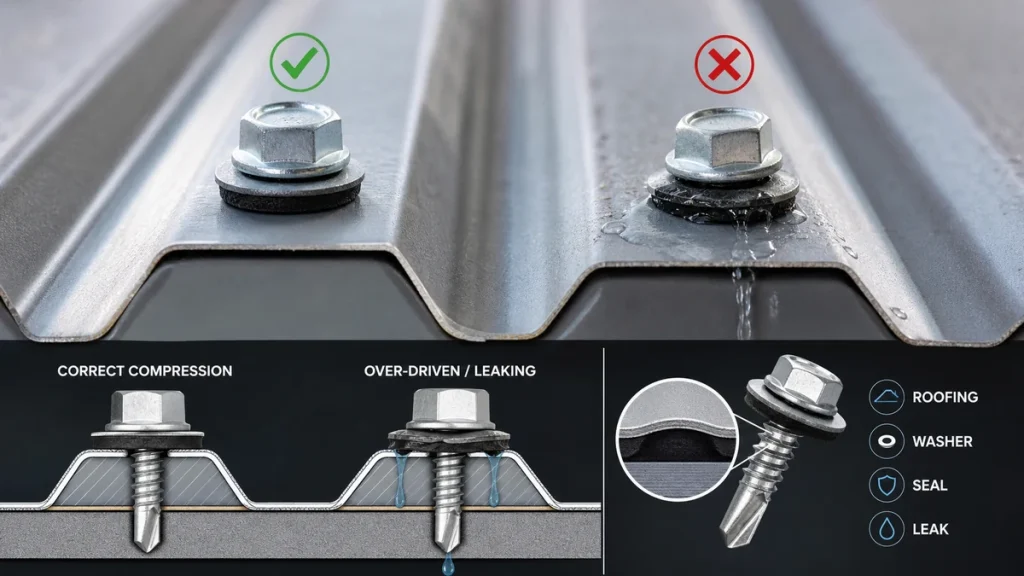
For metal sheet, roofing panels, light-gauge framing or metal-to-wood assemblies, the right screw can reduce pre-drilling and speed installation. The wrong point or length can leave poor thread engagement, stripped holes, crushed washers or leaks around roof penetrations.

Related Products

Hexagonal Wood Screws

Hexagonal Wood Screws

Brand: Wotu Surface: blue and white zinc plated Specifications: Chinese national standard 6#/8#/10#/12#/16#/20#, rod length 35mm~250mm full range of specifications in stock, supports nonstandard length customization Packaging: 25kg cartons, full pallets packed on wooden pallets, support neutral packaging, private-label customization

Read More
Hex nut DIN934-1987 (A/B accuracy classification)

Hex nut DIN934-1987 (A/B accuracy classification)

Brand: Wotu Standard basis: German standard DIN934-1987, metric coarse thread/fine thread universal thread Surface: 304 stainless steel Specifications: M6~M24 full range of specifications Supporting equipment: same specification bolts, flat washer, spring washer complete set of shipment Packaging: 25kg standard carton, whole wooden pallet packaging

Read More
Blue-White Zinc Plated Pan Head With Pad Self-Tapping Screw

Blue-White Zinc Plated Pan Head With Pad Self-Tapping Screw

Brand: Hengzuan Surface: blue and white zinc plated Specifications: in stock ST4.2/ST4.8full range of specifications, length 13~50mm in stock, support nonstandard length customization Packaging: 25kg cartons, solid wood packaging, support neutral packaging, private-label customization

Read More
Countersunk Head Blue-White Zinc Plated Self-Drilling Screw (Chinese National Standard: Phillips Countersunk Head Self-Drilling And Self-Tapping Screw GB/T15856.2-2002)

Countersunk Head Blue-White Zinc Plated Self-Drilling Screw (Chinese National Standard: Phillips Countersunk Head Self-Drilling And Self-Tapping Screw GB/T15856.2-2002)

Brand: Hengzuan Surface: blue and white zinc plated, can be customized color zinc plated, black oxide plated Specifications: Comply with GB/T15856.2-2002 Chinese national standard, in stock ST4.2/ST4.8/ST5.5 full range of specifications, length 13mm~75mm optional, supports customized nonstandard rod lengths; drilling adaptation plate thickness 0.7~6mm Packaging: 25kg export cartons, full pallets wrapped with film, supports neutral export packaging, customer private-label customization

Read More
Countersunk Head Blue Zinc Self-Drilling Screw

Countersunk Head Blue Zinc Self-Drilling Screw

Brand: Hengzuan Surface: blue and white zinc plated, can be customized color zinc plated, black oxide plated Specifications: in stock 3.5/3.9/4.2/4.8/5.5 mainstream wire diameter, rod length 13mm~75mm full size range, nonstandard length can be customized as needed Packaging: 25kg export cartons, full wooden pallets wrapped with film, supports neutral export packaging, private-label customization

Read More

Compare SD Screw Features for Your Assembly

SD screw selection points

Useful SD screw selection compares drill point, thread type, head shape, drive recess, washer requirement, finish and pack format against the actual joint. If you are checking options with Hebei Wotu Fastener Manufacturing Co., Ltd., confirm which sizes, coatings and head styles are available for your material stack before finalizing a purchase specification.

Criterion What To Check Why It Matters Buyer Tip
Self-drilling point and intended material thickness Confirm that “SD” means self-drilling and compare the point style with the metal, wood, or pre-drilled assembly being joined. The point determines whether the screw can form its own hole and how reliably it starts in the base material. Ask: What material and thickness range is this screw designed to penetrate, and is a pilot hole required?
Thread form, diameter, and overall length Compare the thread profile, nominal diameter, and measured length with the joint drawing and required thread engagement. Thread geometry affects grip, pull-out resistance, installation speed, and the risk of penetrating too far. Ask for an application sample or drawing review using the actual layer thicknesses and target engagement.
Head style, drive recess, and washer arrangement Verify the head shape, drive type, clearance around the head, and whether a separate or bonded washer is needed. These details affect tool access, seating, surface finish, clamping, and sealing at the joint. Ask: Should the screw sit flush, remain exposed, or use a washer for load distribution or weather protection?
Steel grade and protective finish Request the material and coating description, then compare it with the indoor, outdoor, or chemically exposed environment. Corrosion protection influences service life and compatibility with the materials being joined. Ask which finish is intended for the application and whether contact with the mating material creates a corrosion concern.

Key Choices Before Ordering Self-Drilling Screws

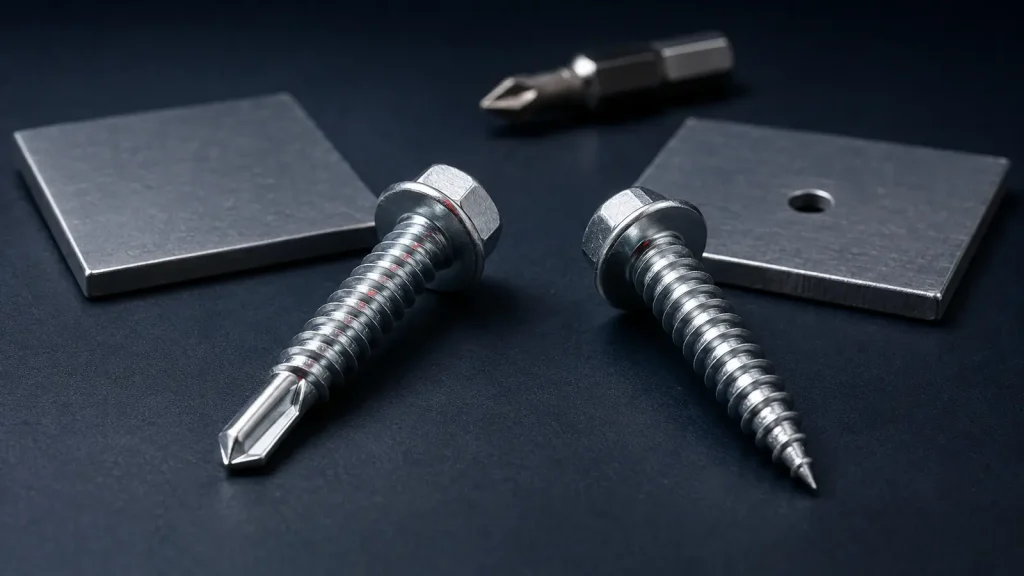
The practical distinction is between self-drilling and self-tapping screws. A self-drilling screw has a drill point designed to make the hole; a self-tapping screw forms or cuts threads in an existing hole or softer material. That difference matters most in metal work, where hole preparation, drill-point capacity and thread engagement decide whether the joint tightens cleanly or fails during installation.

For thin sheet, an SD screw may be chosen to save a drilling step. For thicker steel, layered assemblies or hard material, buyers should confirm the suitable drill point type and fastening sequence instead of assuming any self-drilling screw will penetrate the stack reliably.

Start with the assembly, not the screw name. Identify the top sheet, base material, total material thickness, and whether the joint is metal-to-metal, metal-to-wood or panel-to-frame. These details influence point style, thread pitch and screw length more than a generic request for “SD screws.”

Head style changes both installation and finished performance. Hex washer heads are common where installers need strong tool engagement and may use sealing washers. Pan, wafer or countersunk heads suit different clearance and appearance requirements. A head that looks convenient on paper can interfere with panel seating, cladding overlap or bracket fit.

Pay attention to sealing and corrosion exposure. Roofing or exterior fastening may require a compatible washer and a surface finish suitable for the environment. Indoor brackets, temporary fixtures and concealed assemblies may put more emphasis on drive stability, thread holding and cost control. Do not substitute a non-sealing screw into a weather-exposed roof joint just because the length matches.

Avoid the common mistake of specifying length without confirming thread engagement and drill-point reach. The screw must drill through the upper layer, create a usable hole in the base material, and leave enough thread engaged after any washer, panel rib, insulation or air gap is considered. For an inquiry, share the materials, thicknesses, head preference, finish requirement and application conditions.

Criteria Importance Description Example Options
Drill point capacity Critical when the screw must penetrate sheet, framing or a layered assembly without a separate drilling step. The point must suit the base material and the total thickness it needs to pass through. A point intended for thin sheet may not be appropriate for thicker or harder steel. Compare a point for light-gauge sheet with one selected for a thicker metal-to-metal stack.
Self-drilling or self-tapping action Important because it determines the installation sequence and the type of prepared hole, if any, that the joint requires. Self-drilling screws create the initial hole with their drill point, while self-tapping screws form or cut threads in an existing hole or suitable material. Use the self-drilling option for an assembly where pre-drilling would add a separate operation; consider self-tapping screws for a pre-drilled bracket.
Thread engagement and length Critical to joint holding and installation reliability. Length must account for the upper material, washer, panel profile, gaps and the amount of thread that should engage the base material. Longer is not automatically stronger. Calculate the stack before choosing between two otherwise similar lengths.
Head and washer arrangement Important for tool fit, seating, clearance and sealing. Hex washer, pan, wafer and countersunk heads serve different assembly needs. A sealing washer may be necessary for exposed panel joints but can interfere with a clearance-sensitive installation. A roofing panel may need a compatible washer, while a concealed bracket may prioritize head clearance.
Finish and exposure Important wherever the fastener will face moisture, weather or a corrosive operating environment. The finish should be considered alongside the surrounding materials and the application environment. Indoor fixtures may prioritize drive fit and cost control instead. Separate an exterior panel requirement from an indoor sheet-metal assembly when requesting finish options.

Blog Articles / Reviews

How to Specify Countersunk Head Cross Thick Thread Fiberboard Screws for Furniture Assembly Projects

How to Specify Countersunk Head Cross Thick Thread Fiberboard Screws for Furniture Assembly Projects

Fiberboard screws are selected based on more than screw size alone. For furniture assembly and board-based applications, buyers need to match the screw structure with the characteristics of fiberboard, MDF, and similar engineered wood materials. A suitable specification should consider thread design, head style, screw length, diameter, installation method, and application requirements. For buyers sourcing […]

How Should Buyers Evaluate Self Tapping Screws for Project Procurement?

How Should Buyers Evaluate Self Tapping Screws for Project Procurement?

#4 self tapping screws should not be purchased from the “#4” designation alone. For a usable B2B specification, the buyer still needs the actual screw diameter, thread form or pitch, overall length, substrate, pilot-hole condition, head and drive style, material, surface finish and quantity. This matters because suppliers may use different naming systems. Wotu Fastener’s […]

Why Do Self-Tapping Roofing Screws Leak Even When the Screw Length Looks Correct?

Why Do Self-Tapping Roofing Screws Leak Even When the Screw Length Looks Correct?

Direct answer: Correct screw length does not guarantee a watertight metal-roof connection. Self tapping roofing screws can leak because of incorrect washer compression, enlarged or stripped holes, insufficient thread engagement, panel movement, or an unsuitable coating-and-washer system. Buyers should diagnose the complete installed connection—including panel profile, support thickness, point type, washer condition, and exposure—rather than […]

What Is the Difference Between Self Drilling and Self Tapping Screws?

What Is the Difference Between Self Drilling and Self Tapping Screws?

Direct Answer: A self-drilling screw has a drill-shaped point that creates a hole and then forms mating threads in a suitable material. A self-tapping screw forms or cuts mating threads but may require a correctly sized pilot hole. Selection depends on substrate type and thickness, joint stack, point geometry, installation tool, finish and application testing—not […]

Frequently Asked Questions

Are SD screws suitable for roofing and exterior panels?

They can be suitable when the drill point, head, washer and finish match the panel and supporting material. For weather-exposed joints, confirm that the screw-and-washer combination provides the required sealing and that the finish suits the exposure; a correct length alone does not prevent leaks.

When should I use self-tapping screws instead?

Choose self-tapping screws when the assembly already has a prepared hole or the screw is intended to form threads in a suitable material. SD screws are more useful when the fastener must drill through the upper layer and begin the hole, but their drill-point capacity still needs to match the material thickness.

Does a longer screw always provide a stronger joint?

No. Excess length can leave unnecessary projection, while insufficient length may fail to provide useful thread engagement after passing through panels, washers, insulation or air gaps. Specify the complete material stack and confirm how much thread should engage the base material.

Which head style is best for sheet metal or framing work?

Hex washer heads generally offer convenient tool engagement and can accommodate a sealing washer, while pan, wafer and countersunk heads suit different clearance, seating and appearance requirements. The best choice depends on the bracket, panel overlap, tool access and whether the joint must be sealed.

What information should I send with an SD screw enquiry?

Provide the top and base materials, each material thickness, total stack thickness, application, preferred head or washer style, finish requirement and indoor or outdoor exposure. Also state whether installation uses a pre-drilled hole or requires the screw to drill through the assembly.

Leave Your Message

Send the material types, total thickness, intended head or washer style, and whether the screws will be used indoors, outdoors or on roofing. Those details make it easier to suggest a suitable SD screw specification.