

SDS-plus Bits for Anchor Installation | Hebei Wotu Fastener Manufacturing Co., Ltd.
SDS-plus Bits for Anchor Installation
SDS-plus tooling matters when you need clean, repeatable holes in concrete, brick or masonry before installing anchors, bolts or other fastening hardware. The main decision is not only the bit size, but whether the shank, hammer drill, hole depth and anchor type work together.
For buyers planning a fastening job, the practical benefit is fewer rejected holes, less tool wear and a more reliable installation. Hebei Wotu Fastener Manufacturing Co., Ltd. can discuss the fastening requirement and the drilling conditions that affect anchor fit.
Match the Drill Bit, Base Material and Fastener
SDS-plus is a rotary hammer shank system, not a general description for every masonry drill bit. It is commonly used with lighter and medium-duty rotary hammers, while heavier drilling may require a different shank system. That distinction matters because a bit that fits the tool incorrectly can slip, wear quickly or fail to drill to the required depth.
The bit choice should follow the fastener. Expansion anchors, sleeve anchors, wedge anchors and other concrete fixing products depend on hole diameter, hole straightness and drilling depth. A small mismatch between the anchor and drilled hole can reduce holding performance or make installation difficult.
Start with the anchor or fixing method, then choose the SDS-plus bit around it. Confirm the required hole diameter, embedment depth and base material before selecting tooling. Concrete with aggregate, hollow brick and dense masonry behave differently, so the same bit may not give the same hole quality in every substrate.
Check tool compatibility before purchase. SDS-plus bits are designed for SDS-plus rotary hammers, not ordinary keyed drill chucks unless an appropriate adapter is used. Adapters can add runout and are not always suitable for hammer drilling, so confirm the actual drill model and job conditions rather than assuming interchangeability.
Avoid choosing by nominal diameter alone. Flute design affects dust removal, carbide tip shape affects speed and durability, and overall bit length affects usable drilling depth. For fastening work, the usable depth matters more than total length printed on a package, because dust left in the hole can prevent the anchor from seating correctly.
For an inquiry, share the fastener type, base material and required hole size or anchor size. If the job involves overhead drilling, repeated holes or hard concrete, say so; those details can change the recommended bit style and installation approach.
| Criteria | Importance | Description | Example Options |
|---|---|---|---|
| Shank compatibility | Essential before any purchase | The bit must match the rotary hammer connection. SDS-plus is not the same as a standard round shank or a larger hammer-drill shank system. | A buyer with an SDS-plus rotary hammer should ask for SDS-plus shank tooling, not a general masonry drill bit for a keyed chuck. |
| Anchor-to-hole match | Critical for fastening performance | Concrete anchors depend on the correct hole diameter, straightness and depth. The drilling tool should be selected around the fastener requirement. | If a wedge anchor requires a specific drilled hole diameter, the bit selection should follow that requirement rather than the anchor's visible outside shape. |
| Base material | Changes drilling behavior and bit wear | Concrete, dense masonry, brick and hollow block do not drill the same way. Hard aggregate may increase tip wear, while hollow materials may need a more controlled installation approach. | A bit used for repeated holes in concrete may need better dust removal and tip durability than one used occasionally in soft masonry. |
| Usable drilling depth | Often overlooked but important for anchor seating | Total bit length is not the same as usable hole depth. The hole must be deep enough for embedment and space for drilling dust. | For a deeper anchor installation, a longer bit may be needed even if the diameter is correct. |
| Duty level and tool system | Affects speed, comfort and tool life | SDS-plus is practical for many lighter and medium-duty jobs, but larger or more demanding holes may justify a heavier system instead of forcing the wrong tool to work harder. | A maintenance team making occasional anchor holes may prefer SDS-plus, while a contractor drilling many large holes may consider a heavier hammer platform. |
Product Selection
Related Options
The best fit for a real job is the SDS-plus bit that produces the correct hole for the chosen anchor in the actual material. A contractor drilling repeated anchor holes in concrete will usually value durability and dust removal, while a maintenance buyer may care more about matching several common anchor sizes with one reliable rotary hammer system.







Blog Articles / Reviews
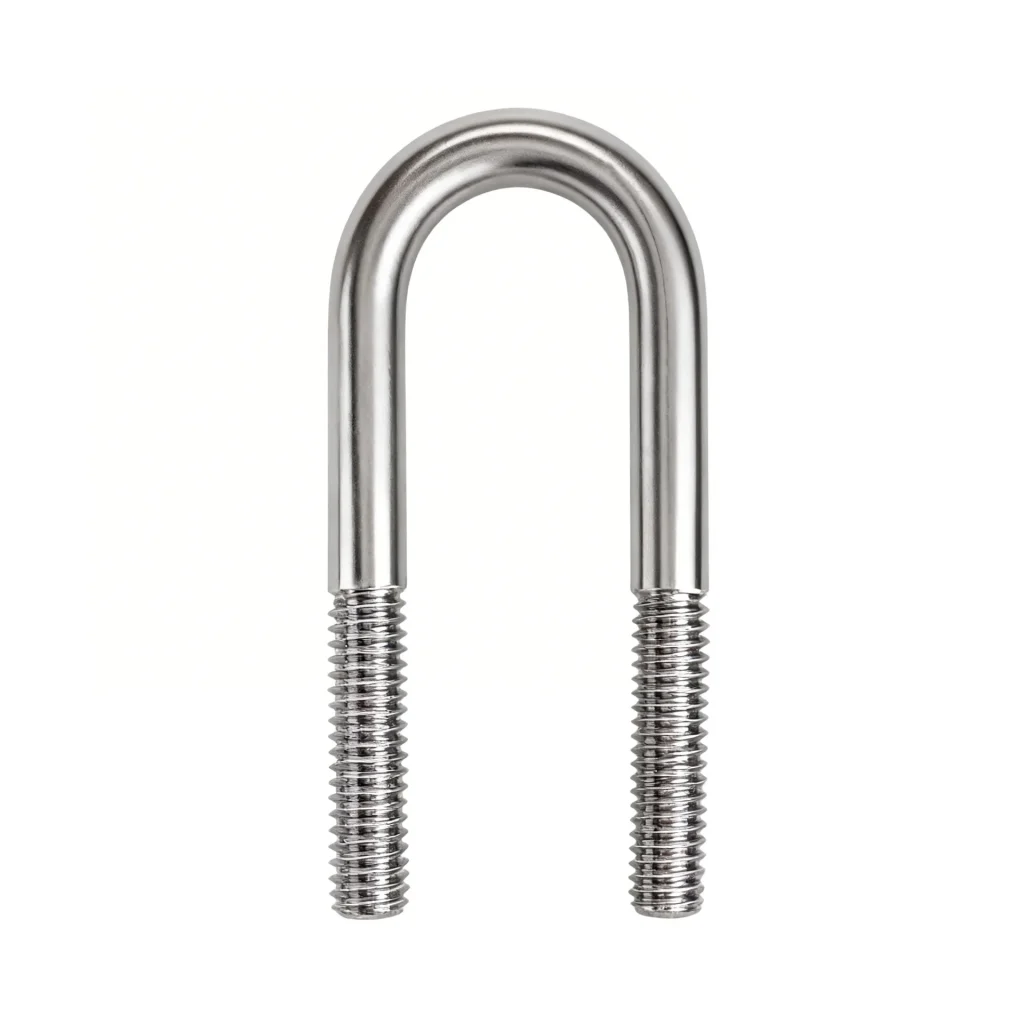
Which U-Bolt Measurements Must Buyers Provide Before a Quote?
For an M10–M24 U-bolt RFQ, buyers should send a dimensioned drawing that defines thread diameter, inside width, leg or overall length, bend geometry, thread length, application diameter, material or grade requirement, surface finish, matching nuts/washers, quantity, and packing needs. Nominal thread size alone is not enough because different measurement datums can produce U-bolts that look […]
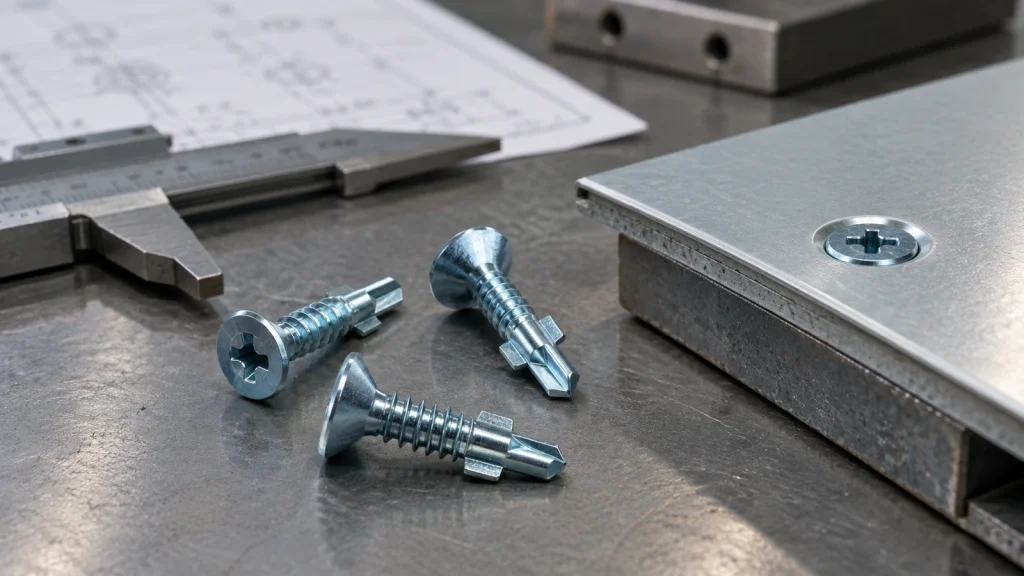
What RFQ Details Matter When Ordering Blue Zinc Winged Self-Drilling Screws?
When ordering a blue zinc self drilling screw with a winged, countersunk configuration, diameter and length are not enough to define the application. The RFQ should identify the materials being connected, upper-material thickness, steel-substrate thickness, total material stack, required countersunk seating, screw diameter, total length, drill-point condition, wing geometry, surface treatment, installation method, quantity and […]
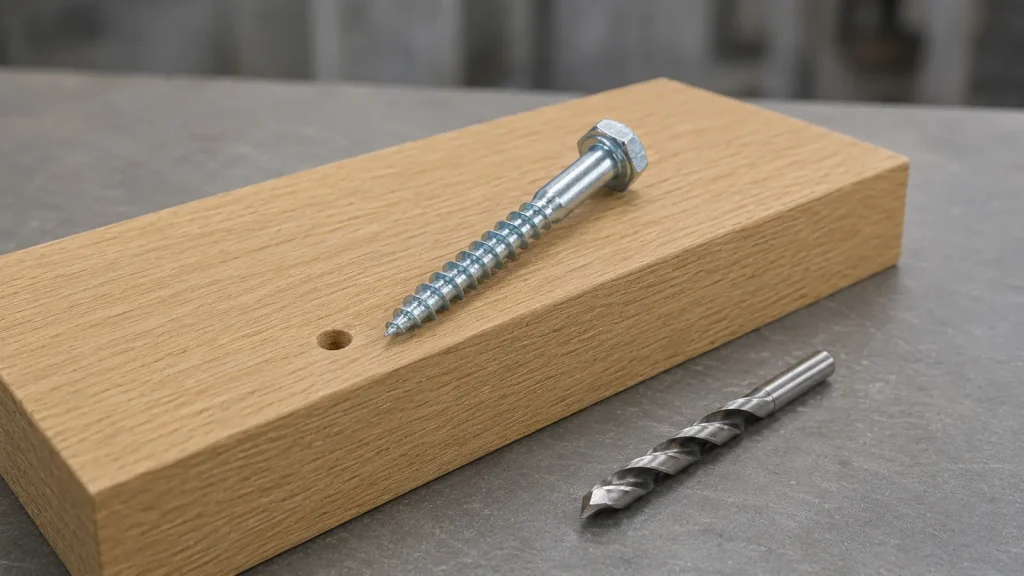
Which Hexagonal Wood Screw Specifications Should Buyers Freeze Before Production?
A hexagonal wood screw order should not be released from a gauge number and length alone. Before production, the buyer and supplier need one approved specification that fixes the screw diameter, length basis, thread geometry, point, hex-head dimensions, material, finish, installation method, substrate and acceptance evidence. The pilot hole belongs in the application specification as […]
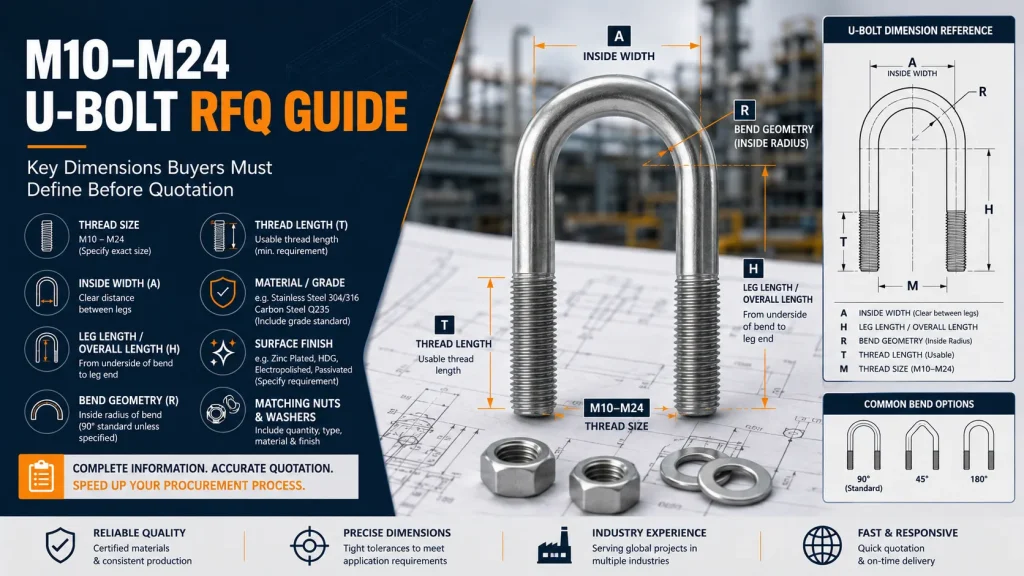
Which M10–M24 U-Bolt Measurements Must Buyers Send Before an RFQ?
Direct Answer: For an M10–M24 U-bolt RFQ, buyers should send a dimensioned drawing that defines thread diameter, inside width, leg or overall length, bend geometry, thread length, application diameter, material or grade requirement, surface finish, matching nuts/washers, quantity, and packing needs. Nominal thread size alone is not enough because different measurement datums can produce U-bolts […]

Self-Drilling vs Self-Tapping Screws: Which One Fits Metal-to-Metal, Metal-to-Wood, or Pre-Drilled Assemblies?
Direct answer: Choose a self-drilling screw when the fastener must create a hole through a verified metal stack before its threads engage. Choose a self-tapping screw when the assembly already has a correctly sized pilot hole or when the selected thread is intended to form or cut into the specified substrate. The decision must also […]

Wotu Discusses Improving Installation Techniques for Self-Drilling Screws
As we all know, self-drilling screws are now widely used in various fields, such as construction, road construction, power construction, factory construction, and equipment fixing. Since they are pre-embedded in concrete structures and are considered pre-installed fasteners, the technical quality of this concealed project is particularly important. Over the years, these manufacturers have gradually established […]
Frequently Asked Questions
Will an SDS-plus bit fit any hammer drill?
No. SDS-plus refers to a specific shank system used with compatible rotary hammers. A standard keyed or keyless drill chuck is not the same connection, and using an adapter may not be suitable for hammer drilling or repeated anchor holes.
How should I choose the bit size for concrete anchors?
Choose the bit size from the anchor manufacturer's required hole diameter, not by visual comparison with the anchor body. The drilled hole must also reach the correct usable depth so the anchor can seat properly after dust is cleared.
Is SDS-plus suitable for heavy concrete drilling?
SDS-plus is commonly used for light and medium-duty masonry drilling. For larger diameters, deep holes or very hard concrete, a heavier rotary hammer system may be more practical because it can deliver more impact energy and reduce tool strain.
What is the common mistake when buying masonry bits for fastening work?
A common mistake is buying only by nominal diameter and ignoring usable drilling depth, flute design and base material. A bit that makes a hole of the right diameter but clears dust poorly can still cause poor anchor seating.
What details should I provide before asking for a recommendation?
Share the anchor or fastener type, required hole diameter, embedment depth, base material and rotary hammer model if known. If the work involves repeated drilling, overhead installation or dense concrete, include those conditions because they affect the best bit style.
Leave Your Message
Send the anchor or fastener type, the base material, and the required hole diameter or embedment depth. If you already know the rotary hammer model, include that as well.