Security Screws Selection Guide | Hebei Wotu Fastener Manufacturing Co., Ltd.

Security screws for tamper-resistant fastening

Security screws are used to deter casual removal from access panels, signs, cabinets, fixtures and other exposed assemblies. The main decision is choosing a drive and head style that slows tampering without making authorised maintenance unnecessarily difficult.

Match the screw to the substrate, load, installation tool and exposure conditions. A tamper-resistant drive alone does not compensate for the wrong thread, poor length selection or a head that does not seat correctly.

Related Products

Hexagonal Wood Screws

Hexagonal Wood Screws

Brand: Wotu Surface: blue and white zinc plated Specifications: Chinese national standard 6#/8#/10#/12#/16#/20#, rod length 35mm~250mm full range of specifications in stock, supports nonstandard length customization Packaging: 25kg cartons, full pallets packed on wooden pallets, support neutral packaging, private-label customization

Read More
Hex nut DIN934-1987 (A/B accuracy classification)

Hex nut DIN934-1987 (A/B accuracy classification)

Brand: Wotu Standard basis: German standard DIN934-1987, metric coarse thread/fine thread universal thread Surface: 304 stainless steel Specifications: M6~M24 full range of specifications Supporting equipment: same specification bolts, flat washer, spring washer complete set of shipment Packaging: 25kg standard carton, whole wooden pallet packaging

Read More
Blue-White Zinc Plated Pan Head With Pad Self-Tapping Screw

Blue-White Zinc Plated Pan Head With Pad Self-Tapping Screw

Brand: Hengzuan Surface: blue and white zinc plated Specifications: in stock ST4.2/ST4.8full range of specifications, length 13~50mm in stock, support nonstandard length customization Packaging: 25kg cartons, solid wood packaging, support neutral packaging, private-label customization

Read More
Countersunk Head Blue-White Zinc Plated Self-Drilling Screw (Chinese National Standard: Phillips Countersunk Head Self-Drilling And Self-Tapping Screw GB/T15856.2-2002)

Countersunk Head Blue-White Zinc Plated Self-Drilling Screw (Chinese National Standard: Phillips Countersunk Head Self-Drilling And Self-Tapping Screw GB/T15856.2-2002)

Brand: Hengzuan Surface: blue and white zinc plated, can be customized color zinc plated, black oxide plated Specifications: Comply with GB/T15856.2-2002 Chinese national standard, in stock ST4.2/ST4.8/ST5.5 full range of specifications, length 13mm~75mm optional, supports customized nonstandard rod lengths; drilling adaptation plate thickness 0.7~6mm Packaging: 25kg export cartons, full pallets wrapped with film, supports neutral export packaging, customer private-label customization

Read More
Countersunk Head Blue Zinc Self-Drilling Screw

Countersunk Head Blue Zinc Self-Drilling Screw

Brand: Hengzuan Surface: blue and white zinc plated, can be customized color zinc plated, black oxide plated Specifications: in stock 3.5/3.9/4.2/4.8/5.5 mainstream wire diameter, rod length 13mm~75mm full size range, nonstandard length can be customized as needed Packaging: 25kg export cartons, full wooden pallets wrapped with film, supports neutral export packaging, private-label customization

Read More

Compare security screws for access, substrate and exposure

Security screw selection

Compare security screws by drive style, head geometry, thread and point, material or finish, installation access and removal method. The right choice balances tamper deterrence with reliable seating, adequate engagement and practical servicing.

Criterion What To Check Why It Matters Buyer Tip
Drive style and tamper resistance Compare the recess type, such as pin-in hex, pin Torx, one-way, snake eye, or clutch head, and confirm the matching driver availability. The drive style determines how difficult removal is with common tools and how practical the screw is for maintenance crews. Ask: Which security drive do you recommend for our access level, and can you supply or specify the correct installation bit?
Head form for the exposed surface Match the head to the assembly: countersunk for flush fitting, button or pan head for exposed fastening, or raised security heads where grip access must be reduced. A poor head choice can leave edges exposed, damage the mating surface, or make the screw easier to grip with pliers. Ask: Should the screw sit flush, stand proud, or cover an oversized hole in this application?
Material and surface finish Confirm the base material and coating for the environment, especially indoor use, outdoor exposure, wet areas, or contact with treated wood or dissimilar metals. Security screws often remain exposed; corrosion can stain the surface, seize the fastener, or make later authorized removal difficult. Ask: What finish or material is suitable for the actual service environment, not just the first installation?
Thread type and substrate fit Verify whether the screw will fasten into metal, wood, plastic, masonry plug, or a pre-threaded insert, and check if a self-tapping, machine, or wood thread is needed. The wrong thread can strip the hole, loosen under vibration, or require an unnecessary pilot hole change. Ask: What substrate and hole condition should we specify so the thread engages without cracking or stripping the part?
Removal and maintenance plan Decide whether the fastener must be removable by authorized staff or mainly deter permanent removal by end users or the public. Some security screws are practical for service access, while one-way styles can create problems when panels, signs, fixtures, or equipment need planned maintenance. Ask: Do we need controlled removal later, and how will replacement bits or tools be managed?

Choose the right tamper-resistant fastener for the assembly

The practical distinction is between removable security screws and one-way or permanent fasteners. Removable types use a matching security bit, so authorised staff can open the assembly for inspection or repair. One-way designs are better suited to installations that should not be routinely dismantled, but removal is more disruptive if a component later needs servicing.

Drive access also matters. A less common recess can discourage opportunistic tampering, while a readily available security bit may be preferable for maintenance teams. Confirm who must remove the fastener, how often, and whether replacement access is required before selecting the style.

Start with the joint rather than the security feature. Identify whether the screw enters sheet metal, timber, plastic, masonry fixing hardware or a pre-threaded hole. Thread form and engagement should suit that material; a security drive cannot prevent stripping caused by an unsuitable thread or insufficient engagement.

Choose the head for the installed surface. Countersunk heads sit flush where a smooth face is needed, while pan, button or other projecting heads may provide a better bearing surface on brackets and panels. Check clearance around the head and whether the mating part has been designed for that profile.

Consider the environment separately from tamper resistance. Ask about moisture, outdoor exposure, contact with dissimilar metals, cleaning chemicals and the required appearance. These conditions affect the suitable screw material or finish, but the correct option should be confirmed against the actual application rather than selected from appearance alone.

Before requesting an enquiry, send a drawing or a clear description of the joint, the substrate and the required security level. Include the screw diameter and length if already defined, the preferred head or drive style, expected removal practice and any finish requirements. Ask Hebei Wotu Fastener Manufacturing Co., Ltd. to confirm the available design, matching installation tool and suitability for the application.

Criteria Importance Description Example Options
Removable vs one-way design Critical for service planning Removable types allow authorised access with the correct tool, while one-way types make later removal more difficult and may damage the assembly during extraction. A service hatch usually needs a removable security drive; a permanent public sign may suit a one-way design.
Head style and seating High for appearance, clearance and joint reliability The head must match the surface and available space. A flush surface may need a countersunk head, while brackets or panels may need a projecting head with more bearing area. A flat access cover may use a countersunk head, while a metal bracket may use a pan or button head.
Thread and substrate match Essential for holding strength Security features do not correct a thread that is unsuitable for the material. The screw must engage properly in sheet metal, timber, plastic, an insert or a tapped hole. A screw intended for thin sheet metal is not automatically suitable for plastic housing or timber furniture.
Tool availability Important for maintenance control A less common drive can reduce casual removal, but authorised users still need reliable access to matching bits. Too rare a tool can slow repairs or create replacement issues. A facilities team may prefer a controlled but serviceable drive rather than a drive that only one installer can remove.
Material or finish Important for exposure and appearance Moisture, cleaning chemicals, outdoor use and contact with other metals can affect the suitable material or coating. Confirm the environment before selecting by appearance alone. An indoor cabinet and an outdoor fixture may need different finish choices even if the screw size and drive are the same.

Blog Articles / Reviews

How to Specify Countersunk Head Cross Thick Thread Fiberboard Screws for Furniture Assembly Projects

How to Specify Countersunk Head Cross Thick Thread Fiberboard Screws for Furniture Assembly Projects

Fiberboard screws are selected based on more than screw size alone. For furniture assembly and board-based applications, buyers need to match the screw structure with the characteristics of fiberboard, MDF, and similar engineered wood materials. A suitable specification should consider thread design, head style, screw length, diameter, installation method, and application requirements. For buyers sourcing […]

How Should Buyers Evaluate Self Tapping Screws for Project Procurement?

How Should Buyers Evaluate Self Tapping Screws for Project Procurement?

#4 self tapping screws should not be purchased from the “#4” designation alone. For a usable B2B specification, the buyer still needs the actual screw diameter, thread form or pitch, overall length, substrate, pilot-hole condition, head and drive style, material, surface finish and quantity. This matters because suppliers may use different naming systems. Wotu Fastener’s […]

Why Do Self-Tapping Roofing Screws Leak Even When the Screw Length Looks Correct?

Why Do Self-Tapping Roofing Screws Leak Even When the Screw Length Looks Correct?

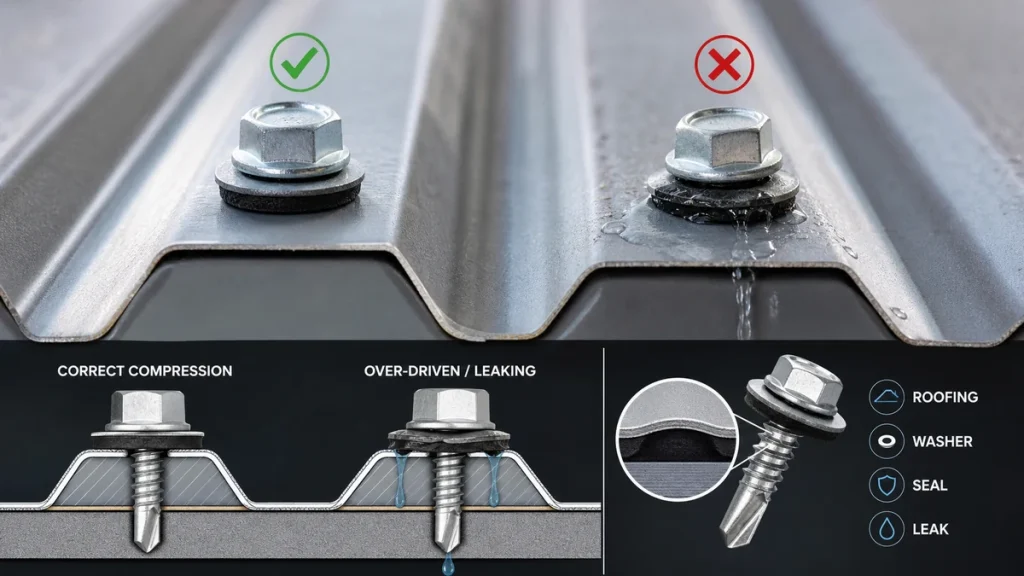
Direct answer: Correct screw length does not guarantee a watertight metal-roof connection. Self tapping roofing screws can leak because of incorrect washer compression, enlarged or stripped holes, insufficient thread engagement, panel movement, or an unsuitable coating-and-washer system. Buyers should diagnose the complete installed connection—including panel profile, support thickness, point type, washer condition, and exposure—rather than […]

What Is the Difference Between Self Drilling and Self Tapping Screws?

What Is the Difference Between Self Drilling and Self Tapping Screws?

Direct Answer: A self-drilling screw has a drill-shaped point that creates a hole and then forms mating threads in a suitable material. A self-tapping screw forms or cuts mating threads but may require a correctly sized pilot hole. Selection depends on substrate type and thickness, joint stack, point geometry, installation tool, finish and application testing—not […]

Frequently Asked Questions

Can a tamper-resistant screw still be removed for maintenance?

Yes, if it uses a removable security drive and the maintenance team has the matching bit. If the installation needs regular inspection, avoid choosing a one-way style unless destructive or difficult removal is acceptable.

Is the drive shape the most important choice?

The drive matters, but it is not the only decision. The screw still needs the correct thread, length, head style and material or finish for the joint, otherwise it may strip, loosen or seat poorly even if the drive discourages tampering.

When is a one-way fastener a better option than a removable type?

One-way fasteners suit applications where the assembly should not normally be opened, such as fixed public fittings or panels with no routine service requirement. They are a poor fit where access is needed for cleaning, inspection, adjustment or part replacement.

What information should be sent with an enquiry?

Send the installation material, screw diameter and length if known, head style, required drive type, finish expectations and whether the screw must be removable. A drawing, photo or sample description helps confirm seating, thread engagement and tool access.

Will a security screw stop all removal attempts?

No. It mainly deters casual or tool-limited tampering and increases the effort needed to remove the fastener. For high-risk assemblies, the fastener should be considered alongside the overall product design, access control and material strength.

Leave Your Message

For a useful enquiry, provide the installation material, required screw size or a drawing, and whether the fastener must be removable with an authorised tool or intended for one-way use.