Square Threaded Inserts Selection Guide | Hebei Wotu Fastener Manufacturing Co., Ltd.

Square Threaded Inserts for Tube Frames

Square threaded inserts are used when a square tube, hollow section or fabricated frame needs a durable internal thread for adjustable feet, leveling pads, casters, handles or bolt-on accessories. The key decision is not just thread size; it is how the insert will sit in the tube, how it will resist pull-out or rotation, and whether the exposed finish suits the final assembly.

For buyers, the right insert depends on the tube’s internal dimensions, wall thickness, material, load direction and installation method. A close-fitting insert can save assembly time and protect the tube end, while the wrong fit can distort the tube, loosen under vibration or make the mating part difficult to align.

Related Products

Hot-Dip Galvanized Hex Head Bolt (DIN931 Half Thread / DIN933 Full Thread / GB30 Chinese National Standard Bolt, Can Be Equipped With Nut And Washer Set)

Hot-Dip Galvanized Hex Head Bolt (DIN931 Half Thread / DIN933 Full Thread / GB30 Chinese National Standard Bolt, Can Be Equipped With Nut And Washer Set)

Brand: Wotu Surface: overall hot-dip zinc plating treatment Specifications: Comply with DIN and GB standards, in stock M6-M48 full range of specifications, length 20mm-300mm, supports nonstandard customized. Packaging: woven bag inside / 25kg export carton, film-wrapped wooden pallet; supports neutral packaging and customer private-label customization.

Read More
Countersunk Head Cross Thick Thread Fiberboard Screw

Countersunk Head Cross Thick Thread Fiberboard Screw

Brand: Wotu Surface: color zinc plated electroplating Specifications: in stock 3.5/4.0/4.5/5.0 regular wire diameter, rod length 16~80mm full range of specifications in stock, supports nonstandard length customization Packaging: 25kg cartons, whole wooden pallets

Read More

Selecting Square Threaded Inserts for Tube Frames

Square Insert Selection

Useful selection criteria for square threaded inserts include tube fit, insert body material, thread size and pitch, installation method, surface finish and resistance to movement after assembly. The best choice is the one that matches the hollow section and the real service condition, not simply the closest thread in stock.

Criterion What To Check Why It Matters Buyer Tip
Square body fit in the host material Confirm the insert’s outside square size, corner radius, and required hole or pocket shape against your part drawing. A square insert resists rotation well, but only if the surrounding material supports the flats and corners correctly. Ask: What hole size and preparation do you recommend for this insert in our material?
Thread size and engagement length Match the internal thread, thread pitch, and insert length to the screw and the load path in the assembly. Too little thread engagement can strip under load; too much length can interfere with nearby features or increase installation force. Ask: Can you confirm the compatible screw size and minimum practical embedment depth for our application?
Installation method Verify whether the insert is pressed in, molded in, welded, or installed by another process, and what tooling access is needed. The same square threaded insert may not suit every production process, especially if the part has limited access or thin walls. Ask: How is this insert normally installed, and what fixture or tool clearance should we allow?
Material and surface finish Identify the insert material and finish, then compare it with the base material, indoor or outdoor exposure, and any corrosion concerns. Material choice affects strength, wear, galvanic compatibility, and long-term thread reliability. Ask: Which material and finish do you suggest for contact with our part material and operating environment?
Retention under torque and pull-out load Review how the square shape, knurls, shoulders, or other features keep the insert from turning or pulling out. A threaded insert can fail by spinning in the part even when the internal thread remains intact. Ask: What design feature provides anti-rotation and pull-out resistance in this insert?

Fit, Thread and Installation Choices That Affect Performance

The main distinction is between push-in, press-fit and weld-in square threaded inserts. Push-in styles are common for furniture, equipment feet and light-duty frames because they install quickly without secondary fastening. Press-fit and weld-in options are usually considered when the joint will see higher load, repeated adjustment or side force.

Material choice also matters. Plastic-bodied inserts can protect painted tube ends and reduce scratching on visible assemblies, while metal-bodied inserts are better suited to tougher mechanical fastening requirements. If the insert carries a leveling foot or caster, confirm how the load transfers into the tube rather than judging the part by the thread alone.

Start with the tube, not the bolt. Confirm the outside tube size, internal opening, wall thickness, corner radius and whether the tube is welded, drawn or formed with size variation. Square inserts usually rely on edge contact inside the tube, so a small mismatch can turn a firm installation into a loose fit or an assembly problem.

Match the thread to the part being installed. Leveling feet, glide feet and casters may use different thread forms or lengths even when they look similar. Check thread diameter, pitch, usable thread depth and whether the mating screw needs room to pass through the insert without bottoming out.

Think about installation conditions. A shop that wants fast assembly may prefer a push-in insert, while a welded frame or high-load base may justify a more permanent style. Avoid specifying an insert that requires force the tube cannot tolerate, especially on thin-wall sections or finished surfaces that must remain clean.

For an inquiry, prepare a simple drawing or sample details: tube size and wall thickness, required internal thread, expected load or application, finish requirements and installation preference. If asking Hebei Wotu Fastener Manufacturing Co., Ltd. about supply, confirm available insert styles, materials, thread options and any minimum order or sample policy before finalizing the design.


Criteria Importance Description Example Options
Tube fit Critical for holding strength and easy assembly The insert must match the actual internal space of the square tube, including wall thickness and corner shape. A loose insert may rotate or pull out; an oversized insert may damage the tube during installation. A nominal square tube may have a smaller internal opening than expected because of wall thickness or an internal weld seam.
Installation method Affects assembly speed, permanence and frame finish Push-in inserts are faster to install, while press-fit or weld-in options may suit stronger or more permanent assemblies. The correct choice depends on load, vibration and whether the frame is already finished. A painted display frame may favor a push-in insert, while a fabricated machine base may justify a more permanent fixing method.
Body material Important for load, appearance and contact with the tube Plastic bodies can protect tube ends and give a neat finish in lighter applications. Metal bodies are generally considered where mechanical strength and repeated adjustment are more important. A light furniture glide may use a plastic-bodied insert, while an adjustable machinery foot may need a metal-bodied insert.
Thread compatibility Necessary for proper engagement with the mating component The insert thread must match the diameter, pitch and usable thread length required by the foot, caster, handle or bolt. Also confirm whether the screw needs clearance beyond the insert depth. Two leveling feet can look similar but use different thread pitches or require different engagement lengths.
Service condition Determines whether a basic insert is enough Static light-duty loads, repeated height adjustment, side loading and vibration place different demands on the insert. Selection should reflect how the assembly will actually be used. A stationary table foot and a caster on a movable frame may need different insert styles even if the tube size is the same.

Blog Articles / Reviews

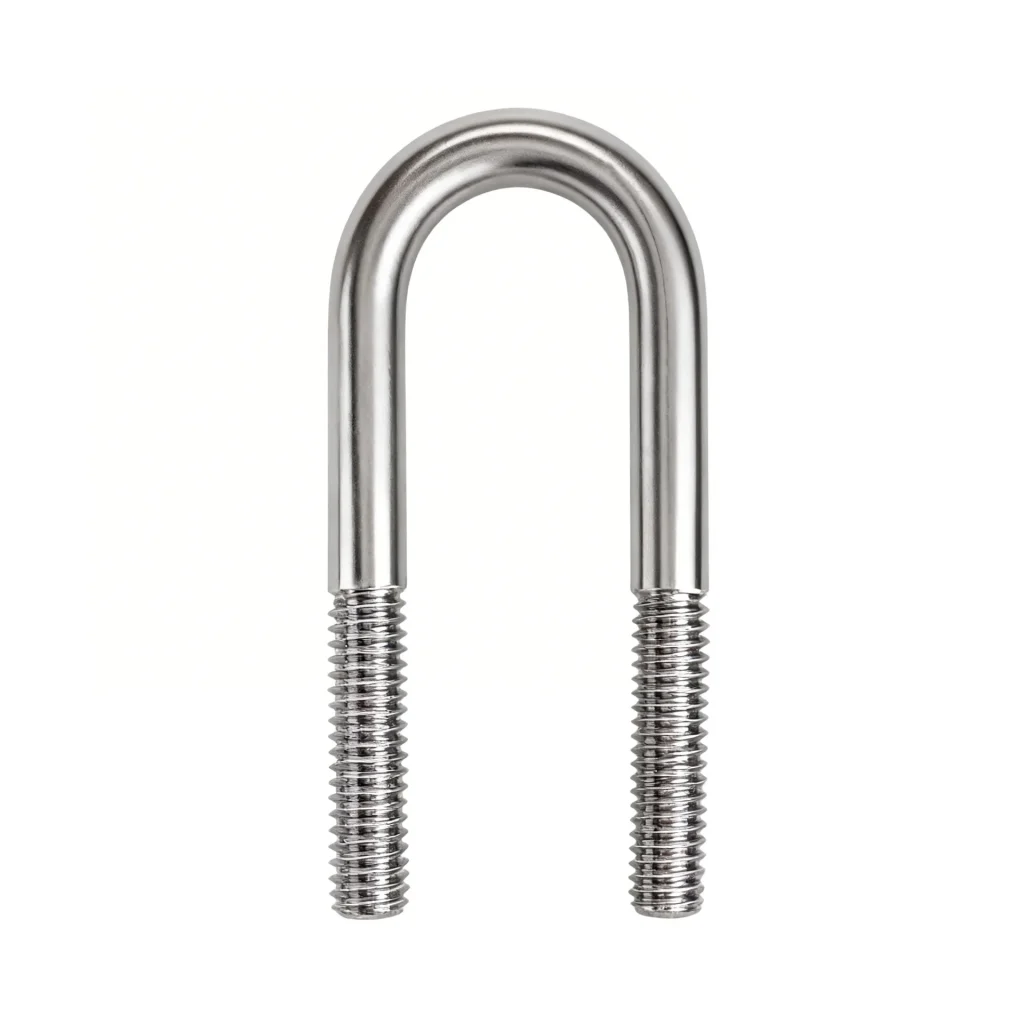
Which U-Bolt Measurements Must Buyers Provide Before a Quote?

Which U-Bolt Measurements Must Buyers Provide Before a Quote?

For an M10–M24 U-bolt RFQ, buyers should send a dimensioned drawing that defines thread diameter, inside width, leg or overall length, bend geometry, thread length, application diameter, material or grade requirement, surface finish, matching nuts/washers, quantity, and packing needs. Nominal thread size alone is not enough because different measurement datums can produce U-bolts that look […]

What Is the Difference Between Self Drilling and Self Tapping Screws?

What Is the Difference Between Self Drilling and Self Tapping Screws?

Direct Answer: A self-drilling screw has a drill-shaped point that creates a hole and then forms mating threads in a suitable material. A self-tapping screw forms or cuts mating threads but may require a correctly sized pilot hole. Selection depends on substrate type and thickness, joint stack, point geometry, installation tool, finish and application testing—not […]

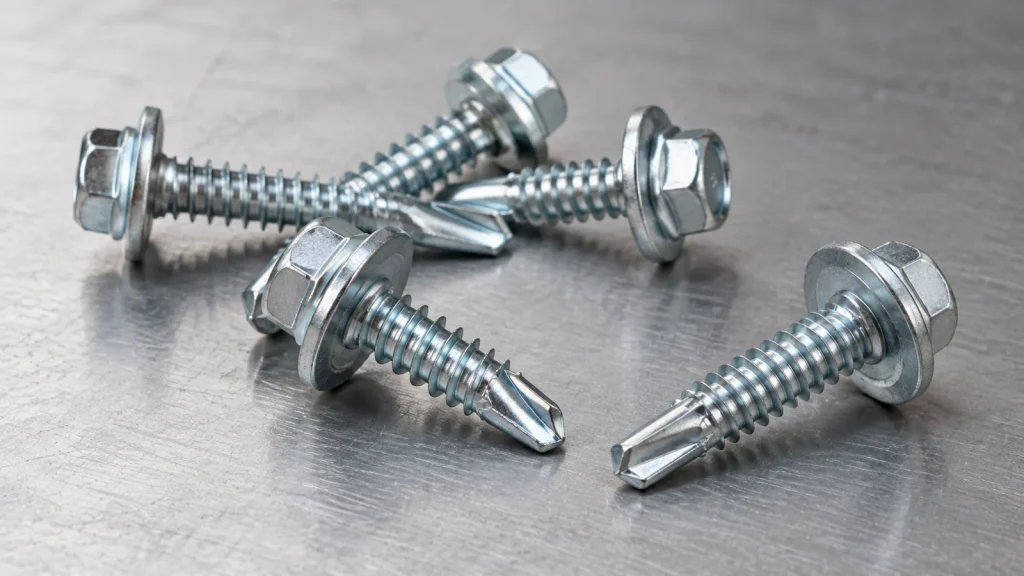
Hex Head Self-Drilling Screws with Cup Washers: Choosing Drill Point and Length

Hex Head Self-Drilling Screws with Cup Washers: Choosing Drill Point and Length

Choosing a hex head self-drilling screw with a cup washer requires more than selecting ST5.5 or ST6.3 and a nominal length. The drilling point must suit the steel it penetrates; the threaded section must engage the intended supporting material; and the head-and-washer assembly must seat correctly on the outer panel. A screw’s drilling capacity is […]

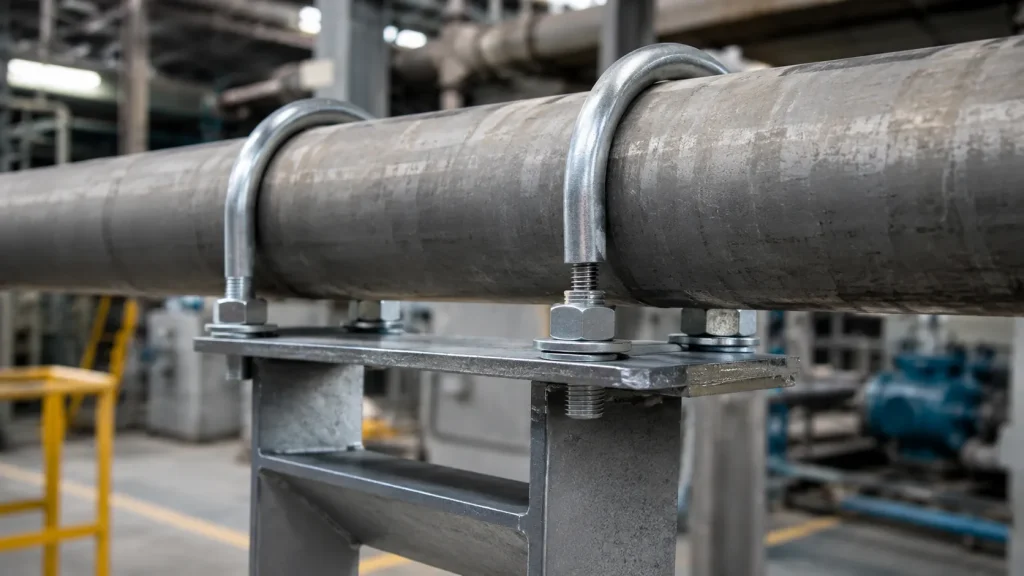
Why Do U Bolts Loosen in Pipe Supports? 6 Causes and Prevention Methods

Why Do U Bolts Loosen in Pipe Supports? 6 Causes and Prevention Methods

U bolts usually loosen in pipe supports because the connection loses clamping force, receives continuous vibration, restricts thermal pipe movement, uses an incorrectly sized U bolt, experiences surface settlement, or suffers from corrosion and inadequate inspection. This issue affects EPC contractors, pipe installers, industrial maintenance teams, equipment manufacturers and fastener distributors working with water, oil […]

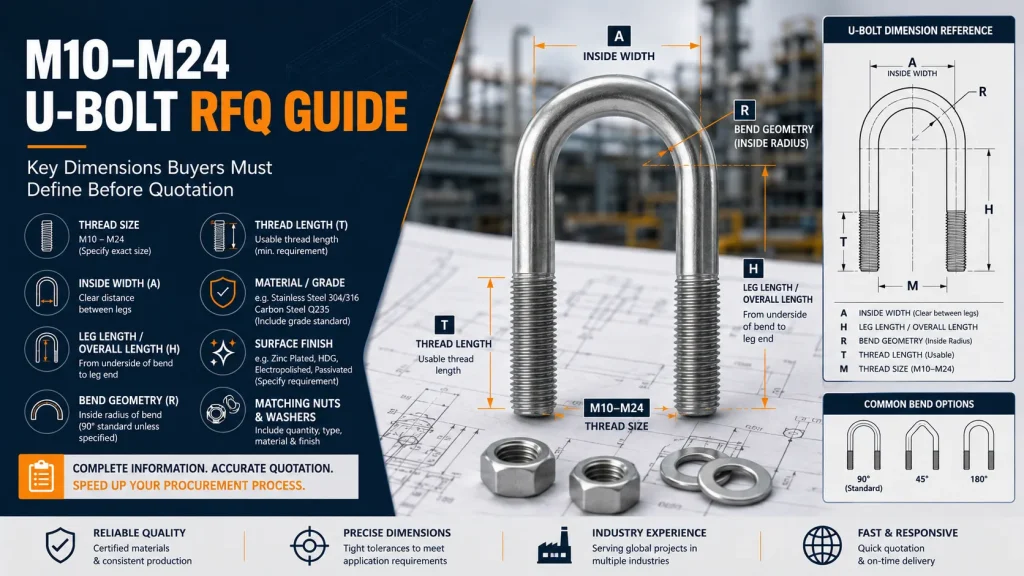
Which M10–M24 U-Bolt Measurements Must Buyers Send Before an RFQ?

Which M10–M24 U-Bolt Measurements Must Buyers Send Before an RFQ?

Direct Answer: For an M10–M24 U-bolt RFQ, buyers should send a dimensioned drawing that defines thread diameter, inside width, leg or overall length, bend geometry, thread length, application diameter, material or grade requirement, surface finish, matching nuts/washers, quantity, and packing needs. Nominal thread size alone is not enough because different measurement datums can produce U-bolts […]

What are the standard dimensions of a universal hexagonal self-drilling screw?

What are the standard dimensions of a universal hexagonal self-drilling screw?

Self-drilling screws, also known as “drill screws,” “self-drilling screws,” or “dovetail screws,” are classified into different types based on their application, material, and shape. A standard 6mm self-drilling screw has a flatness of 9.38mm or 9.8mm. A hexagonal self-drilling screw with dimensions 4.5*14*25 means the screw size is 4.5mm, the screw length is 25mm, and […]

Frequently Asked Questions

How do I know if an insert will fit my square tube?

Check the tube’s internal opening, not only the nominal outside size. Wall thickness, welded seams and corner radius can reduce the space available, so a sample or drawing with tolerances is useful before ordering.

Are plastic or metal inserts better for adjustable feet?

Plastic-bodied inserts are often suitable for lighter frames where a clean tube-end finish and quick push-in assembly matter. Metal inserts are usually the better option where the foot carries higher load, is adjusted often or may see side force.

Can I choose by thread size alone?

No. The thread must match the mating foot, caster or bolt, but the insert body must also grip the square tube securely. An insert with the correct thread can still fail if it is loose in the tube or bottoms out before the mating part tightens.

What is the trade-off between push-in and weld-in styles?

Push-in inserts save assembly time and avoid welding marks, making them practical for many furniture and light equipment frames. Weld-in styles take more fabrication work but can be preferred where a more permanent connection is needed.

What information should I send with an enquiry?

Send the square tube size, wall thickness, internal thread requirement, application, expected load direction and preferred installation method. If the visible finish matters, include the frame material and surface finish so the insert body and appearance can be checked.

Leave Your Message

Share the square tube size and wall thickness, the required thread diameter and pitch, and the intended application such as leveling feet, casters or adjustable supports.