Stainless Steel Pipe Fittings Selection Guide | Hebei Wotu Fastener Manufacturing Co., Ltd.

Stainless Steel Pipe Fittings

Stainless steel pipe fittings are usually selected to solve two practical problems: keeping a piping joint sealed and resisting corrosion in the fluid or surrounding environment. The right choice depends on the pipe size, connection method, pressure and temperature conditions, and the grade of stainless steel needed for the service.

For an inquiry to Hebei Wotu Fastener Manufacturing Co., Ltd., it is worth confirming the exact fitting type first, such as elbows, tees, reducers, couplings, unions, flanges, plugs, or threaded adapters. Stainless material alone is not enough to define the part.

Related Products

U-bolt ( / U-bolt, M10/M12/M16/M20/M24 multiple specifications)

U-bolt ( / U-bolt, M10/M12/M16/M20/M24 multiple specifications)

Brand: Wotu Surface: natural black oxide / hot-dip galvanized / blue-white zinc plated, multiple processes available Specifications: Based on common industry drawing parameters, suitable for pipe diameter 25mm~139.7mm, screw diameter M10~M24, total length can be nonstandard customized Matching: can be matched with nut, flat washer and spring washer of the same specifications for complete shipment Packaging: Bundling and packaging + 25kg export carton, full-container wooden pallet wrapped with film, supports private-label export packaging

Read More
Hot-Dip Galvanized Chinese National Standard Flat Washer (GB/T97.1A Level Flat Washer)

Hot-Dip Galvanized Chinese National Standard Flat Washer (GB/T97.1A Level Flat Washer)

Brand: Wotu Surface: overall hot-dip zinc plated anti-corrosion treatment, optional blue-white zinc plated, color zinc plated, black oxide Specifications: Execute GB/T97.1-2002 Chinese national standard, in stock M6-M64 full range of specifications, inner diameter, outer diameter, thickness strictly comply with Chinese national standard parameters, support nonstandard size customized Packaging: 25kg woven bag / export carton packaging, full pallets wrapped with film, supports private-label customization

Read More
Chinese National Standard / German Standard Hex Nut (thick Nuts, Thin Nuts, Flange Nuts, Multiple Categories)

Chinese National Standard / German Standard Hex Nut (thick Nuts, Thin Nuts, Flange Nuts, Multiple Categories)

Brand: Wotu Surface: color zinc plated, blue-white zinc plated, black oxide, hot-dip galvanized, various surface treatments available Specifications: Comply with DIN934, GB/T6170, GB/T6172.1, GB/T6177.1 standards, in stock M6-M64 full range of specifications, support nonstandard customized Packaging: woven bag inside/25kg export carton, full-container wooden pallet wrapped with film, supports private-label, neutral export packaging

Read More
Hot-Dip Galvanized Hex Nut (DIN934 Thickened/GB Thin Nut In Multiple Specifications)

Hot-Dip Galvanized Hex Nut (DIN934 Thickened/GB Thin Nut In Multiple Specifications)

Brand: Wotu Surface: high temperature hot dip zinc plated surface treatment Specifications: Comply with DIN934, GB/T6170, GB/T6172.1 Chinese national standard German standard, in stock M6-M64 full range of specifications, length is nonstandard customized as required Packaging: 25kg woven bag/export carton, full-container wooden pallet wrapped with film, supports neutral packaging, private-label customization

Read More
Hot-Dip Galvanized Hex Head Bolt (DIN931 Half Thread / DIN933 Full Thread / GB30 Chinese National Standard Bolt, Can Be Equipped With Nut And Washer Set)

Hot-Dip Galvanized Hex Head Bolt (DIN931 Half Thread / DIN933 Full Thread / GB30 Chinese National Standard Bolt, Can Be Equipped With Nut And Washer Set)

Brand: Wotu Surface: overall hot-dip zinc plating treatment Specifications: Comply with DIN and GB standards, in stock M6-M48 full range of specifications, length 20mm-300mm, supports nonstandard customized. Packaging: woven bag inside / 25kg export carton, film-wrapped wooden pallet; supports neutral packaging and customer private-label customization.

Read More
Hex flange nut (Chinese national standard GB/T6177.1-2000)

Hex flange nut (Chinese national standard GB/T6177.1-2000)

Brand: Wotu Surface: zinc plated Specifications: in stockM6/M8/M10/M12/M14/M16/M20 Chinese national standardfull range of specifications, support nonstandard thickness, tooth pitch customized Matching: can be matched with bolts of the same specification, flat washer, spring washer complete set of shipment Packaging: 25kg cartons, whole wooden pallets

Read More

Compare stainless pipe fitting types by connection and service conditions

Fitting selection notes

When comparing stainless steel pipe fittings, focus on fitting type, pipe standard, connection style, stainless grade, sealing method, and the conditions of use. These details matter more than a broad material description because they determine whether the part will fit, seal, and last in the installed system.

Criterion What To Check Why It Matters Buyer Tip
Fitting type and connection method Confirm whether the job needs elbows, tees, reducers, couplings, caps, unions, or threaded fittings, and match the connection style to the pipe system. A fitting with the wrong end type can delay installation even if the material and nominal size are correct. Ask: which fitting shapes and end connections do you need, and can you share a drawing or pipe schedule?
Stainless steel grade for the service environment Verify the required stainless grade against the fluid, outdoor exposure, cleaning chemicals, and corrosion risk. Different stainless grades handle corrosion, temperature, and contamination risk differently; over-specifying also adds cost. Ask: what fluid or gas will pass through the pipe, and will the fittings be used indoors, outdoors, or in a corrosive area?
Nominal size and pressure compatibility Match the fitting size, wall schedule, thread standard, and pressure class to the existing pipe and operating conditions. Pipe fittings that look similar can have different bore sizes, thread forms, or pressure ratings, which affects sealing and safety. Ask: what pipe size, schedule, thread standard, and working pressure should the fittings match?
Sealing surface and thread quality Inspect or specify clean threads, smooth sealing faces, correct taper or parallel thread form, and no visible burrs or deformation. Poor threads or damaged sealing surfaces are common causes of leaks, galling, and difficult assembly in stainless steel systems. Ask: can the supplier confirm the thread standard and provide photos or inspection details for the sealing areas?
Batch traceability and documentation needs Decide whether the order needs material certificates, heat numbers, inspection records, or marking on each fitting or package. Traceability matters for regulated, high-pressure, food, chemical, or maintenance-critical piping systems. Ask: what documents can be supplied with the stainless steel pipe fittings, and how are parts identified after unpacking?

Key details to confirm before buying stainless steel pipe fittings

The main distinction is between connection styles. Threaded fittings suit smaller lines and maintenance-friendly assemblies, while welded fittings suit more permanent piping systems where joint strength and leak control are priorities. Flanged fittings make sense when equipment, valves, or pipe sections may need removal later.

Material grade also changes the decision. Common stainless grades may be suitable for general water, air, and mildly corrosive service, while more demanding fluids or outdoor exposure may require a grade with better corrosion resistance. Buyers should match the fitting material to the pipe, gasket, fasteners, and operating environment rather than choosing stainless steel as a single category.

Start with the piping layout and the job of the fitting. An elbow changes direction, a tee creates a branch, a reducer changes pipe size, and a coupling or union joins straight runs. Mistakes often happen when a buyer sends only a pipe diameter without saying whether the connection is threaded, welded, socket weld, butt weld, or flanged.

Check compatibility before price. The fitting should match the pipe standard, wall thickness or schedule, thread form where applicable, and face type for flanges. A stainless fitting that is close but not matched can create sealing problems, installation delays, or unnecessary rework.

Consider the service conditions. Fluid type, pressure, temperature, cleaning chemicals, outdoor exposure, and contact with other metals all affect material choice. For example, a fitting used in a clean water line has different priorities from one used near salt air, chemicals, or food-process washdown.

A useful next step is to send a simple specification: fitting type, nominal pipe size, connection type, stainless grade if known, quantity, and application. If the grade or standard is not fixed, ask which options can be supplied and what documents can be provided with the order.


Criteria Importance Description Example Options
Connection method Often the first decision because it controls installation, sealing approach, and future maintenance Threaded, welded, socket weld, butt weld, and flanged fittings suit different pipe sizes and maintenance expectations. A union can suit a removable service point, while a welded elbow may suit a permanent line.
Stainless steel grade Important when corrosion resistance, hygiene, or chemical exposure affects service life The grade should match the fluid, environment, cleaning method, and nearby materials rather than being chosen only by price. A general water line and a line exposed to salt spray may require different material decisions.
Pipe standard and dimensional fit Critical because a small mismatch can prevent assembly or cause sealing problems Nominal size alone may not define the part. Wall thickness, schedule, thread form, flange standard, and face type may also be needed. Two fittings with the same nominal size may not be interchangeable if the thread or flange standard differs.
Service pressure and temperature Important for safety, leakage control, and long-term reliability Operating conditions influence fitting style, material choice, wall thickness, sealing parts, and inspection requirements. A low-pressure utility line may allow a different connection choice from a hot process line.
Access for inspection or replacement Practical for maintenance-heavy systems and equipment connections Some fittings create permanent joints, while others allow pipe sections, valves, or instruments to be removed more easily. A flanged connection may be preferred near equipment that needs periodic removal.

Product Selection

Related Options

For a maintenance line, a buyer may prioritize threaded couplings, elbows, or unions that can be installed and removed with standard tools. For a permanent process line, welded elbows, tees, and reducers may be more appropriate because the joint design supports a cleaner, stronger piping assembly when installed by qualified personnel.

Blog Articles / Reviews

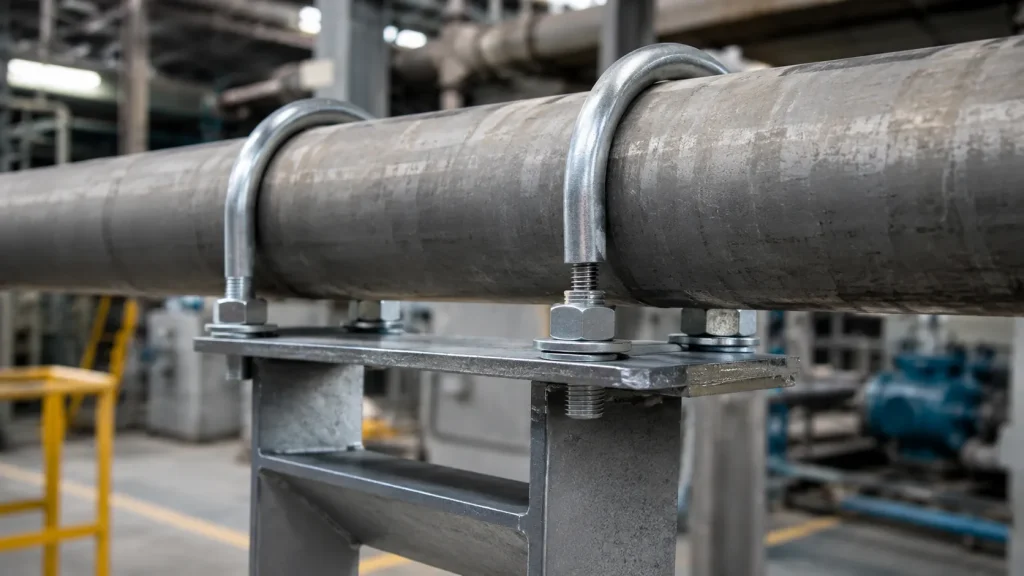
Why Do U Bolts Loosen in Pipe Supports? 6 Causes and Prevention Methods

Why Do U Bolts Loosen in Pipe Supports? 6 Causes and Prevention Methods

U bolts usually loosen in pipe supports because the connection loses clamping force, receives continuous vibration, restricts thermal pipe movement, uses an incorrectly sized U bolt, experiences surface settlement, or suffers from corrosion and inadequate inspection. This issue affects EPC contractors, pipe installers, industrial maintenance teams, equipment manufacturers and fastener distributors working with water, oil […]

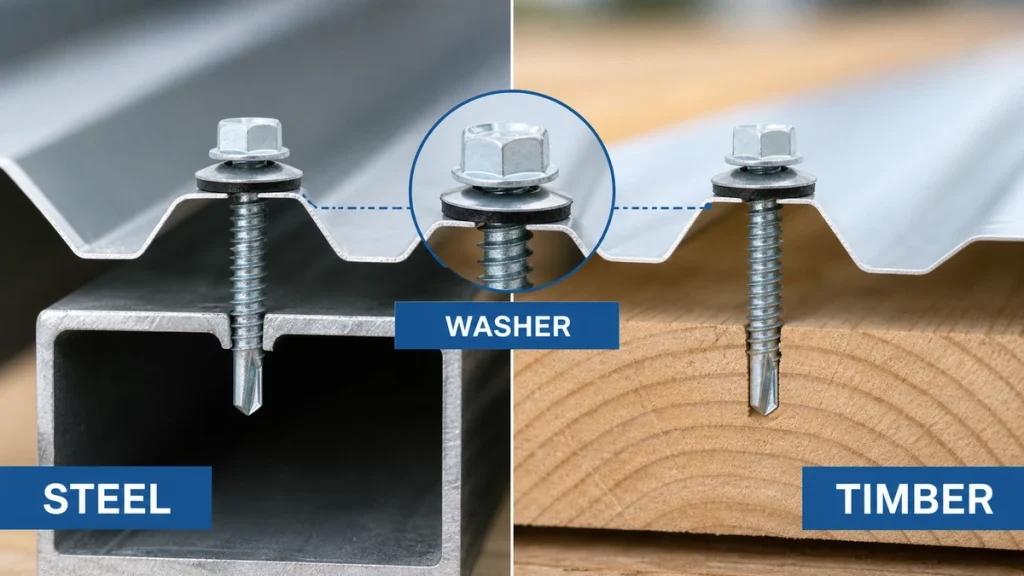
Which Self-Tapping Roofing Screw Specification Fits Metal Panels on Steel or Timber?

Which Self-Tapping Roofing Screw Specification Fits Metal Panels on Steel or Timber?

The correct self-tapping roofing screw depends on the complete panel-and-substrate stack-up. Steel supports typically require a point and thread matched to the support thickness and any pilot-hole requirement; timber supports require a wood-appropriate thread and sufficient embedment. In both cases, buyers must define diameter, length, head, sealing washer, material or coating, environment, pull-out requirements, and […]

What is the Importance of High-Quality Self-Drilling Screws in Prefabricated Steel Structure Projects?

What is the Importance of High-Quality Self-Drilling Screws in Prefabricated Steel Structure Projects?

While the quantity of self-drilling screws used in prefabricated steel structure projects isn’t large, the quality requirements are still very high. Why are high-quality self-drilling screws necessary? High-quality self-drilling screws are absolutely essential. The function of self-drilling screws in prefabricated steel structure projects is to secure and lock the prefabricated steel panels to prevent them […]

Frequently Asked Questions

Which fitting type should I specify for a piping layout?

Specify the function first: elbows change direction, tees create branches, reducers change pipe size, and couplings or unions join straight pipe runs. If the fitting connects to a pump, valve, tank, or removable section, mention that because it may affect whether a threaded, welded, or flanged connection is suitable.

Are threaded fittings a good alternative to welded fittings?

Threaded fittings are easier to install and remove, which can suit small lines, maintenance work, and equipment connections. Welded fittings are usually chosen for more permanent systems where joint integrity and a clean pipe run matter more than easy disassembly.

Does stainless steel always mean the fitting will resist corrosion?

No. Stainless steel grade, fluid chemistry, temperature, cleaning chemicals, salt exposure, and contact with other metals all affect corrosion performance. A fitting that works in clean water may not be the right choice for chloride exposure, chemical service, or outdoor coastal conditions.

What information is needed to check compatibility with existing pipe?

Provide the nominal pipe size, pipe standard or schedule if known, connection type, stainless grade, and the fitting style required. For threaded parts, also confirm the thread form; for flanged parts, confirm the flange standard and sealing face needed.

Can I mix stainless fittings with carbon steel pipe or fasteners?

Mixed-metal assemblies can work in some systems, but the environment and sealing design need attention because galvanic corrosion or crevice corrosion may occur in the wrong conditions. Ask whether the fitting, pipe, gasket, bolts, and operating environment are compatible before placing the order.

Leave Your Message

Send the fitting type, pipe size or standard, connection method, stainless grade if known, and the intended fluid or environment so the inquiry can be checked properly.