| Stainless grade for the roof environment |
Confirm the stainless material grade stated on the quotation or drawing, especially for coastal, chemical, farm, or high-humidity roofs. |
The wrong grade can stain, pit, or weaken faster in corrosive air, even if the screw fits mechanically. |
Ask: Which stainless grade are you quoting, and is it suitable for the project environment? |
| Point style for the support material |
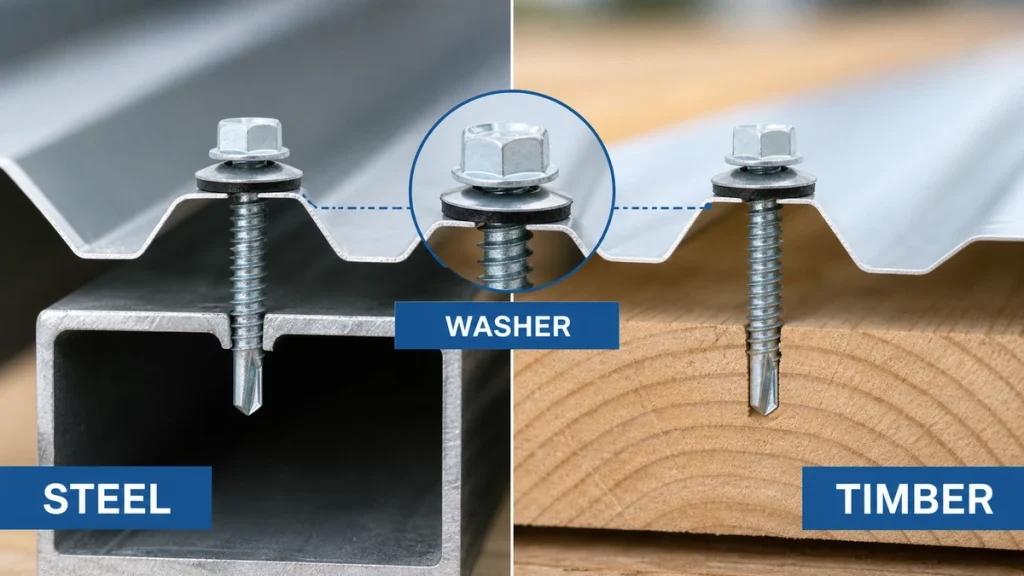
Match the screw point to the substrate: self-drilling for metal purlins, suitable tapping or sharp points for timber, and the correct drill capacity for steel thickness. |
A point that cannot drill cleanly can burn, wander, strip the hole, or leave poor thread engagement. |
Ask: What roof sheet material and supporting frame thickness should this screw drill through? |
| Sealing washer material and fit |
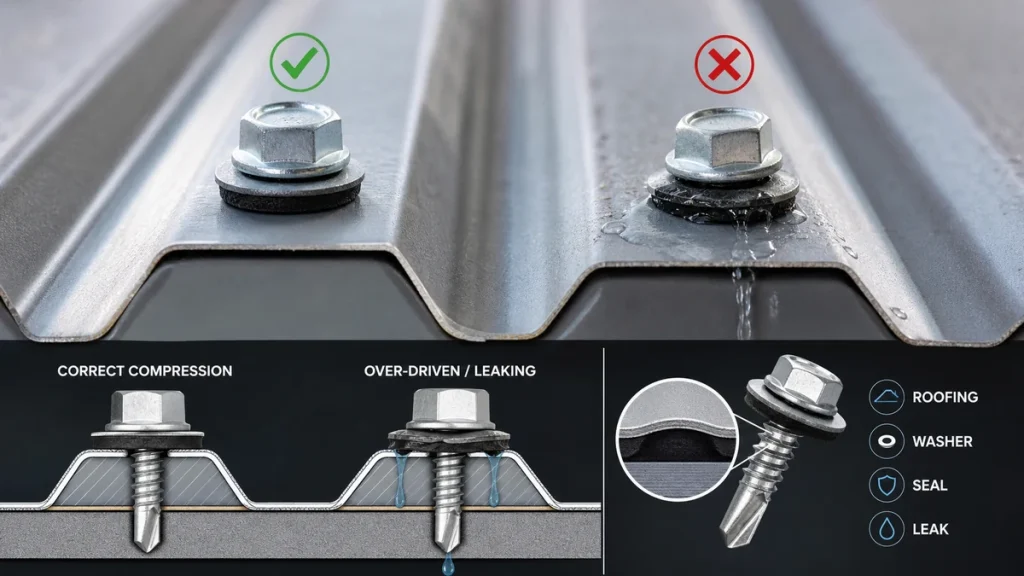
Verify the washer type, rubber material, outside diameter, and whether it seats properly under the screw head on the chosen roof profile. |
Many roof leaks come from poor washer compression, damaged rubber, or a washer that does not cover the hole correctly. |
Ask: Which washer is supplied with the screw, and is it compatible with the panel profile and outdoor exposure? |
| Screw length and thread engagement |
Compare roof sheet height, washer thickness, insulation or spacer layers, and the support material before choosing length. |
A screw that looks long enough may still have too little thread in the base material, while an overly long screw can create installation problems. |
Ask: After passing through the roof sheet and washer, how much thread will engage the steel or timber support? |
| Head style and drive recess |
Confirm whether the project needs hex washer head, pan head, or another head style, and specify the matching driver size. |
The head affects clamping, tool access, installation speed, and the risk of cam-out or surface damage. |
Ask: What head and drive style matches the installer’s tools and the roof panel manufacturer’s fastening detail? |