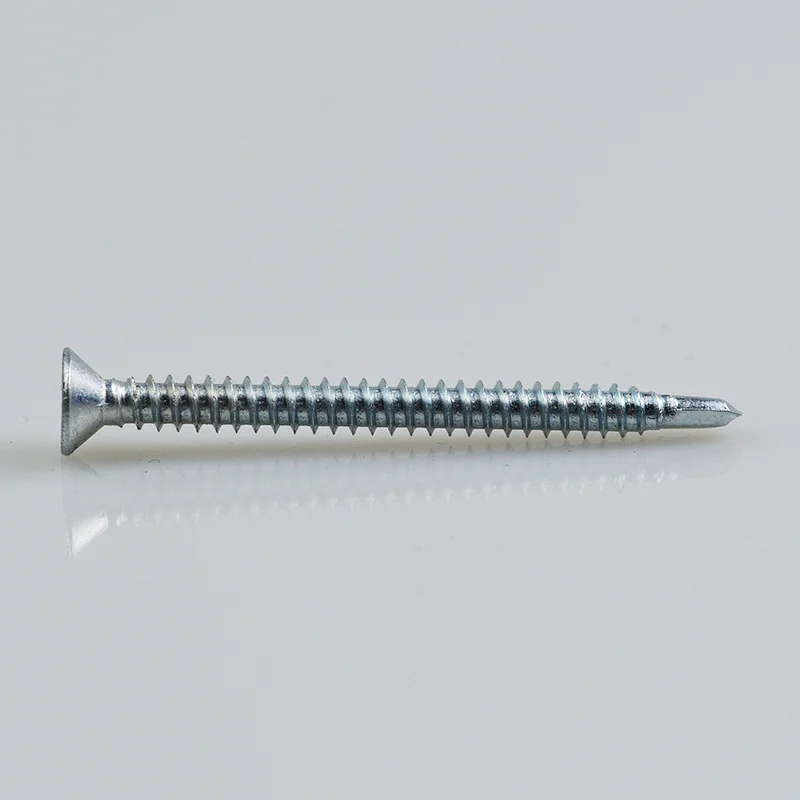
| Drill point matched to metal thickness |
Confirm the screw’s drill point type and the total steel thickness it is intended to drill before the threads engage. |
A point that is too light can burn out or fail to drill; a point that is too aggressive may leave weak thread engagement in thinner sheet. |
What metal thickness range will this tek screw drill in one pass without a pilot hole? |
| Thread form for the joint material |
Compare whether the screw is intended for thin sheet, thicker steel, or metal-to-wood fastening, not just the nominal diameter. |
Thread shape affects pull-out resistance, clamping, and how well the screw forms threads in the base material. |
Is this screw specified for metal-to-metal fastening, or for fastening metal panels into another substrate? |
| Head style and washer choice |
Match hex washer, pan, flat, or countersunk heads to the surface and required bearing area; check whether a bonded washer is needed. |
The head controls load spread, appearance, tool access, and sealing. A poor match can crush panels, sit proud, or fail to seal exterior sheet work. |
Do you need a low-profile finish, high driving torque, or a sealing washer under the head? |
| Coating and corrosion exposure |
Ask what coating or surface treatment is available and whether it suits indoor, damp, outdoor, or chemically exposed conditions. |
Tek screws for metal often fail from corrosion before the joint loses mechanical strength, especially around roofs, cladding, and exposed frames. |
What environment will the screws face, and can you provide the matching coating option for that exposure? |
| Drive compatibility and installation control |
Verify the drive type, recommended bit, and whether the screw is suitable for the installer’s screw gun and depth-control method. |
Self-drilling screws need enough speed and pressure to drill cleanly, but overdriving can strip threads, damage washers, or deform sheet metal. |
Which driver bit and installation method do you recommend for consistent seating without overdriving? |