Tek Screws For Steel Selection Guide | Hebei Wotu Fastener Manufacturing Co., Ltd.

Tek screws for steel applications

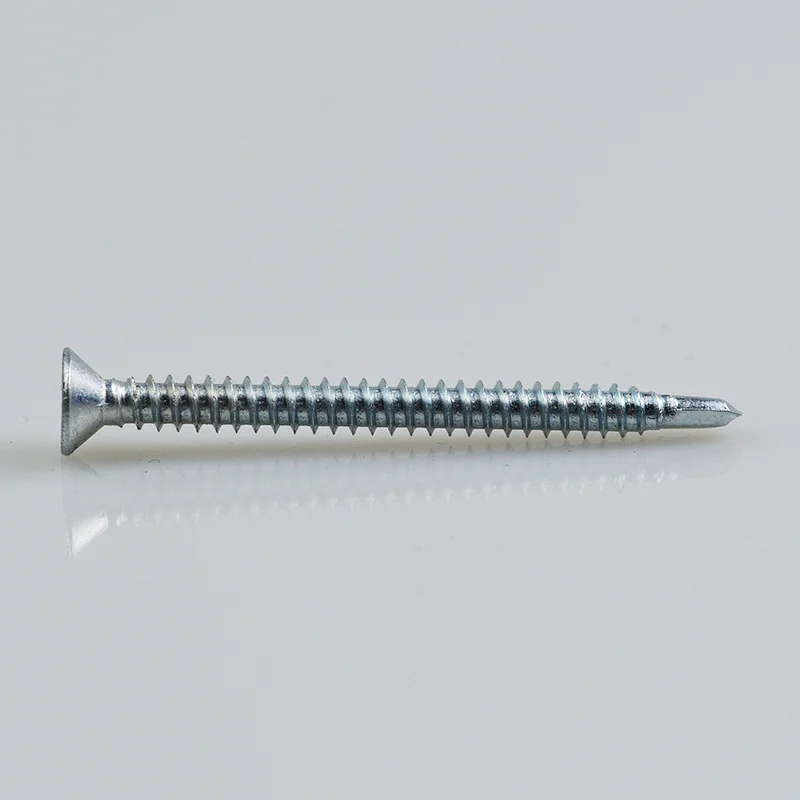
Tek screws for steel fasten metal sheets, brackets, cladding, purlins and light structural components without a separate drilling step. The main decision is not only screw size; it is whether the drill point, thread, head style and coating match the steel thickness, exposure and installation method.

For a buyer, a good specification reduces stripped holes, broken tips, loose panels and early corrosion. Share the steel grade or thickness range, the joint type and the working environment so Hebei Wotu Fastener Manufacturing Co., Ltd. can discuss a suitable self-drilling screw option.

Related Products

Hexagonal Wood Screws

Hexagonal Wood Screws

Brand: Wotu Surface: blue and white zinc plated Specifications: Chinese national standard 6#/8#/10#/12#/16#/20#, rod length 35mm~250mm full range of specifications in stock, supports nonstandard length customization Packaging: 25kg cartons, full pallets packed on wooden pallets, support neutral packaging, private-label customization

Read More
Countersunk Head Self-Tapping Screw

Countersunk Head Self-Tapping Screw

Brand: Hengzuan Surface: blue and white zinc plated, optional color zinc plated, black oxide treatment Specifications: Follow GB/T846-1985 Chinese national standard, in stock ST4.2/ST4.8/ST5.5 full range of specifications Packaging: 25kg export cartons, full pallets wrapped with film, supports neutral export packaging, private-label customization

Read More
Countersunk Head Blue-White Zinc Plated Self-Drilling Screw (Chinese National Standard: Phillips Countersunk Head Self-Drilling And Self-Tapping Screw GB/T15856.2-2002)

Countersunk Head Blue-White Zinc Plated Self-Drilling Screw (Chinese National Standard: Phillips Countersunk Head Self-Drilling And Self-Tapping Screw GB/T15856.2-2002)

Brand: Hengzuan Surface: blue and white zinc plated, can be customized color zinc plated, black oxide plated Specifications: Comply with GB/T15856.2-2002 Chinese national standard, in stock ST4.2/ST4.8/ST5.5 full range of specifications, length 13mm~75mm optional, supports customized nonstandard rod lengths; drilling adaptation plate thickness 0.7~6mm Packaging: 25kg export cartons, full pallets wrapped with film, supports neutral export packaging, customer private-label customization

Read More
Countersunk Head Blue Zinc Self-Drilling Screw

Countersunk Head Blue Zinc Self-Drilling Screw

Brand: Hengzuan Surface: blue and white zinc plated, can be customized color zinc plated, black oxide plated Specifications: in stock 3.5/3.9/4.2/4.8/5.5 mainstream wire diameter, rod length 13mm~75mm full size range, nonstandard length can be customized as needed Packaging: 25kg export cartons, full wooden pallets wrapped with film, supports neutral export packaging, private-label customization

Read More

Key specifications for tek screws used in steel

Specification points

Compare tek screws for steel by drill point style, thread form, head type, drive recess, washer option, coating and the steel thickness they are expected to penetrate. These details matter more than a generic diameter and length because they determine drilling speed, holding strength, sealing and resistance to corrosion.

Criterion What To Check Why It Matters Buyer Tip
Point type and drilling capacity Confirm whether the screw is self-drilling with a drill point or self-tapping for a prepared hole, and match it to the steel thickness. A mismatched point can increase installation time, damage the hole, or fail to penetrate the steel consistently. Ask: Is this point designed for my steel grade and total material thickness, or should I specify a pilot hole?
Length and thread engagement Compare the screw length with the combined thickness of the steel and any attached material; review the thread length rather than length alone. Too little engagement can reduce holding power, while excess length may protrude, interfere with components, or create a sharp hazard. Provide the material stack-up and ask the supplier to recommend the usable length and thread coverage.
Head style and drive Check the required head profile, seating surface, drive recess, and available installation tool. A pan, hex washer, or countersunk head suits different joint surfaces and load distribution; an unsuitable drive can slow installation or cause cam-out. Ask which head style best suits the joint and whether the specified drive bit is readily available for production.
Corrosion protection Request the coating or material designation and confirm that it is intended for the actual indoor, outdoor, humid, or chemically exposed environment. Steel fasteners can corrode at the joint, weakening the connection and staining surrounding materials when protection does not match exposure. Describe the installation environment and ask what corrosion-protection option is recommended, along with any available coating documentation.
Thread form and joint materials Review the thread design against the steel thickness, attached material, and whether the joint needs a sealing or load-spreading washer. Thread geometry affects cutting, holding, and resistance to loosening; a washer may improve seating or weather resistance where the head alone is unsuitable. Send a cross-section or material description and ask whether the proposed thread and washer combination fits the joint.

Choosing the right self-drilling screw for steel joints

The useful distinction is between self-drilling screws and ordinary self-tapping screws. A self-drilling screw has a drill-shaped point that cuts its own pilot hole in steel, while many self-tapping screws still need a prepared hole. That difference affects installation speed, hole quality and pull-out performance.

For steel-to-steel work, the drill point must suit the material thickness. A point that is too light may burn, wander or fail to penetrate; a point that is too aggressive for thin sheet can enlarge the hole and reduce thread engagement. Match the screw to the actual stack-up, not just the visible top sheet.

Start with the joint, not the screw name. Steel sheet to steel frame, roofing sheet to purlin, flashing to substrate and bracket fixing can all need different head styles and sealing choices. Hex washer heads suit many exterior panel jobs because they give drive strength and bearing area; countersunk heads sit flush but need compatible material thickness and seating.

Check drilling capacity against the total steel thickness. Buyers sometimes specify only the outer sheet and forget the support member behind it. The screw must drill through the combined material and still leave enough thread engagement to hold. If the job includes insulation, washers or overlaps, include that build-up in the inquiry.

Choose coating and washer materials for the environment. Indoor dry steelwork, temporary assembly, outdoor roofing and coastal or chemical exposure do not place the same demand on a fastener. Ask what surface treatment is available and whether a sealing washer is suitable for the panel material, temperature range and weather exposure.

Avoid mixing drive tools, torque and screw type casually. Over-driving can crush washers or strip the steel; under-driving can leave loose sheets and water paths. For the next step, send the steel thickness range, head style preference, exposure conditions and any drawing or sample screw you already use.

Criteria Importance Description Example Options
Drill point selection Critical for penetration and hole quality The point must drill the full material stack without burning, wandering or making an oversized hole. Selecting by visible sheet thickness alone can lead to poor engagement in the support steel. A roofing sheet fixed to a steel purlin should be specified by the combined fixing condition, not only the outer sheet.
Head style Important for drive strength, bearing area and finished appearance Hex washer heads suit many steel sheet applications because they are easy to drive and spread load. Countersunk heads create a flush surface but need a compatible joint design. Cladding work may favor a washer head, while an exposed flush bracket may require a countersunk option.
Washer and sealing requirement High for exterior panels and water-exposed joints A sealing washer can help close the hole around the screw, but it must be compressed correctly. Over-driving can damage the washer, while under-driving can leave a leak path. Roofing and wall panels often need a sealing washer; indoor steel framing may not.
Coating and service environment Important for durability and replacement cost Dry indoor use, outdoor weather, high humidity and chemical exposure place different demands on the fastener surface. Confirm the available coating options against the actual environment. A temporary indoor assembly and an exterior roof fastening should not be treated as the same corrosion case.
Installation method Important for consistent fastening quality Tool speed, torque control and driver fit affect drilling, thread formation and washer compression. Even a suitable screw can fail if it is over-driven, under-driven or installed with the wrong bit. A stable drive setup helps prevent stripped holes, broken tips and crushed sealing washers.

Product Selection

Related Options

For steel roofing or cladding, the priority is usually clean drilling, secure thread engagement and a washer that seals without being crushed. For indoor steel framing or bracket assembly, drive stability and consistent hole formation may matter more than weather sealing. The right choice depends on the joint and service conditions.

Blog Articles / Reviews

How to Specify Countersunk Head Cross Thick Thread Fiberboard Screws for Furniture Assembly Projects

How to Specify Countersunk Head Cross Thick Thread Fiberboard Screws for Furniture Assembly Projects

Fiberboard screws are selected based on more than screw size alone. For furniture assembly and board-based applications, buyers need to match the screw structure with the characteristics of fiberboard, MDF, and similar engineered wood materials. A suitable specification should consider thread design, head style, screw length, diameter, installation method, and application requirements. For buyers sourcing […]

How Should Buyers Evaluate Self Tapping Screws for Project Procurement?

How Should Buyers Evaluate Self Tapping Screws for Project Procurement?

#4 self tapping screws should not be purchased from the “#4” designation alone. For a usable B2B specification, the buyer still needs the actual screw diameter, thread form or pitch, overall length, substrate, pilot-hole condition, head and drive style, material, surface finish and quantity. This matters because suppliers may use different naming systems. Wotu Fastener’s […]

Rust Prevention Tips for Self-Drilling Screws

Rust Prevention Tips for Self-Drilling Screws

As we all know, the simplest way to prevent self-drilling screws from rusting is to properly isolate the screws from moisture-containing and humid environments. This can be achieved through selective application of protective coatings and sealants, or by purchasing specially formulated rust-resistant or rust-proof screws. This is why many businesses and households have rust prevention […]

What is the Importance of High-Quality Self-Drilling Screws in Prefabricated Steel Structure Projects?

What is the Importance of High-Quality Self-Drilling Screws in Prefabricated Steel Structure Projects?

While the quantity of self-drilling screws used in prefabricated steel structure projects isn’t large, the quality requirements are still very high. Why are high-quality self-drilling screws necessary? High-quality self-drilling screws are absolutely essential. The function of self-drilling screws in prefabricated steel structure projects is to secure and lock the prefabricated steel panels to prevent them […]

National Standards for Self-Drilling Screws – Fasteners

National Standards for Self-Drilling Screws – Fasteners

When using fasteners, are you familiar with the standards governing them? Today, Hebei Wotu Fastener Manufacturing Co., Ltd. will discuss the national standards for fasteners with you. Let’s take a look. 1. Standards for Fastener Product Dimensions: These specifically define the basic dimensions of the product; for threaded products, this also includes the basic dimensions […]

Frequently Asked Questions

Can one self-drilling screw cover all steel thicknesses?

Usually no. The drill point and thread need to match the total steel stack-up, including the sheet, support member, overlaps and any washer or spacer. A screw that works well in thin sheet may fail to drill heavier steel or may not leave enough thread engagement.

What is the difference between a tek screw and a normal self-tapping screw?

A tek screw is a self-drilling screw with a drill-shaped point, so it can make its own hole in steel during installation. A normal self-tapping screw forms threads but may still need a pre-drilled hole, depending on the material and screw design.

Should I choose a hex washer head or a countersunk head?

Hex washer heads are common for roofing, cladding and metal sheet fastening because they provide strong drive engagement and a broad bearing surface. Countersunk heads are used where a flush finish is needed, but the steel and joint design must allow proper seating without weakening the fixing.

Is corrosion resistance only about the screw coating?

No. Coating matters, but the environment, washer material, contact with other metals, installation damage and exposure to water or chemicals also affect service life. For outdoor or wet applications, ask which coating and sealing washer options are suitable for the site conditions.

What details should I send before asking for a recommendation?

Send the total steel thickness range, the materials being joined, the application, the head style, whether a sealing washer is needed and the working environment. A drawing, photo or existing sample is useful if the screw must replace a current fastener.

Leave Your Message

Send the steel thickness or stack-up, the application such as roofing, cladding or steel framing, and the required head, washer or coating preference. A drawing, photo or current screw sample also helps confirm the right option.