Threaded Inserts For Wood Selection Guide | Hebei Wotu Fastener Manufacturing Co., Ltd.

Threaded Inserts for Wood

Threaded inserts for wood provide a reusable internal thread for furniture, cabinets, fixtures and other wood assemblies that need repeated fastening. The main decision is choosing an insert that matches the wood or panel, the mating screw, and the way the joint will be assembled and serviced.

A suitable insert can improve repeatable assembly and make a joint easier to disassemble than a wood screw driven directly into the material. Fit depends on the insert’s external grip, internal thread, installation method and the strength of the surrounding wood.

Related Products

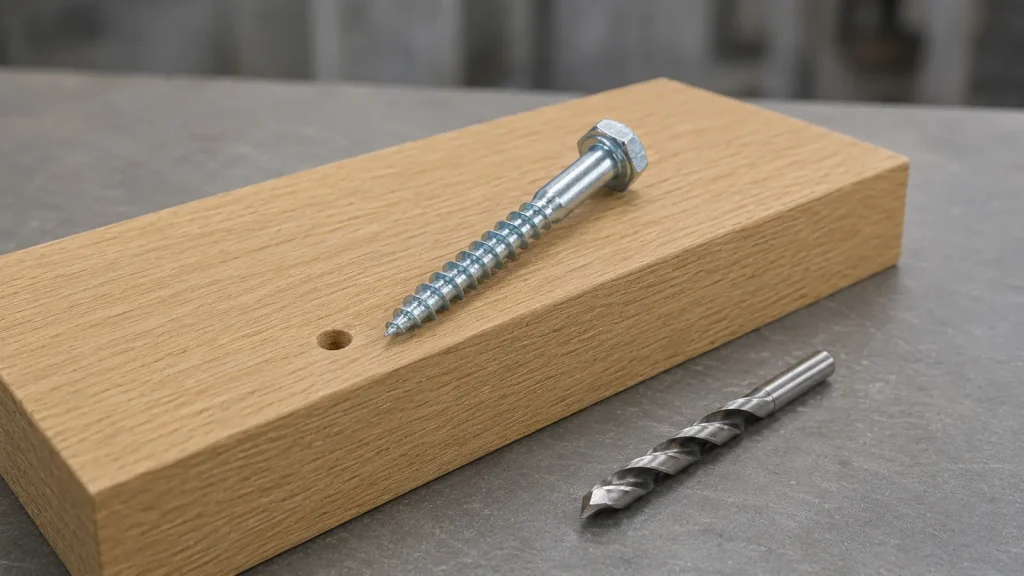
Color Zinc Plated Hex Flange Wood Screw With Washer

Color Zinc Plated Hex Flange Wood Screw With Washer

Brand: Hengzuan Surface: color zinc plated, can be customizedblue-white zinc plated Specifications: in stock 4.8/5.5 common wire diameter, rod length 16~125mm full range of specifications, supports nonstandard customized Packaging: 25kg cartons, whole wooden pallets, support neutral packaging, private-label customization

Read More
Hexagonal Wood Screws

Hexagonal Wood Screws

Brand: Wotu Surface: blue and white zinc plated Specifications: Chinese national standard 6#/8#/10#/12#/16#/20#, rod length 35mm~250mm full range of specifications in stock, supports nonstandard length customization Packaging: 25kg cartons, full pallets packed on wooden pallets, support neutral packaging, private-label customization

Read More
Countersunk Head Cross Thick Thread Fiberboard Screw

Countersunk Head Cross Thick Thread Fiberboard Screw

Brand: Wotu Surface: color zinc plated electroplating Specifications: in stock 3.5/4.0/4.5/5.0 regular wire diameter, rod length 16~80mm full range of specifications in stock, supports nonstandard length customization Packaging: 25kg cartons, whole wooden pallets

Read More
Countersunk Head Blue-White Zinc Plated Self-Drilling Screw (Chinese National Standard: Phillips Countersunk Head Self-Drilling And Self-Tapping Screw GB/T15856.2-2002)

Countersunk Head Blue-White Zinc Plated Self-Drilling Screw (Chinese National Standard: Phillips Countersunk Head Self-Drilling And Self-Tapping Screw GB/T15856.2-2002)

Brand: Hengzuan Surface: blue and white zinc plated, can be customized color zinc plated, black oxide plated Specifications: Comply with GB/T15856.2-2002 Chinese national standard, in stock ST4.2/ST4.8/ST5.5 full range of specifications, length 13mm~75mm optional, supports customized nonstandard rod lengths; drilling adaptation plate thickness 0.7~6mm Packaging: 25kg export cartons, full pallets wrapped with film, supports neutral export packaging, customer private-label customization

Read More
Countersunk Head Blue Zinc Self-Drilling Screw

Countersunk Head Blue Zinc Self-Drilling Screw

Brand: Hengzuan Surface: blue and white zinc plated, can be customized color zinc plated, black oxide plated Specifications: in stock 3.5/3.9/4.2/4.8/5.5 mainstream wire diameter, rod length 13mm~75mm full size range, nonstandard length can be customized as needed Packaging: 25kg export cartons, full wooden pallets wrapped with film, supports neutral export packaging, private-label customization

Read More

Compare insert designs for the wood and fastener

Insert selection criteria

Compare threaded inserts for wood by internal thread compatibility, external gripping profile, insert length, installation method, material and finish. Also check the recommended hole preparation, minimum surrounding material and suitability for solid wood or engineered boards before approving a design.

Criterion What To Check Why It Matters Buyer Tip
Insert body style and installation method Compare screw-in, press-in, or self-tapping designs against the wood type and assembly process. The installation method affects hole preparation, resistance to rotation, and the risk of splitting or crushing the panel. Ask which insert design is recommended for your solid wood, hardwood, MDF, or particleboard application.
Internal thread size and thread standard Match the insert drawing with the mating screw or bolt, including nominal size, pitch, and thread standard. A mismatch can prevent full engagement or make replacement hardware difficult to source. Send the exact mating fastener specification and ask the supplier to confirm thread compatibility.
Outside diameter, length, and required hole size Verify the insert dimensions, recommended pilot-hole diameter, and usable engagement length against the panel thickness. These dimensions affect holding area, edge breakout, protrusion, and the amount of thread available for the fastener. Ask for the recommended hole size and minimum edge distance for your wood species and panel thickness.
Material and surface finish Compare the stated insert material and finish with the moisture, corrosion, and appearance requirements of the assembly. The surrounding environment can affect corrosion resistance and compatibility with the wood or mating fastener. Ask which material and finish are available for indoor, damp, or outdoor use, and whether they are compatible with the mating screw.
Installation tooling and seating guidance Review the supplier's installation instructions, driver interface, seating depth, and any trial-sample requirements. Incorrect installation can leave the insert proud, damage the internal thread, or reduce its grip in the wood. Ask for the recommended tool, pilot-hole procedure, seating method, and installation limits before approving production.

Choose the right installation and holding method

Choose a threaded insert instead of a conventional wood screw when the joint will be opened repeatedly, needs a machine screw connection, or requires consistent assembly torque. A direct wood screw may be simpler and more economical for a one-time joint, but its holding performance can decline if the hole is reused or over-tightened.

For softwood, MDF, particleboard and hardwood, the same insert design will not behave identically. External threads or knurling that hold well in solid wood may damage a board edge or fail to grip a weak composite panel, so the material and hole condition matter as much as the nominal internal thread.

Start with the mating fastener. Specify the internal thread form and size, the screw or bolt length, the required head clearance and whether the connection needs to sit below the surface. Do not select an insert by outside diameter alone; the internal thread must match the fastener, and the insert length must suit the available material without breaking through the opposite face.

Match the installation style to the assembly process. Screw-in inserts can suit pre-drilled holes and field installation, while press-in or driven designs may be better for controlled production processes. Check whether the insert requires a pilot hole, a special driver or a defined installation depth. An oversized, undersized or poorly aligned hole can cause rotation, splitting or an uneven finished surface.

Consider the material around the joint. Dense hardwood, softwood, plywood, MDF and particleboard differ in holding strength and resistance to splitting. Near an edge, in a thin panel or beside an existing hole, a shorter insert or a different external profile may be safer than a deep, aggressive design. If the joint carries repeated loads, confirm how pull-out and rotation resistance will be evaluated rather than relying only on a visual fit.

For an enquiry, send the wood or board type, material thickness, mating screw or bolt details, hole location and expected assembly method. Include a drawing or sample-hole information if the insert must remain flush, avoid breakthrough or work with automated installation. Ask Hebei Wotu Fastener Manufacturing Co., Ltd. which insert designs, materials, finishes and installation guidance are available for that application.

Criteria Importance Description Example Options
Wood or board material Often the first decision factor Solid hardwood, softwood, plywood, MDF and particleboard hold inserts differently. The same insert may perform well in one material and loosen or split another. An insert selected for hardwood may be too aggressive near the edge of a thin particleboard panel.
Internal thread and mating fastener Essential for functional fit The insert must match the machine screw or bolt thread, and the fastener length must suit the insert depth and joint stack-up. A furniture connector using a machine screw needs the insert thread specified clearly, not just the outside diameter of the insert.
Installation method Important for production quality and repeatability Screw-in, press-in and driven styles place different demands on hole preparation, tooling and alignment. A design that works for hand installation may not suit automated assembly. A screw-in insert may suit repair or field assembly, while a press-in style may be considered for controlled factory installation.
Panel thickness and hole location Critical where material is thin or close to an edge Insert length and outside profile must fit the available material without breaking through, bulging the surface or weakening the edge. A deep insert may be unsuitable for a thin cabinet side if the remaining material below the insert is too small.
Serviceability versus simple fastening Guides whether an insert is needed at all Threaded inserts add value when a joint is opened repeatedly or needs a machine screw connection. For a permanent low-service joint, a wood screw may be simpler. A removable access panel is a better candidate for an insert than a hidden one-time assembly joint.

Blog Articles / Reviews

Which Hexagonal Wood Screw Specifications Should Buyers Freeze Before Production?

Which Hexagonal Wood Screw Specifications Should Buyers Freeze Before Production?

A hexagonal wood screw order should not be released from a gauge number and length alone. Before production, the buyer and supplier need one approved specification that fixes the screw diameter, length basis, thread geometry, point, hex-head dimensions, material, finish, installation method, substrate and acceptance evidence. The pilot hole belongs in the application specification as […]

How to Specify Countersunk Head Cross Thick Thread Fiberboard Screws for Furniture Assembly Projects

How to Specify Countersunk Head Cross Thick Thread Fiberboard Screws for Furniture Assembly Projects

Fiberboard screws are selected based on more than screw size alone. For furniture assembly and board-based applications, buyers need to match the screw structure with the characteristics of fiberboard, MDF, and similar engineered wood materials. A suitable specification should consider thread design, head style, screw length, diameter, installation method, and application requirements. For buyers sourcing […]

How Should Buyers Evaluate Self Tapping Screws for Project Procurement?

How Should Buyers Evaluate Self Tapping Screws for Project Procurement?

#4 self tapping screws should not be purchased from the “#4” designation alone. For a usable B2B specification, the buyer still needs the actual screw diameter, thread form or pitch, overall length, substrate, pilot-hole condition, head and drive style, material, surface finish and quantity. This matters because suppliers may use different naming systems. Wotu Fastener’s […]

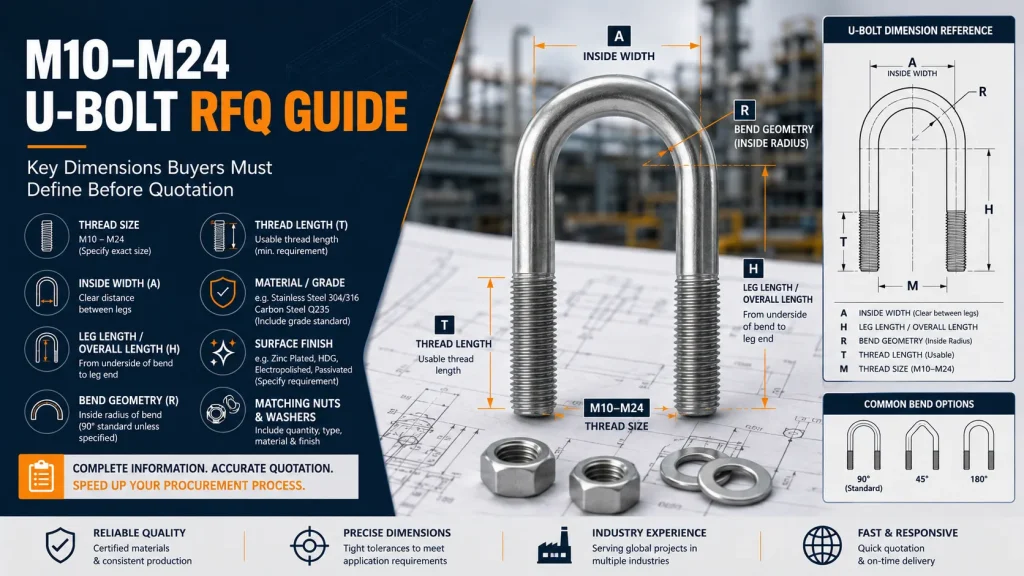
Which M10–M24 U-Bolt Measurements Must Buyers Send Before an RFQ?

Which M10–M24 U-Bolt Measurements Must Buyers Send Before an RFQ?

Direct Answer: For an M10–M24 U-bolt RFQ, buyers should send a dimensioned drawing that defines thread diameter, inside width, leg or overall length, bend geometry, thread length, application diameter, material or grade requirement, surface finish, matching nuts/washers, quantity, and packing needs. Nominal thread size alone is not enough because different measurement datums can produce U-bolts […]

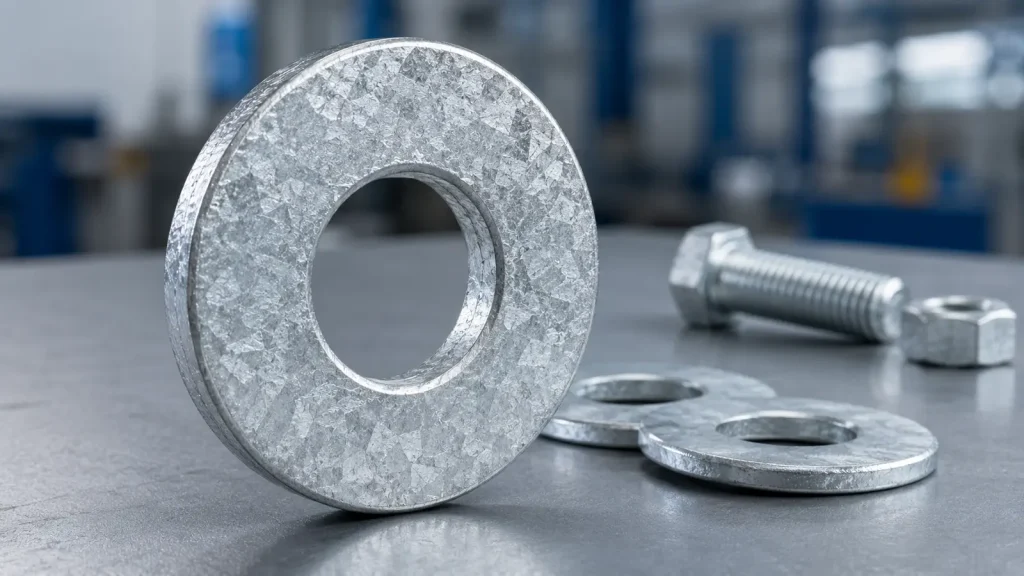
What Should Buyers Check Before Ordering Hot-Dip Galvanized Flat Washers?

What Should Buyers Check Before Ordering Hot-Dip Galvanized Flat Washers?

A hot-dip galvanized flat washer should be purchased as a defined joint component, not simply as an M-size metal disc. A usable specification identifies the dimensional standard and series, nominal size, inside and outside diameters, thickness, product grade, hardness or mechanical requirement, base material, coating requirement and the bolt, nut and bearing surface with which […]

Frequently Asked Questions

Are threaded inserts suitable for MDF and particleboard?

They can be, but the board density and edge distance are critical. MDF and particleboard may not grip an aggressive external thread as well as solid wood, so confirm the pilot hole, insert length and pull-out or rotation expectations before approving the design.

Should I use a threaded insert or just drive a wood screw directly?

Use a direct wood screw for a simple permanent joint where the fastener will not be removed often. Choose an insert when the assembly uses a machine screw, needs repeated removal, or requires more consistent reassembly than a wood screw can provide after multiple cycles.

Does a larger outside diameter always mean a stronger joint?

No. A larger insert can provide more grip in some materials, but it can also split solid wood, weaken a thin panel, or damage an edge location. The right choice depends on insert length, external profile, hole preparation and the strength of the surrounding material.

What information should I send before asking for a quote?

Share the wood or panel type, material thickness, internal thread size, mating screw or bolt details, installation method and hole location. If the insert must sit flush, avoid breakthrough, or support repeated disassembly, include that requirement clearly.

What causes an insert to spin during assembly?

Common causes include an oversized pilot hole, weak board material, poor alignment, insufficient external grip, or excessive tightening torque. The fix is not always a bigger insert; it may require a different external profile, better hole control or a change in assembly procedure.

Leave Your Message

Please provide the wood or panel material, material thickness, and mating screw or bolt thread. If available, also share the hole location, installation method and whether the joint will be disassembled repeatedly.